Skip to content

Posts from the ‘Electricity Market’ Category

The Iceland-Europe interconnector
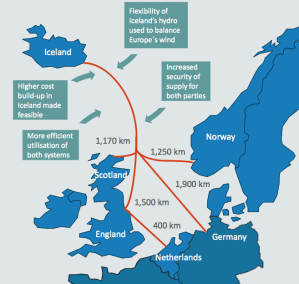
Iceland is currently a closed electricity market with no cable connections to other markets. This may soon change. Technology advancement, strong demand for more renewable energy, and high electricity prices in Europe are making a submarine high voltage direct current (HVDC) cable between Iceland and Europe more feasible than ever before.

Unharnessed renewable energy

Iceland can substantially increase its green electric power production at a reasonable cost. Iceland is the only country in Western Europe that still has several large unharnessed hydro power options. Also, Iceland’s geophysical conditions offer numerous possibilities for low cost utilization of geothermal power, and Iceland has stronger and more stable winds than most of Europe.

Some of this natural energy will be harnessed for varied domestic industries, such as new data centers, metallurgical-grade silicon production, etc. Iceland also has the possibility to do business with electric power through a submarine cable to Europe. Such a connection would not only be based on Icelandic hydro- and geothermal power, but would open up the possibility of large-scale harnessing of Icelandic wind power.

Choosing the best business model

So far the longest submarine HVDC-cable is the NorNed between Norway and the Netherlands (580 km / 369 miles). The interconnector between Iceland and Europe would be at least double that length, so it will definitely be a challenging project.

Such an  interconnector would not only enable sales of renewable electricity at high prices but also have various other benefits for the Icelandic electricity system, such as more efficient use of the generation capacity and enhance the security of supply. Currently, three scenarios are being studied. The first concerns an interconnector that would be used for export/import only, based on market prices.  The second involves a cable used for export only, and the third assumes an interconnector used in part for export/import and in part for export.

Green AND competitively priced

The main drivers behind an electric cable between Iceland and Europe are high electricity prices in Western Europe and the growing demand in Europe for more renewable energy.
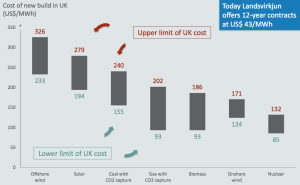
According to engineering and management firm Parsons Brinckerhoff and consultancy firm  Mott MacDonald Group, as presented by Landsvirkjun, Iceland’s electricity prices are much lower than can possible be offered by new electricity generation projects in the United Kingdom (UK). This is especially interesting when having in mind UK’s energy policy, with the goal of increasing its renewable energy consumption from the present 54 TWh to 234 TWh no later than 2020.

This goal, which is based on European Union’s (EU) and UK’s energy policy, will only be achieved with major investments in new green energy projects. Those projects will for example include very expensive and controversial onshore and offshore wind farms in the UK. For example, the minimum cost for offshore wind electricity in the UK is equivalent to 233 USD/MWh.

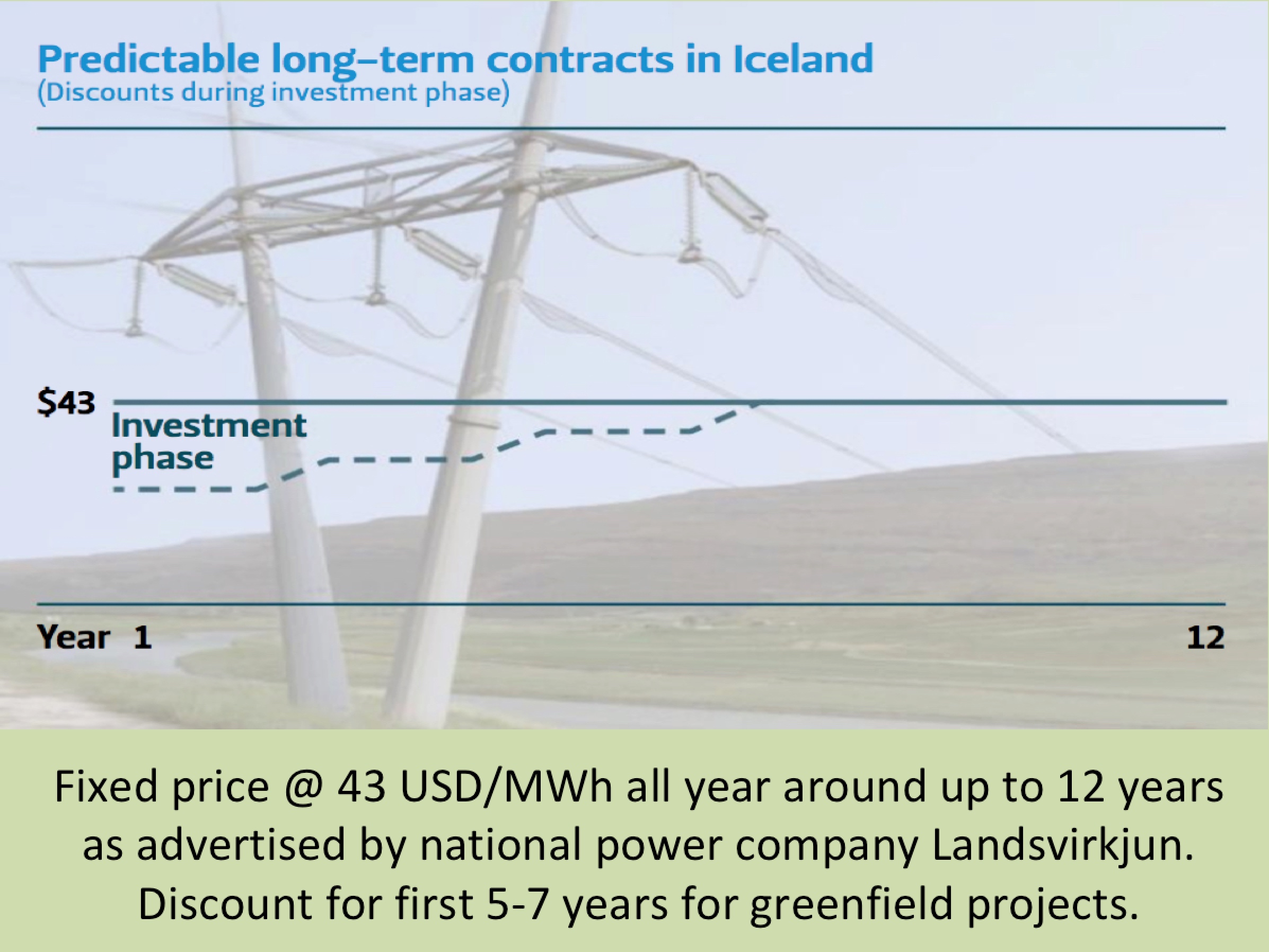
When comparing this to Icelandic renewable energy cost, it is quite obvious that an electric cable between Iceland and UK is an exciting option (Icelandic Landsvirkjun is currently offering long-term electricity contracts at 43 USD/MWh). Thus, it is not surprising that Mr. Hörður Arnarson, CEO of Landsvirkjun, has described the laying of a submarine cable to Europe, together with vigorous industrial development in Iceland, as probably being “one of the biggest business opportunities Iceland has faced”.

The two charts above are from a presentation by Landsvirkjun, given at an energy seminar in Reykjavik in last May (2012).
The United Kingdom and Icelandic electricity

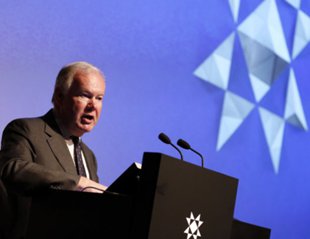
The British Minister for Energy and Climate Change, Mr. Charles Hendry, was recently in Reykjavik discussing energy issues with Icelandic authorities and people in the industry. Mr. Hendry also gave a speech at an energy-seminar at the headquarters of the Icelandic Arion bank.

One of the main issues discussed were the possibility of connecting Iceland and the United Kingdom (UK) with an electric cable. The cable would transfer green electricity from Iceland’s natural renwable sources to the UK. Such a cable would also offer Iceland access to competitively priced electricity genereted in the UK during night (when demand in the UK is low). Thus, this could be a win-win project.

It is no surprise that the British Government is looking for acess to new sorces of green electricity. The share of renewable energy in the UK is very low. The total annual production of renewable energy in the UK is 54 TWh, which only accounts to approximately 3.5% of the country’s energy consumption.

The UK is determined to increase the share of renewable energy substantially. This is not only a governmental position but also a binding obligation according to the common energy policy of the European Union. Thus, the UK Department of Energy and Climate Change now has published the goal of having 15% of the UK’s energy consumption delivered from renewable sources by 2020.

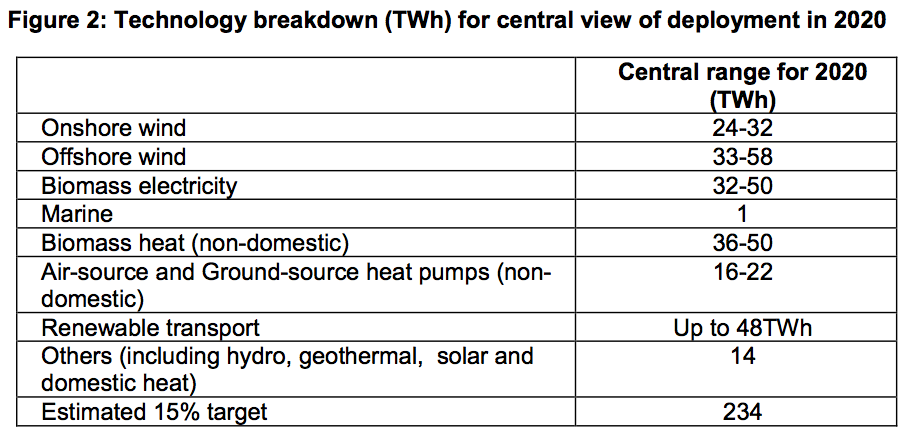
Let’s look at what this means in numbers. The cost is very uncertain but definitely very high. It is of course hard to foresee exactly how much energy the UK will consume by 2020. According to the Department of Energy and Climate Change it is expected that the UK’s total annual energy consumption in 2020 will be 1,557 TWh. And 15% of 1,557 TWh is 234 TWh.

This means that the UK has to increase its renewable energy consumption from the present 54 TWh to 234 TWh no later than 2020. This is an increase of 180 TWh! 180 TWh of new green energy that needs to beavailable within less than a decade from now. In comparison the whole nuclear industry in the UK produced 69 TWh last year (2011.)

To achieve this goal of adding 180 TWh of renewable energy by 2020, green energy consumption in the UK will need to increase by 22.5 TWh each year over a period of 8 years. Obviously this renewable energy target calls for major investment in all kinds of green energy projects, including for example biomass, geothermal, hydro, solar and wind. Large portion of the new green energy will come from new renewable electricity generation (renewable heat and renewable fuels will have to increase substantially). Renewable electricity will need to maintain a growth rate of approximately 15% per annum from the 2010 baseline.

In addition to more renewable generation at home the UK is also focusing on major imports of electricity from renewable sources in neighbouring countries – like Norway and Iceland. This is why the British Minister for Energy and Climate Change is very positive towards an electric cable between UK and Iceland.

In fact Iceland has been considering such a connection between Iceland and Europe for years and even decades. However, it is probably not until now that such a high voltage direct current cable (HVDC) is becoming both tecnically possible and financially feasable.

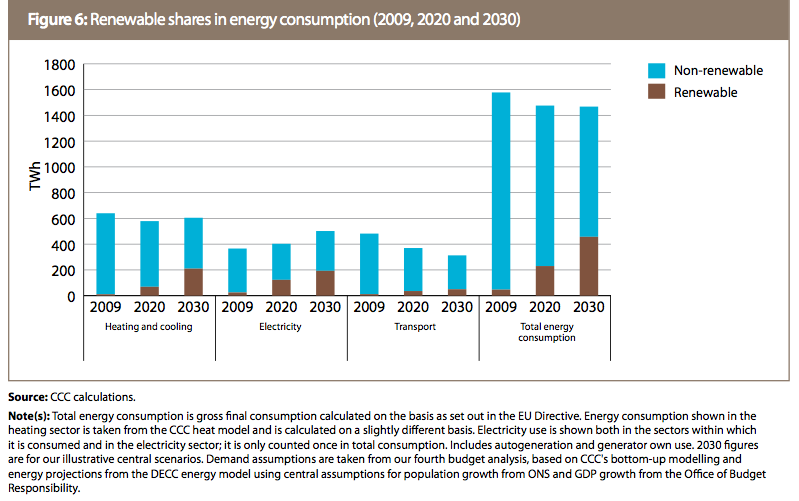
And keep in mind that the British Government is already considering even more ambitious renewable energy targets for 2030 and beyond. Recent independent advice from the British Committee on Climate Change (CCC) has concluded that there is scope for the penetration of renewable energy to reach 30-45% of all energy consumed in the UK by 2030!

At the same time Iceland is in the somewhat unique position to have access to several excellent unharnessed renewable energy opportunities. In the coming weeks we will be presenting more information about the possible Iceland-UK interconnector  and explain Iceland’s potentials for generating more renewable electricity and gaining from Europe’s high electricity prices.

More information about UK’s energy policy and future scenarios:
–  UK Renewable Energy Roadmap
–  UK’s Renewable Energy Review
The charts above are from these two reports.

Attractive Prices

Electricity prices for industries in Iceland are substantially lower than the prices offered in the USA or Canada. In comparison with Europe, Iceland becomes even more competitive.

Thus, Iceland is a very economical location for firms that have electricity as an important cost factor. This fact has for decades drawn energy-intensive industries such as aluminum smelting to Iceland. With rising energy prices around the world and especially in the countries within the EU, new types of industries and services are finding Iceland an increasingly attractive location.

Currently, Iceland’s main power producer is offering long term electricity contracts at a fixed price of 43 USD/MWh. You can read more about the energy related business opportunities in Iceland in our investing section.