Skip to content

Posts from the ‘Investing and Legal Issues’ Category

Upcoming silicon plant and new hydropower station

The National Power Company of Iceland, Landsvirkjun, will provide electricity to a new power a metallurgical grade silicon metal production plant being, built by German PCC Group. The plant is to be constructed in Bakki near Húsavík on Northeast Iceland.

PCC-Silicon-logoPCC Group is a privately owned industrial holding and participation company based in Duisburg in Germany. The group operates in 16 countries with a total workforce of around 2,800 employees. PCC’s silicon plant in Iceland will be a 32,000 ton facility and is scheduled to start operating in early 2017. It will require 58 MW of power, which will be derived entirely from the renewable energy sources of Icelandic hydro and geothermal power. The contract is subject to certain conditions set to be finalised later this year. These include the appropriate licensing and permit requirements, financing for the project, as well as the approval of the Boards of both parties.

The Icelandic Landsvirkjun is one of Europe’s leading renewable energy companies. Landsvirkjun is Iceland’s largest generator of electricity, currently operating 16 renewable hydro- and geothermal power stations, producing approximately 75% of all electricity in Iceland. The company has for over 45 years generated renewable electricity from hydro, geothermal and onshore wind power sources.

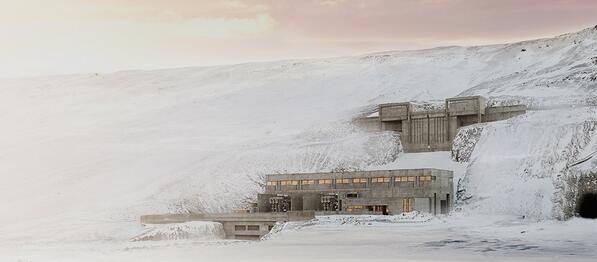
Budarhals-Landsvirkjun-Hydropower-Iceland-WinterRecently, Landsvirkjun was also starting up its newest hydropower station in Iceland. This is the Búðarháls Hydropower Station, and the official start-up ceremony was on March 7th (2014). The Búðarháls Station is Landsvirkjun’s 16th power station and the seventh largest power station owned and operated by Landsvirkjun. This new station utilises the 40 metre head in the Tungnaá River from the tail water of the Hrauneyjafoss Hydropower Station to the Sultartangi Reservoir. The installed capacity of the Búðarháls Hydropower Station is 95 MW and it will generate approximately 585 GWh of electricity per year for the national grid. Most of the electricity added by Búðarháls has already been purchased by long term agreement with Rio Tinto Alcan’s smelter in Straumsvík in Southwestern Iceland.

UK will import more power from neighbouring countries in the future

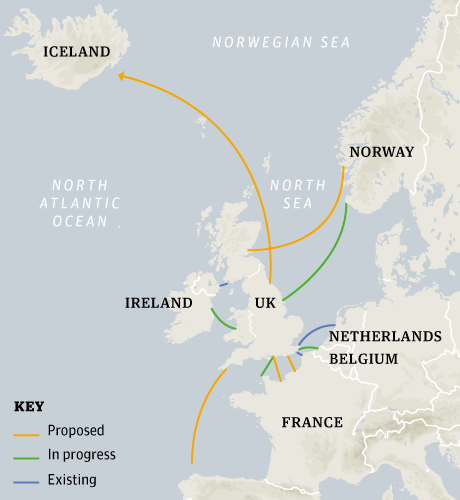
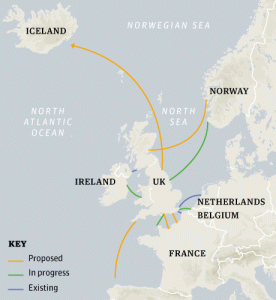
LV-HVDC-Iceland-UK-London-august-2012-1According to the UK National Grid, the UK will import more power from neighbouring countries in the future as the country’s electricity margin continues to tighten. The Financial Times recently wrote about how one of the new subsea electric cables to be constructed is likely to be a cable between UK and Iceland (sometimes referred to as the IceLink):

Swiss engineering group ABB last year commissioned a 262 km interconnector to link Ireland’s grid to the UK’s. National Grid is also working on interconnector projects with Belgium, Denmark, Norway and Iceland. About 5-7 GW of additional capacity could flow from the new interconnectors over the next decade or so, said Mr Bonfield. However, some of the interconnector projects are more feasible than others. A link between UK and Iceland may be the best economic option.

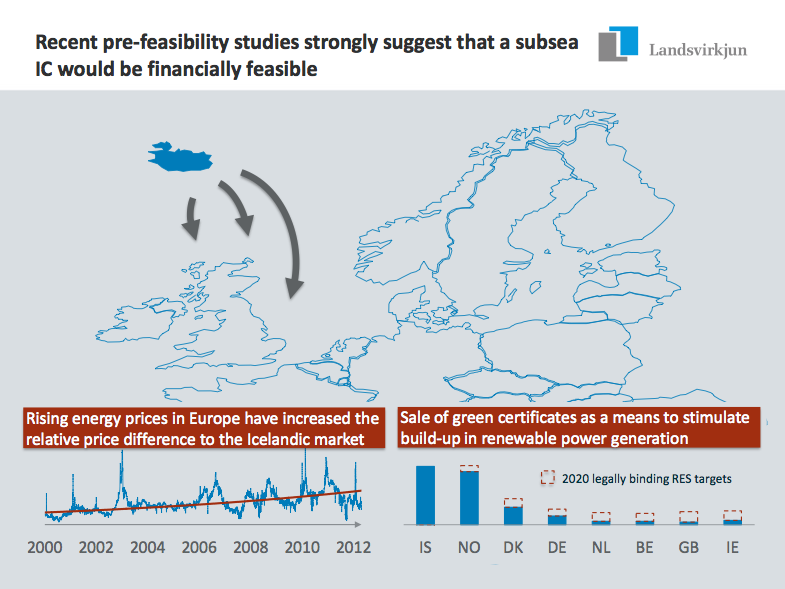
LV-HVDC-Iceland-UK-London-august-2012-2Net electricity imports cost the UK about GBP 365 millions in the past six months of 2013, two and a half times more than two years previously, according to data supplied by ICIS, the price reporting agency. Electricity imports can be cheaper than those produced by UK suppliers and are a small but growing part of the country’s overall power supply. Power is produced in France and the Netherlands and imported via subsea interconnectors. Electricity flows both ways but the UK currently buys more than it sells. And there will be a rise in Uk’s power imports, says Andrew Bonfield, National Grid’s chief finance officer .“[This is] because there is a pricing differential which we believe will be beneficial to the country, and ultimately customers.”

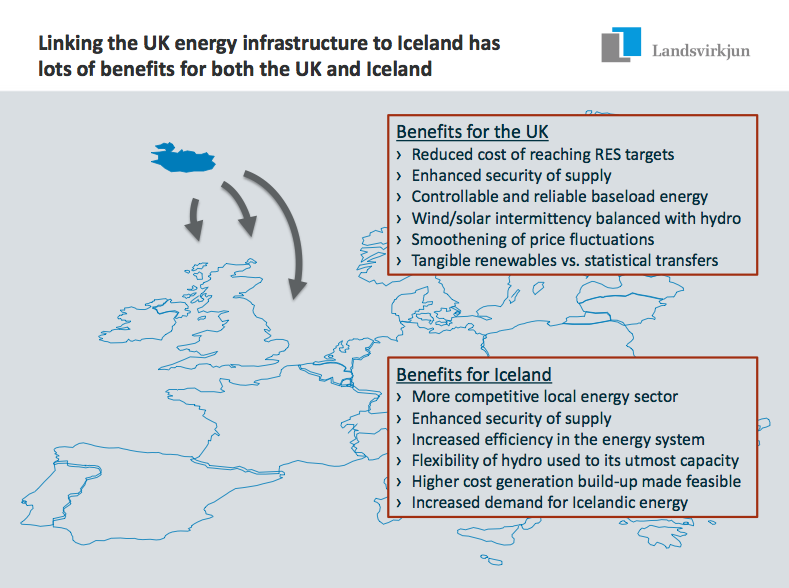
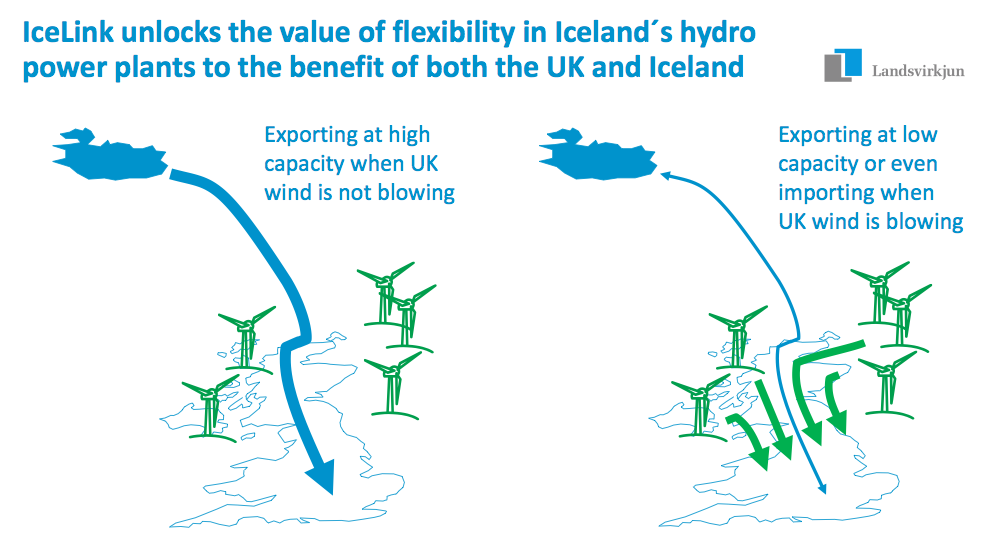
National Grid will invest about GBP 3.5 billion this year, most of which will go towards reinforcing its UK transmission infrastructure. Power imports should help National Grid level out peaks and troughs from renewable energy production and deal with the UK’s diminishing electricity margin, which represents the safety cushion of spare power generating capacity (National Grid previously said that the electricity margin during peak demand in cold weather will be 5 per cent, down from more than 15 per cent in the winter of 2011-12). IceLink could become an important part of this strategy, opening access to Iceland’s 100% renewable power geothermal- and hydro power generation.

The two illustrations above are from a presentation by Mr. Hörður Arnarson, CEO of the Icelandic Power Company Landsvirkjun, presented in August 2012.

UK National Grid: IceLink is feasible, achievable and viable

Economist-Iceland-UK-HVDCAccording to a recent article in the Schumpeter column of the Economist, the proposed IceLink power cable between Iceland and Britain seems to be getting a deservedly serious hearing.

The IceLink would be the longest undersea cable in the world, at at least 1,000 km, costing on current estimates billions of EUR.  According to the Economist It would take four years to construct the cable and would have a capacity of 1,000 MW. And the Economist is very positive about the project:

Iceland is in a unique position with regard to energy: it has in effect unlimited power, from both geothermal and hydro-electric. Apart from keeping the hardy Icelanders warm, it also runs aluminum smelters. But exporting electricty would give the small island economy a new source of income (the main other ones, since the collapse of the financial bubble, are fish and tourism).

HVDC-Cable-Iceland-Europe-map-slideThe Economist goes on by pointing out that the attraction of the IcLink for Britain is flexibility. The increasing dependence on wind energy, which produced a record ten percent of Britain’s power in last December (2013), may be questionable from an economic point of view. And it creates a technical difficulty too: if the wind drops, you need a speedy alternative source of power. When it blows strongly, you need somewhere to store it. Iceland’s stable geothermal- and hydro-electric generation is ideal for both purposes. But Britain has rather little hydro and close to none geothermal.

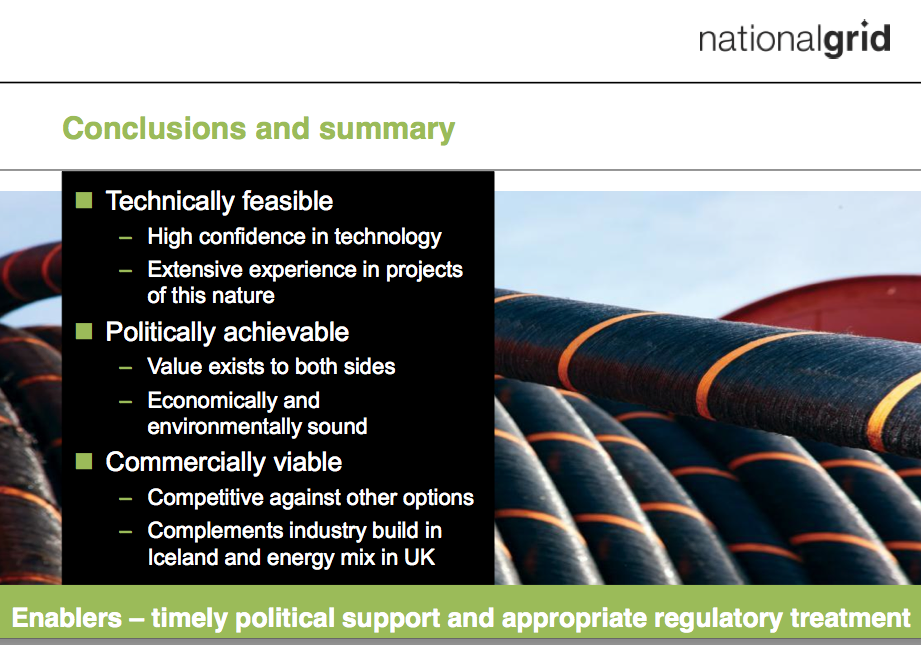
According to the Economist, the UK National Grid (the transmission operator for electricity and gas) likes the project, describing it as “Technically feasible…Politically achievable…Commercially viable”. Britain and Iceland signed an intergovernmental memorandum of understanding on the project in 2012. In June last year, the project won backing from an UK cross-party government advisory committee. Now the British government is waiting for the Icelandic side to come out with a firm proposal.

UK National Grid showing interest in IceLink

According to news from Norwegian energy information provider Montel, the cost of electric power from the potential subsea interconnector linking the UK with Iceland  will be around GBP 100/MWh (164 USD/MWh). This new subsea cable, which is sometimes referred to as the IceLink, would thus offer electric power at substantiall lower prices than for example from offshore wind.

Icelink-HVDC-UK-NG-nov-2013-5The IceLink would be a high voltage direct current (HVDC) cable, with a power capacacity of 700-1,000 MW.  It would be 1,000-1,500 km long, making it qute a bit longer than any existing subsea cable of this kind today. The longest subsea electric cable is currently the 580 km NorNed cable between Holland and Norway. Longer cables of this type are being planned, such as a cable between Norway and the United Kingdom that will be more than 700  km long, and even longer cables in the Mediterranean.

Mr Hörður Arnarsson, CEO of the Icelandic  state owned power company Landsvirkjun has expressed that the Icelink cable could add “very valuable” flexibility to offset intermittent renewables production in the UK. Landsvirkjun generates 75% of all electricity used in Iceland.

Icelink-HVDC-UK-NG-nov-2013-4In May 2012, Icelandic and UK ministers signed a memorandum of understanding over a new interconnector between the countries. The UK TSO National Grid has been showing interest in the Icelink, focusing on issues such as supply diversification, and gaining access to the reliable hydro- and geothermal energy resources of Iceland.

In the last few months,Mr. Paul Johnson, Project Director and Head of Cables at National Grid, has at numerous occasions expressed that the need for such an interconnector between Iceland and the UK has come to the fore. According to Mr. Johnson, the IceLink is a realizable goal and there is political will for the connector. Mr. Charles Hendry, MP and former UK Energy Minister has been of the same opinion, as the IceLink project offers low-risk, predictable returns attractive to investors, such as pension and infrastructure funds.

Icelink-HVDC-UK-NG-nov-2013-7

According to Montel, the costs of the IceLink are estimated at GBP 4 billion, with it being possibly completed by 2022. The project could supply up to 5 TWh of power annually to Britain from hydro, geothermal and wind sources in Iceland.

While Icelanders still need to engage in national discussions about the costs and benefits of a subsea power cable to the UK, policy makers in the UK seems to agree on the project. In addition, the President of Iceland, Mr. Ólafur Ragnar Grímsson, has addressed leaders and people in the energy business, expressing his view that the Icelanders and the Brits should jointly examine the options of an interconnector.

Iceland-UK-BICC-meeting-Nov-2013-ORG-2At an energy conference in London in last November (2013), Mr. Grímsson said the proposed IceLink should be hard-headed analysis driven by engineers and energy specialists. “We should listen to the government in Britain…then in two to three years we can come back to the table and make the real decision.”

Grimsson said popular support was necessary before a project to bring geothermal power from Iceland to the UK could get off the ground. “As we move forward we need to bring all segments of Icelandic society into this discussion,” he said. “Then we will take a decision based not only on the business sense and the technical feasibility [of the project] but on the national will,” Grimsson said, adding that unless “there is a broad national will behind this, you will never get the necessary players on board”.

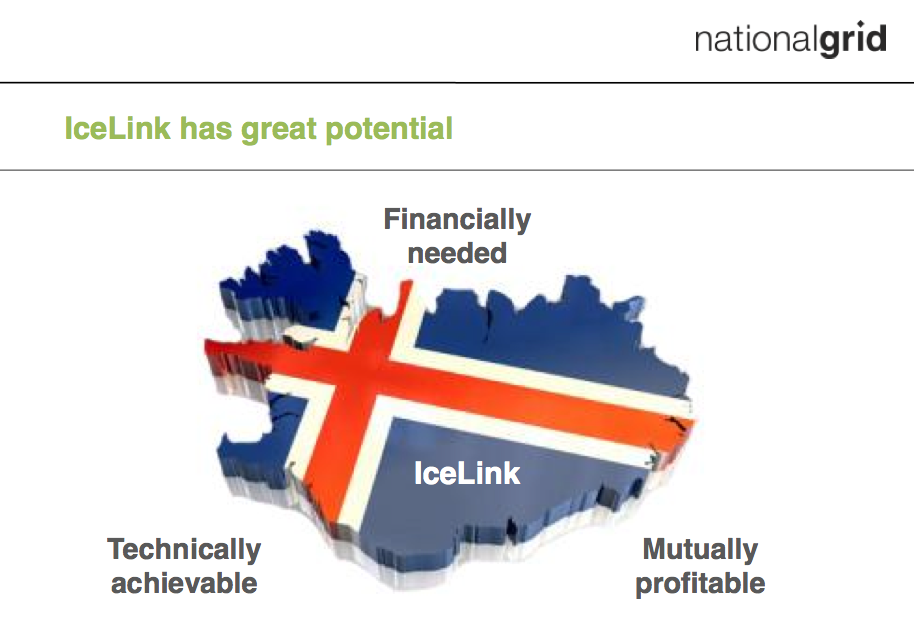
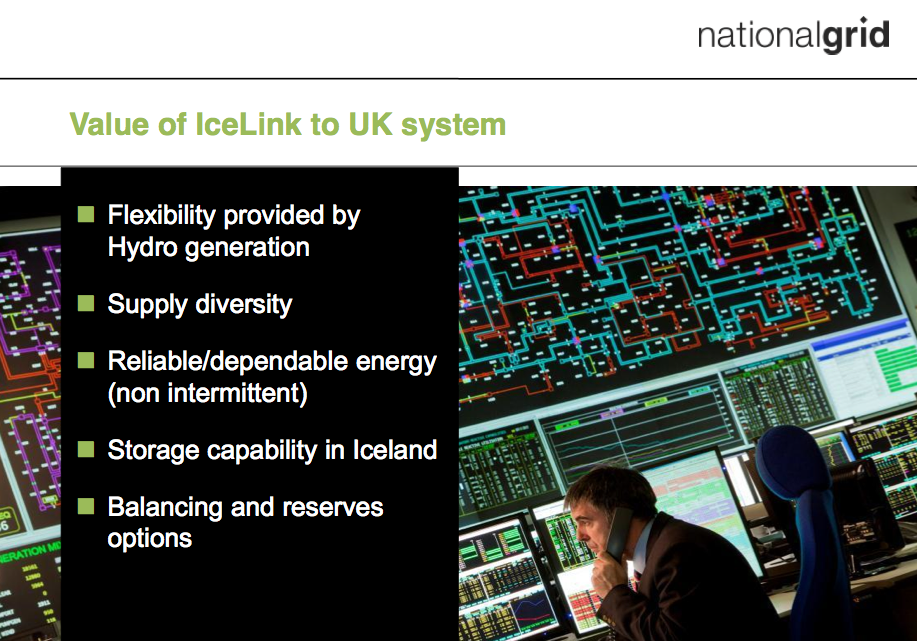
The three slides above are from a presentation given by Mr. Paul Johnson from UK National Grid, at the Bloomberg Icelandic Energy Summit. It took place in London on November 1st 2013.

The Bitcoin mines of Iceland

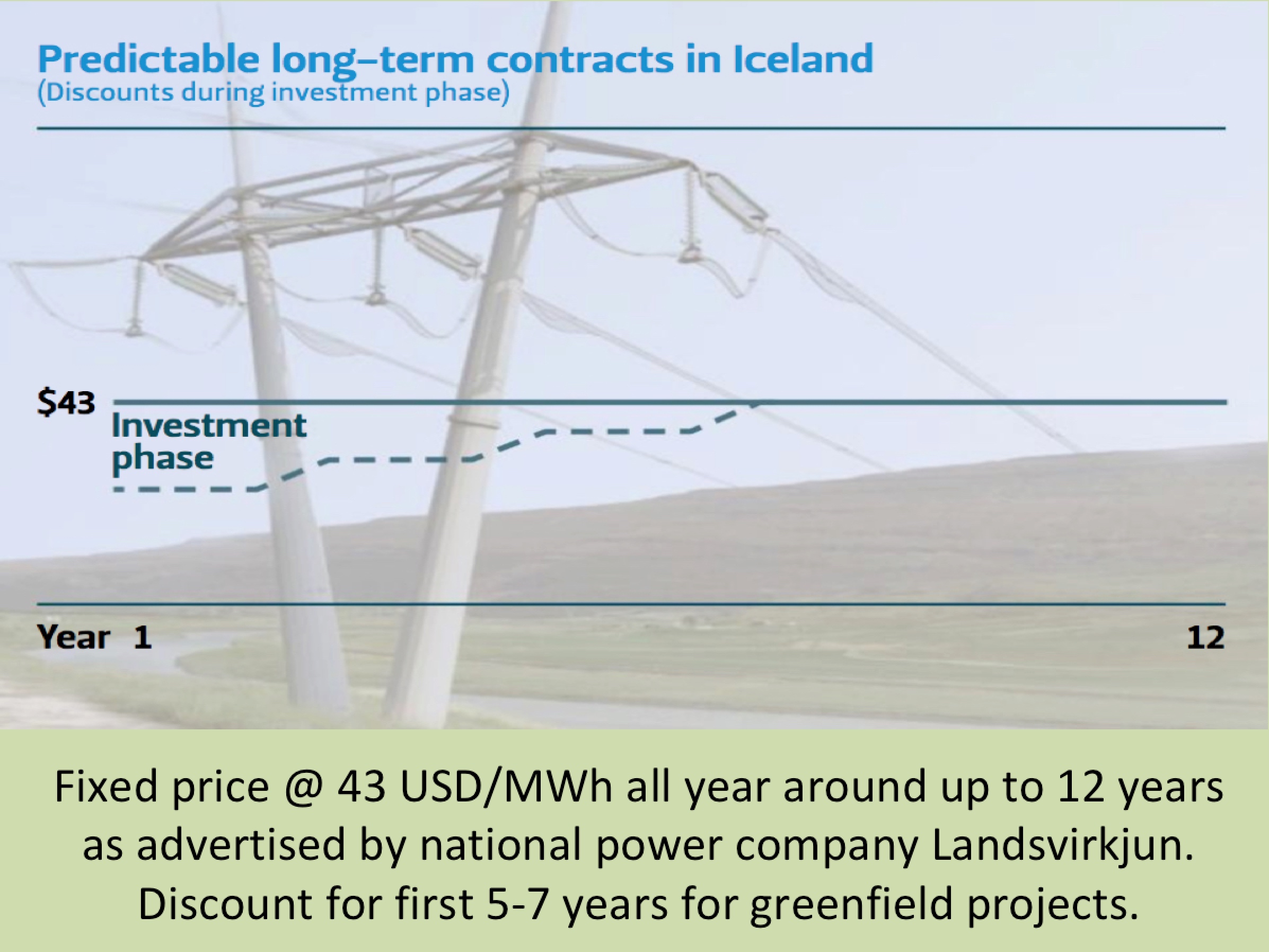
Earlier this month (December 2013), an article in the New York Times told us about the mines of bitcoin that are situated “on the flat lava plain of Reykjanesbær” in Iceland. This article, and several other recent articles in the world’s media about bitcoin, have put a limelight on Iceland’s extremely reliable hydro- and geothermal power. Where companies are offered long time electricity contracts at excellent predictable rates. And the bitcoin mines in Iceland are good example of how Iceland is well situated as a very accessible data storage centre.

Bitcoin-imageBitcoin is of course the decentralized digital currency and payment network, created few years ago by pseudonymous  developer Satoshi Nakamoto. The bitcoin network is based on an open source protocol, which makes use of a public transaction log. A master-list of all bitcoin transactions shows who owns what bitcoins currently and in the past, and is maintained by a decentralized network that verifies and timestamps payments. The operators of this network, known as miners, are rewarded with transaction fees and newly minted bitcoins.

As more Bitcoin are mined, increasingly greater amounts of computing power, and thus electricity, are required. The fastest miners on the market now sell for thousands of dollars, on top of whatever electricity costs you have to pay to keep what amounts to a supercomputer running 24/7. So how do you keep those costs in check? According to Business Insider you of course pool your resources and move to Iceland.

At the data centre facility in Reykjanesbær in Southwest Iceland, where you can find the Bitcoin mines, more than houndred whirring silver computers are the laborers of the virtual mines where Bitcoins are unearthed. To get there, you pass through a fortified gate and enter a featureless yellow building. After checking in with a guard behind bulletproof glass, you face four more security checkpoints, including a so-called man trap that allows passage only after the door behind you has shut.

The custom-built computers, securely locked cabinet and each cooled by blasts of Arctic air shot up from vents in the floor, are running an open-source Bitcoin program. They perform complex algorithms 24 hours a day. If they come up with the right answers before competitors around the world do, they win a block of 25 new Bitcoins from the virtual currency’s decentralized network. The network is programmed to release 21 million coins eventually. A little more than half are already out in the world, but because the system will release Bitcoins at a progressively slower rate, the work of mining could take more than 100 years.

Bitcoin-Iceland-Data-Centre-Emmanuel-Abiodun

“What we have here are money-printing machines,” said Emmanuel Abiodun, 31, founder of the company that built the Iceland installation, shouting above the din of the computers. “We cannot risk that anyone will get to them.”

Mr. Abiodun was a computer programmer at HSBC in London when he decided to invest in specialized computers that would carry out constant Bitcoin mining. He is one of a number of entrepreneurs who have rushed, gold-fever style, into large-scale Bitcoin mining operations in just the last few months. These entrepreneurs or digital miners believe that Bitcoin will turn into a new, cheaper way of sending money around the world, leaving behind its current status as a largely speculative commodity.

The computers that do the work eat up so much energy that electricity costs can be the deciding factor in profitability. There are Bitcoin mining installations in Hong Kong and Washington State, among other places, but Mr. Abiodun chose Iceland, where geothermal and hydroelectric energy are plentiful and cheap. And the arctic air is free and piped in to cool the machines, which often overheat when they are pushed to the outer limits of their computing capacity. And Mr. Abiodun prides himself on using renewable power.

In just a few months, that installation has generated more than $4 million worth of Bitcoins, at the current value, according to the company’s account on the public Bitcoin network. He is also expanding his Icelandic operation, shipping in about 66 machines that have been running for the last few months near their manufacturer in Ukraine. Mr. Abiodun said that by February, he hopes to have about 15 percent of the entire computing power of the Bitcoin network, significantly more than any other operation.

Verne-Global-data-centre-iceland-low-cost-green-powerToday, all of the machines dedicated to mining Bitcoin have a computing power about 4,500 times the capacity of the United States government’s mightiest supercomputer, the IBM Sequoia, according to calculations done by Michael B. Taylor, a professor at the University of California, San Diego. The computing capacity of the Bitcoin network has grown by around 30,000 percent since the beginning of the year.

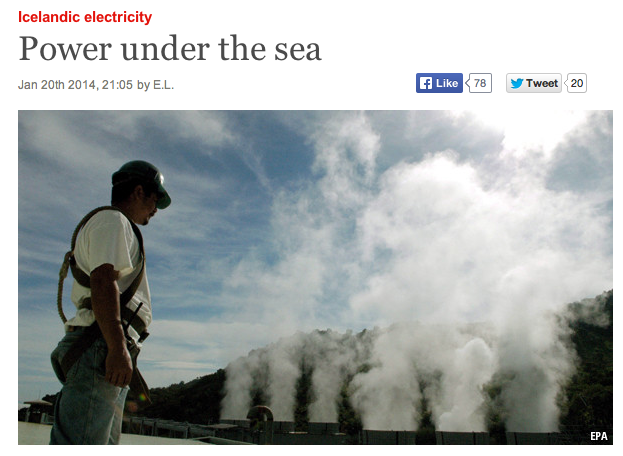
Inside the Iceland data center, which also hosts servers for large companies like BMW and is guarded and maintained by the company Verne Global, strapping Icelandic men in black outfits were at work recently setting up the racks for the machines coming from Ukraine. Gazing over his creation, Mr. Abiodun had a look that was somewhere between pride and anxiety, and spoke about the virtues of this Icelandic facility where the power has not gone down once. This is no surprise, as it is a known fact that the Icelandic electricity system is one of the most reliable in the world.


The Nordic energy infrastructure is gaining interest

Public ownership is widespread in the energy sector of the Nordic countries. This especially applies to the transmission system operators (TSO’s). Strong state ownership is also the norm regarding all the main electricity producing companies and oil exploration companies in the Nordic countries. However, private investment has been increasing in the Nordic energy sector, especially in energy infrastructure projects and renewable energy production.

Nordic-Energy-Perspectives-CoverThe Norwegian electricity company Statkraft and the Norwegian TSO Statnett are both 100% owned by the Norwegian state. Norwegian oil giant Statoil is 70.9% owned by the Norwegian state.

The Swedish electricity company Vattenfall is 100% owned by the Swedish state and so is the Swedish TSO Svenska Kraftnät. Finnish electricity company Fortum is 50.76% owned by the Finnish state. And the Finnish TSO Fingrid is 53.1 % owned by the Finnish state.

Icelandic electricity company Landsvirkjun is 100% owned by the Icelandic state. And the Icelandic state owns  87.24% in the Icelandic TSO Landsnet (through 100% state owned Landsvirkjun and Rarik). In Denmark, the Danish state has owned 76,49% in the energy company Dong Energy. And the Danish TSO Energinet.dk is 100% owned by the Danish state.

Thus, all the major Nordic electricity companies and the TSO’s are controlled by the relevant Nordic state, and also the main Nordic oil exploration companies. Although this ownership structure of the Nordic energy sector will probably not change much in the near future, we may be experiencing increased private investments in certain parts of the Nordic energy sector. This seems especially to apply to infrastructure and renewable energy.

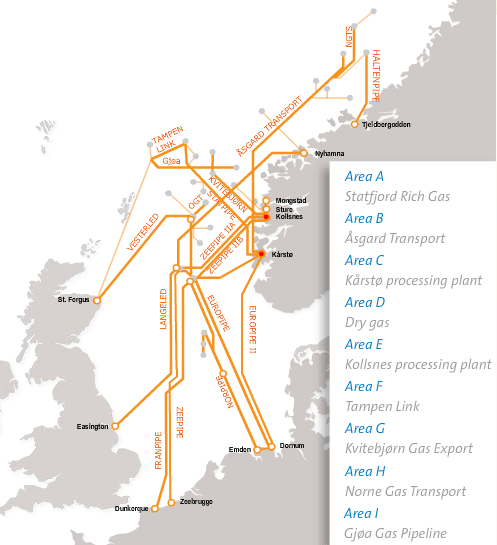
Norway-Gassco-PipesSubstantial private investment is already to be found in Statoil (oil & gas), Fortum (electricity), Fingrid (TSO), and in Dong Energy (oil, gas, heating & electricity). In addition, the Norwegian state has sold large share of the natural gas transportation infrastructure system that links the gas resources of the Norwegian continental shelf with the neighbouring countries. Today, the Norwegian state owns only 45.8% stake in Gassled (through the state owned oil license investing company Petoro), plus its stake through Statoil, which owns 5% in Gassled. The major private investors in Gassled are Abu Dhabi Investment AuthorityCanada Pension Plan Investment Board, and the German insurance and financial services group Allianz (together they own 24.75% in Gassled).

The most recent private investment in the typically state owned Nordic energy sector took place earlier this year (2013). When two funds (managed by Goldman Sachs) and two Danish pension funds (Arbejdsmarkedets Tillægspension; ATP, and Pension Forsikringsaktieselskab; PFA) agreed to buy 26% stake in the Danish Dong Energy. When this 2 billion USD deal will be finalized (probably within a few weeks) it is expected that Goldman Sachs will own approximately 19% in Dong Energy, ATP approximately 5% and PFA approximately 2%. The Danish state will still be owner of more than half of the shares in the company.

It is expected that this deal will allow Dong to strengthen its balance sheet (hit by falling electricity demand due to the economic crisis and competition from coal) and to pursue its ambition to become a leading player in offshore wind energy. Thus, the deal has a strong renewable energy aspect. Dong Energy is already European market leader with almost 2 GW of offshore wind power installed in Denmark, Britain and Germany. And the company wants to more than triple that to 6.5 GW by 2020.

UK-Electric-Subsea-Cables-MapThe investments by the Goldman Sachs funds, Abu Dhabi Investment Authority, the Canadian pension fund, and Allianz are good examples of increased interest in the Nordic energy infrastructure and renewable energy. This may be a positive development, having regard to financing of the IceLink (an electric cable between Iceland and the UK). Financing projects like that could be perfect fit for large pension funds and investment vehicles.

China and Norway team up on Iceland’s continental shelf

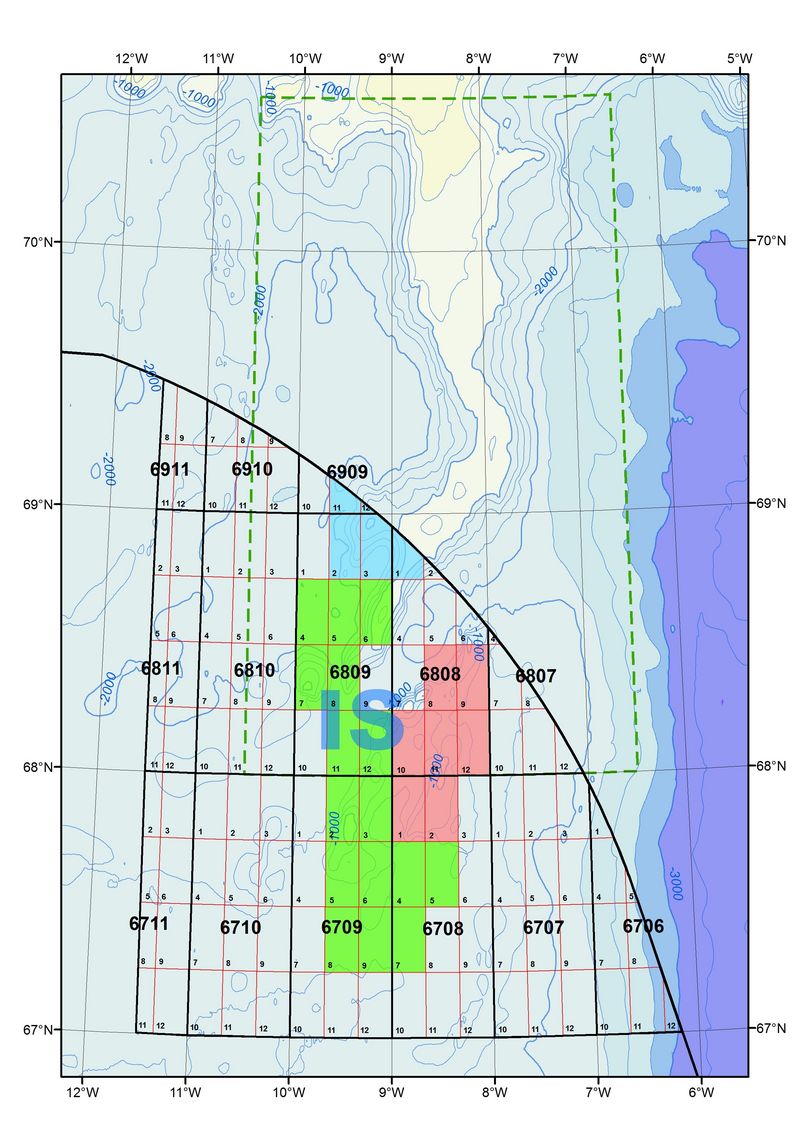
The Icelandic National Energy Authority (NEA) has finished processing the third application received in the second licensing round in the Dreki Area on the Icelandic Continental Shelf. The license will be awarded to Icelandic firm Eykon Energy, Chinese oil company CNOOC, and Norwegian state company Petoro.

Iceland-Oil-Licenses-Second-Round

The NEA expects this third license to be formally issued by the end of this year (2013). Before the licence is awarded, Petoro’s decision to take part in the license needs to be approved by Norway’s parliament.

The granting of this third licence by the NEA will conclude the licensing as a result of the second licensing round on the Icelandic continental shelf, which had a deadline for applications in April 2012. In last January (2013), the NEA granted two licences to Faroe Petroleum Norway, Iceland Petroleum and Petoro, and to Valiant Petroleum (now part of Canadian Ithaca Energy), Icelandic Kolvetni and Petoro. The licences were granted on the basis of the Icelandic Hydrocarbons Act (No. 12/2001) on Prospecting, Exploration and Production of Hydrocarbons.

The area covered by the three licenses are shown on the map (above). The new third upcoming license is marked in green (Eykon Energy, CNOOK and Petoro), the other two already issued licenses are the blue area (Ithaca Energy, Kolvetni and Petoro) and the red area (Faroe Petroleum, Iceland Petroleum and Petoro).

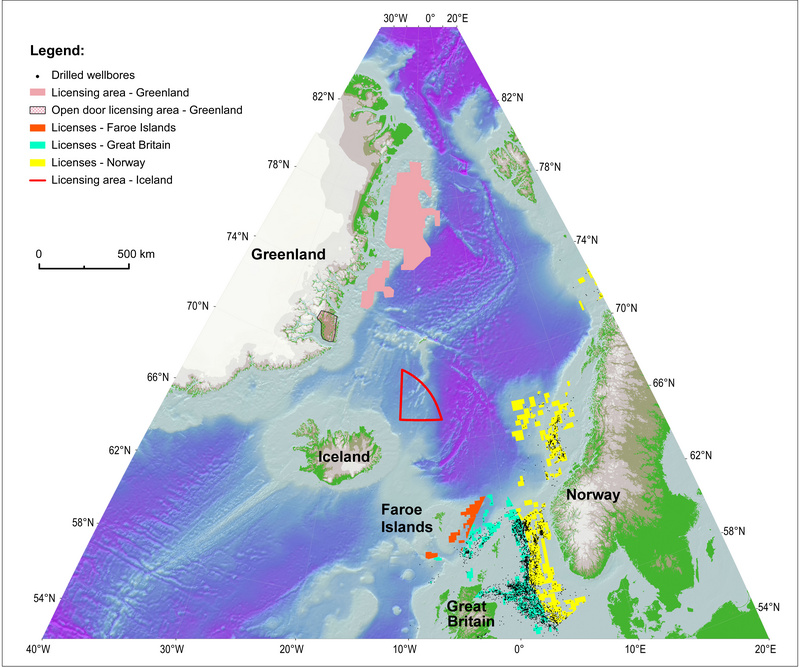
Dreki-Area-and-NE-Atlantic_hydrocarbon-licensing_areasThe Dreki Area, which is part of the Jan Mayen Ridge, is thought to have potential for hydrocarbon accumulations because of its geological similarity to hydrocarbon basins which were its next door neighbours prior to the opening of the northeast Atlantic ocean basin. The basins in question are the Jameson Land Basin onshore East Greenland, where oil is known to have been generated and preserved in sandstone bodies, and basins offshore western Norway, Shetland and in the North Sea, where oil and gas has been discovered in commercial quantities.

UK’s electricity strike prices positive for IceLink

In last October, the Government of the United Kingdom (UK) gave the go-ahead for a new nuclear plant. This will be the first nuclear power station to be be constructed in the UK for numerous decades. The agreement regarding this nuclear plant shows well how competitive Icelandic electricity is, and makes it clear that an electric cable between Iceland and the UK could be very positive for both countries.

The nuclear strike price will be 92.50 GBP/MWh (close to 150 USD/MWh)

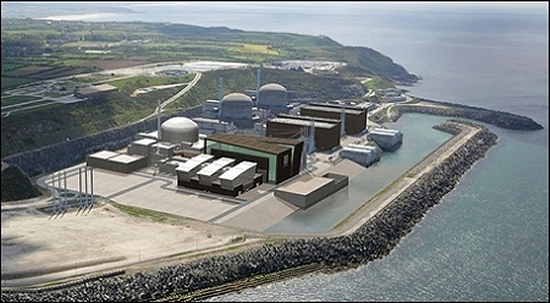
The above mentioned agreement on the nuclear energy involves an enlargement of the Hinkley Point Nuclear Plant in Somerset (Hinkley Point C). The new reactors are scheduled to be completed ten years from now (2023). The plant will be built and operated by the French energy firm EDF (Électricité de France) in cooperation with Chinese investors.

UK-Hinkley-Point-C-new-Nuclear-Plant-diagramEDF has negotiated a guaranteed fixed price – a strike price – for the nuclear electricity at 92.50 GBP/MWh (equivalent to approximately 150 USD/MWh). This strike price is in 2012 prices. The price will be adjusted according to inflation during the construction period and over a subsequent period of 35 years. According to the BBC, the existing nuclear plant at Hinkley produces about 1 per cent of the UK’s total electricity. This is expected to rise to 7 per cent once the construction of Hinkley Point C will be completed in 2023.

Strike Prices effectively remove price volatility risk for electricity generated from low-carbon sources. This ensures greater certainty to generators and minimizes their risk. The goal is to bring forward investment in affordable low-carbon electricity generation, including renewables and new nuclear. In total, renewable energy is expected to make up more than 30 per cent of the UK’s electricity mix in 2020, helping to significantly decarbonize the power sector by 2030. This means that the UK has very ambitious plans in expanding the production of renewable power.

Strike price for renewable power will be even higher

Earlier this year (2013), the British Government introduced the strike price which renewable energy technologies can expect in the coming years (2014-2019). The proposals are expected to become legislation in early 2014. According to a publication by the UK Department of Energy and Climate Change (DECC) the new regime will make the UK market one of the most attractive for developers of most renewables technologies, whilst minimising the costs to consumers. The proposed renewable electricity technologies eligible for the strike prices for example include hydro, geothermal, onshore and offshore wind, tidal and solar projects.

UK-Renewable-Energy-Strike-Price_2014-2019-The strike price for geothermal power will be 120-125 GBP/MWh (approximately 190-200 USD/MWh) and strike price for hydro will be 95 GBP/MWh (approximately 150 USD/MWh). The lowest strike price is for sewage gas; 85 GBP/MWh (close to 135 USD/MWh).

However, what is probably most important and interesting is the strike price for wind power. The British Government expects the overwhelming majority of the new renewable-capacity will be new wind farms, both onshore and offshore. This is understandable, because the utilization of wind power for electricity production is a well known and mature technology. In fact the strike price for wind power can be said to be the base price for new renewable generation. And the strike price introduced for onshore and offshore wind is 95-100 GBP/MWh and 135-155 GBP/MWh, respectively.  This is equivalent to approximately for 150-180 USD/MWh for onshore wind, and 215-250 USD/MWh for offshore wind.

IceLink could be an important part of the solution

In comparison, Iceland could most likely offer the UK electricity from renewable sources at prices similar or even substantially lower than the strike price for new offshore- or even onshore wind capacity in the UK. And actually the Icelandic electricity can be seen as a better product and thus a better option than massive wind power in the UK. Both hydro- and geothermal power offer stable base load electricity, which is very different from the unstable wind power.

Iceland-UK-BICC-meeting-Nov-2013-Landsvrkjun-Hordur-Arnarson-slide-7With an electric cable between Britain and Iceland (IceLink), the Icelandic energy sector could provide the UK with stable and reliable power from the Icelandic hydro- and geothermal power plants, at very competitive prices. Iceland could also import some of the unstable wind power from the UK; especially during the night. This would give an option to “store” even more of the controllable hydro power in the dams in Iceland during the night. When demand in UK rises during the day this power can then be transferred through the cable to the electricity markets in UK.

The UK wants to be able to move away from fossil fuels towards low-carbon power. What is even more important for the UK is to gain more energy independence and be able to rely on energy from politically stable neighbours (rather than for example importing more LNG from Algeria). Both the nuclear plant at Hinkley Point and plans for more renewable energy in the UK’s energy mix, are important in this context. In addition, a fifth of Britains’ aging power plants are due to close over the coming decade (with further closures in the 2020’s). Thus, the UK needs not only huge investment in energy production and -infrastructure, but also need to secure it self access to numerous reliable energy sources. Therefore the IceLink is a project that undoubtedly will interest the British energy sector and investors.

Icelandic Energy Summit, London, November 1st 2013

The British Icelandic Chamber of Commerce is introducing the Icelandic Energy Summit, hosted by Bloomberg, in London on Friday, 1 November 2013.

Iceland-Europe-mapAccording to the website of the British Icelandic Chamber of Commerce the event “will provide participants an insight into Iceland´s renewable energy resources, the birth and growth of the data storage industry in the country, the search for offshore oil – and what all this means for the country and its neighbours. The BICC is proud to have assembled some of the most dynamic voices in the developing story of Iceland and its energy potential.” The event, which is free, is said to be of interest “to finance professionals who conduct business with Iceland, or would like to, renewable energy specialists, academics and all those who take an interest in the future development of the Arctic. Feel free to pass on this invitation to colleagues, but  we expect this event to be well attended.”

The Agenda is as following:

10:30 Registration & Coffee
11:00 Welcome
William Symington, BICC
Keynote speech
Olafur Ragnar Grimsson, President of Iceland
11:45 UK-Iceland Interconnector
Charles Hendry, MP
Hörður Arnason, CEO Landsvirkjun
Paul Johnson, National Grid
Mike Lawn, Bloomberg New Energy Finance
13:00 Buffet Lunch
13:45 Data Centres in Iceland
Verne Global – Isaac Kato, CFO
Risk Management Solutions Inc, Robert Muir-Woood, Chief Research Officer
14:45 Geothermal
Sigurður St Arnalds, Senior Energy Advisor, Mannvit
Mark Taylor, Bloomberg New Energy Finance
15:45 Icelandic Oil exploration and the development of Arctic Resources
Michael Evans, Chief Operating Officer, Iceland Petroleum
Heiðar Guðjónsson, author “The Push for the Arctic”
16:30 Closing & Drinks

Here is a link to the registration.

Premature story in the Guardian

Yesterday, the Guardian published a story about Iceland seeking UK funding for subsea cable project. This is a somewhat premature statement by the Guardian. It is certainly true that the possibility of an electric cable between Iceland and the UK is being considered. However, no formal decision on such a project has been taken yet.

UK-Electric-Subsea-Cables-Map

The Guardian correctly states that such a project could possibly deliver 5 TWh’s of green electrity a year to Britain. And the price of the electricity could be very competitive (lower than from British offshore wind farms). It is also correct that all the electricity from Iceland would be generated by harnessing renewable natural sources (especially hydropower, but also geothermal and wind).

The project would most likely strongly appeal to the UK. The Guardian correctly points out that the highly reliable potential energy in Iceland’s hydro dams can be seen as neatly dovetailing with Britain’s expanding, but unpredictable, wind power generation:

“As wind has become an increasing component of UK electricity generation, those tasked with matching UK supply with demand are increasingly facing a difficulty when usage spikes at times of when wind speeds drop. Few sources of generation, other than hydropower, can be brought on-stream at short notice to cover for lulls in wind.”

According to the Guardian, Iceland’s president Mr. Ólafur Ragnar Grímsson is expected this week to call on the British government to provide financial support for the construction of the subsea electricity cable – which will be the longest in the world – linking the electricity grid’s of Iceland and the UK.  Actually, it is more likely that the president will urge the British government to further cooperate with Iceland in necessary research and development that will be necessary if the cable is to be realized.

HVDC-Cable-Iceland-Europe-map-slideAs mentioned in the Guardian’s article, the governments of Iceland and the UK have already stared exploring proposals for a cable, after a ministerial meeting in May last year (2012). It would be a sensible step to strengthen the cooperation between the two countries in preparing to link the countries with an electric cable. Hopefully, the necessary cost analysis and research on for example the sea-bed can take place soon. When this will be finished, the financing of the cable may become a relevant issue.

NB: The Guardian says that the length of the cable would be 10,000 km. This is of course wrong; an electric cable between Iceland and the UK would be close to 1,200 km (somewhere between 1,000 and 1,500 km). The Guardian also says that the electricity industry in Iceland produces 12 GWh of electricity annually. The correct number is of course much higher or close to 17.2 TWh (17,200 GWh). Hopefully, the Guardian will correct their numbers. More information about the Icelandic power sector can be found here.