Skip to content

Posts from the ‘Geothermal Power’ Category

Iceland and Ethiopia in geothermal cooperation

The Icelandic International Development Agency (ICEIDA) and the Ethiopian Government have signed a Partnership Agreement for geothermal surface exploration and capacity building for geothermal development in Ethiopia.

Iceida-logoThe Ethiopian government is currently implementing a strategy to develop its renewable energy resources, including geothermal side by side with hydro, in order to increase energy production. The cooperation between iceland and Ethiopia is the second project initiated under an agreement on geothermal energy between Iceland and the World Bank (the first agreement of this kind is already under way in Rwanda). The immediate objective of the project is to identify potential sites for exploration drilling in the target areas and develop capacity in Ethiopia to advance geothermal energy production in the country.

The overall objective is to assist the Government to increase renewable energy production through low emission geothermal energy development for social and economic benefit. ICEIDA will assist the implementing agencies with finalizing geothermal surface explorations and associated geophysical and geochemical studies to identify locations for drilling of exploration and production wells in target sites.
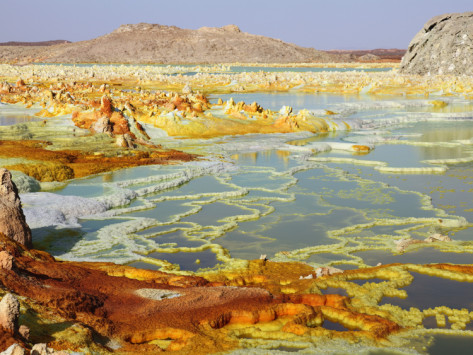
Ethiopea-Dallol-GeothermalEthiopia is considered to have geothermal potential up to 5,000 MW. The Ethiopian Government has now decided to prioritize geothermal development as a key area in energy development. The geothermal surface exploration activities in Ethiopia will focus on the areas of Tendaho Alalobeda and Aluto Langano, both considered to have great potential for energy production. A capacity building project for geothermal exploration will also be initiated in the area of Gedemsa. The implementing agencies in Ethiopia are the Geological Survey of Ethiopia and the Ethiopian Electric Power Corporation.

Canadian Methanex invests in Iceland

The Vancouver-based Methanex has announced an initial USD 5 million investment in Icelandic Carbon Recycling International (CRI), a privately held company with headquarters in Reykjavik, Iceland. Methanex becomes one of the key shareholders of CRI, with Board representation.

Methanex-CRI-investment-2013In Iceland, CRI operates the world’s first renewable methanol plant, which utilizes CRI’s emissions-to- liquids (ETL) technology, utilizing renewable energy to convert carbon dioxide emissions to methanol. CRI markets this product in Europe as renewable methanol, under the registered brand name Vulcanol. The Vulcanol can be blended with gasoline and can also be used for production of biodiesel. Vulcanol is certified by the International Sustainability and Carbon Certification system (ISCC) as an ultra-low carbon advanced renewable transport fuel with no biogenic footprint.

According to press announcements, Methanex and CRI intend to collaborate on large scale projects based on CRI’s ETL technology by leveraging Methanex’s operational experience and global reach and CRI’s unique expertise in the production of ultra-low carbon renewable methanol. The companies say they are targeting to expand the use of methanol blended fuels in Europe.

Methanex-logoMethanex is the world’s largest supplier of methanol to major international markets. It is a publicly traded company; Methanex shares are listed for trading on the Toronto Stock Exchange in Canada under the trading symbol “MX” and on the Nasdaq Global Market in the USA under the trading symbol “MEOH“.

Mr. John Floren, President and CEO of Methanex, says that the fastest growing markets for methanol are in the energy sector and that Methanex believes renewable methanol will play an important role in future applications. Mr. Floren has also pointed out that the team at CRI has demonstrated the ability to develop this technology, operate a production plant and successfully market renewable methanol, which further reinforces the value of this investment by Methanex.

The investment of Methanex in CRI shows that the Icelandic energy- and technology sectors are becoming increasingly interesting for foreign investors. Currently, several other foreign companies are considering investments in for example oil exploration on the Icelandic continental shelf and in silicon production in Northeast Iceland.

Green methanol produced in Iceland

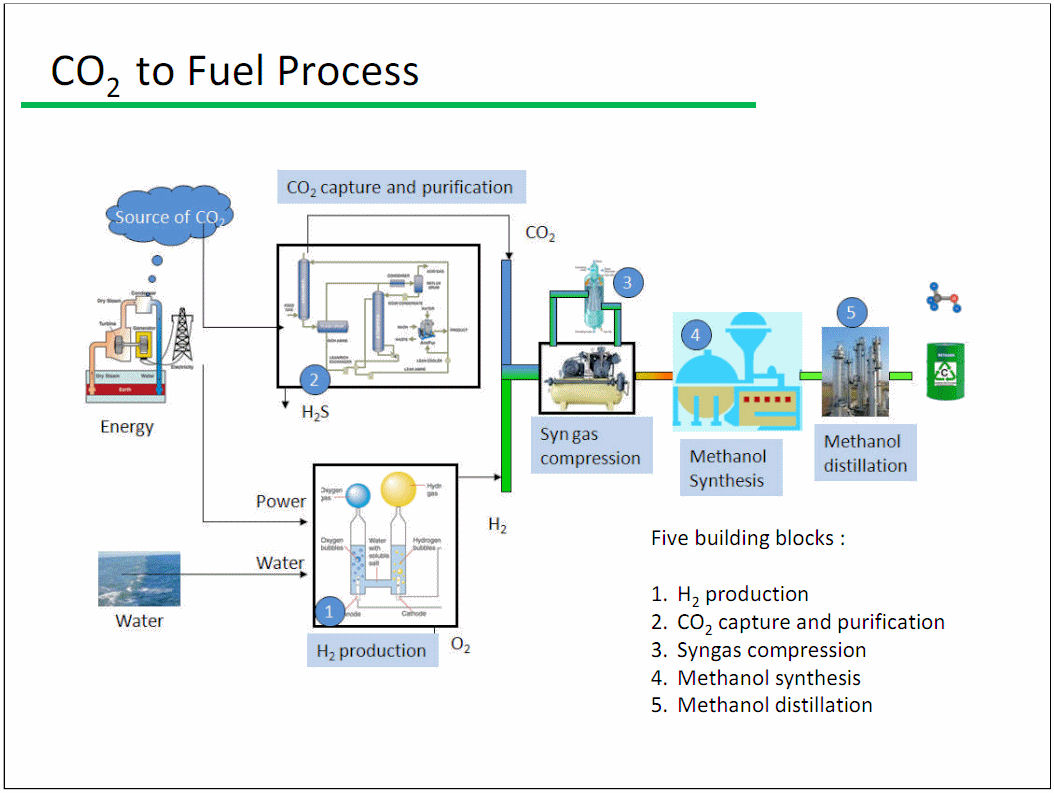
In Iceland renewable geothermal energy is utilized to produce Green Renewable Methanol; a synthetic liquid fuel which can be used as a fuel blend for normal gasoline combustion engines. The company behind this innovation is Carbon Recycling International (CRI).

Methanol-CRI-process-explainedMethanol is one type of alcohol fuel that can be used as alternative fuel in gasoline combustion engines, either directly or in combination with gasoline. If it is used as low blend in gasoline, very little or even no modifications of the engine are needed.

Methanol is produced from hydrogen and carbon monoxide. Normally the feedstock is petroleum based, such as natural gas or coal. However, it is possible to obtain the hydrogen portion of the synthesis gas via electrolysis, as well as the carbon monoxide by collecting it from a a biomass, factory emissions or a geothermal borehole.

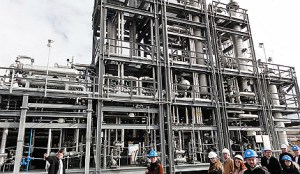
The Green Renewable Methanol produced by CRI is made from water and carbon dioxide from a geothermal power plant. The electricity used in the process comes from the same geothermal power plant (the Svartsengi Geothermal Plant in Southwest Iceland). One might wonder why power from geothermal power plants in Iceland is categorized as renewable energy, since they emit carbon dioxide. The fact is that the amount is tiny compared to fossil fuel tendencies – yet enough for CRI to utilize it for methanol production. And CRI refers to its product as Green Renewable Methanol because it captures carbon dioxide that would otherwise escape to the atmosphere.

Methanol-CRI-George Olah-plant-Svartsengi

The methanol from CRI’s plant is blended with regular gasoline to meet the fuel standards of the European Union (EU). According to the European regulations, the maximum volume of methanol in the gasoline can be three percent). In the world about 20 million tons (25 billion liters) of methanol are consumed as fuel annually. However, only a fraction of it is from renewable sources.

It is expected that the market for renewable automobile fuels in Europe will more than double before 2020. Large share of that will be in the form biofuels from food sources. The market for renewable transport fuels which are of non-biological origin or from waste is expected to show the fastest growth in coming years. CRI may be in a unique position having brought a renewable fuel to the market from non-biological sources (as opposed to oil seeds, corn or sugar cane). The Green Renewable Methanol proves that carbon dioxide can provide alternative renewable fuel and it is not necessary to use scarce agricultural resources or destroy forests and wetlands to grow fuel crops. And, unlike hydrogen, methanol can be transported and distributed via existing gasoline infrastructure.

argos-energiesEarlier this year (2013), CRI announced that the first shipment of renewable transport fuel from its production plant in Iceland had been shipped to Dutch oil company Argos in Rotterdam, signaling the entrance of transport fuel from geothermal sources to the European market. Argos is the largest independent player in the downstream oil market in Western Europe and distributes over 17.5 billion liters of fuels each year. The company has a leading position in the Netherlands and also operates a distribution network in Belgium, France, Germany and Switzerland. Argos has been ambitious in providing renewable fuel and it will be interesting to see how the Green Renewable Methanol from Iceland will fit into their fuel mix.

Experiencing Earth’s underground steam

Power plants are becoming a popular attraction for foreign visitors in Iceland. According to Samorka, which is a federation of the Icelandic electricity industry, district heatings, waterworks and sewage utilities in Iceland, tens of thousands of tourists visit the largest power plants every summer. This both applies to hydro- and geothermal power plants.

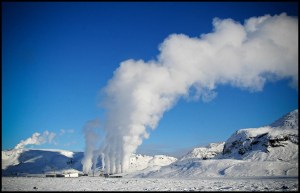
Hellisheidi-Geothermal-Plant-Steam-Winter

The power plants are therefore among the most popular tourist attractions in Iceland. Some of the plants are open all year around.

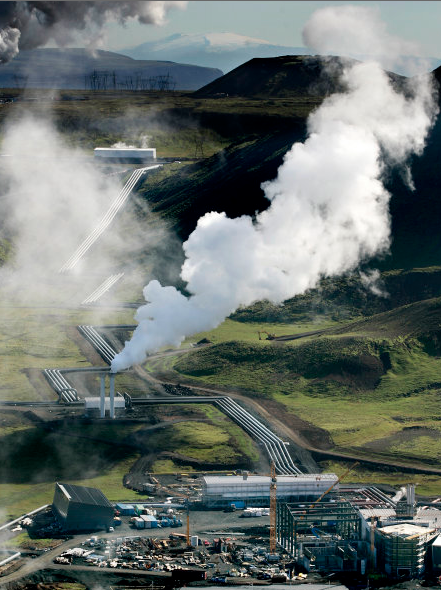
The most popular power plant to visit is Hellisheiðarvirkjun Geothermal Power Plant. Around 50,000 guests are forecast to visit the Geothermal Energy Exhibition at Hellisheiðarvirjun this year. Around 95 percent of guests are foreign, the largest number from the United Kingdom. The exhibition includes multimedia presentations about the harnessing of geothermal energy in Iceland. You can read more about Iceland’s geothermal diversity here.

The GEOthermal Research Group

The cooperative project Deep Roots of Geothermal Systems (DRG) aims at understanding the relationship of water and magma in the roots of volcanoes and how heat is transferred into geothermal systems to maintain their energy. Furthermore, the project focuses on the design of wells and well heads for high temperatures, as well as methods for utilizing superheated steam from greater depths.

PrintThe project is managed within a cluster cooperation called GEORG. This Icelandic entity is financially supported by the National Energy Authority (Orkustofnun), Icelandic power companies Landsvirkjun, Orkuveita Reykjavíkur (Reykjavik Energy), and HS Orka, and the Iceland Deep Drilling Project (IDDP). The IDDP has several partners from Europe and USA, making both IDDP and GEPRG leading international players in geothermal research.

By enhancing research and development of geothermal resources in a sustainable way, geothermal energy will constitute an important part of reducing the world dependence on carbon-based energy sources.  Hence, the foundation of GEORG can be vital. It is based on the principles of creating a critical mass of joint resources and efforts to break through existing scientific and technical barriers to innovation in the field. This may lead to increasing the number of qualified experts in geothermal research, engineering, design and technical exploitation of the resource.

OR-Hellisheidi-Power-Plant-SteamThe research within GEORG is performed by three groups made up of representatives from universities, research institutes, engineering companies and energy companies. The latest technology is be applied in surveying, resistance measurements and seismic measurements, petrology and geochemistry. In addition, new simulation models will be developed. These models will be used to simulate heat transfer and operation of geothermal boreholes for high temperature steam. Training young scientists to work in this field will be an area of heavy focus for this project.

The project will be ongoing over the next three years and the partners have pledged direct financial support amounting close to 100 million ISK. In addition, they will provide support through other similar projects the partners are working on. More information about geothermal energy in Iceland can be found here.

Landsvirkjun promotes university research and education

The Icelandic power company LandsvirkjunReykjavík University (RU), and the University of Iceland have joined forces to support and encourage the development of expertise within the field of renewable energy. The cooperation will strive to create a source of shared value for Landsvirkjun, the universities and Icelandic society by supporting those disciplines where more education and research are vital.

Landsvirkjun-university-cooperation-2013In total, Landsvirkjun has pledged 80 million ISK to the universities over a five year period, to promote education and research in geochemistry, electric power engineering and other academic disciplines within the universities. The cooperation agreement with the University of Iceland has the main objective of promoting and supporting teaching and research in the disciplines of geochemistry, geology, mechanical and industrial engineering. An emphasis will be placed on developing expertise in the field of renewable energy sources. Landsvirkjun and Reykjavík University will also cooperate in promoting research and university education in the field of renewable energy.

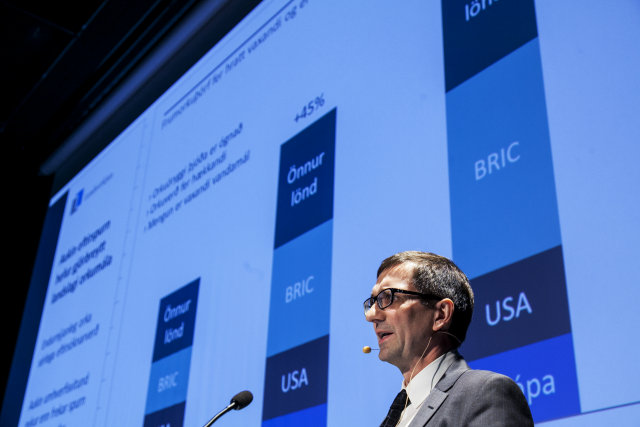
Hordur-Arnarson-Landsvirkjun-CEO-presentingWhen signing the Agreement Mr. Hörður Arnarson, CEO of Landsvirkjun, stated that in building a dynamic cooperation between Landsvirkjun and the universities will create shared value for the economy and for society, by sharing expertise and supporting innovation and development in renewable energy sources. The University of Iceland has a long established history in building upon its expertise in these fields and the contract is an extension of decades of cooperation between the university and Landsvirkjun in the disciplines of engineering and the natural sciences. In recent years the Reykjavik University has also been actively developing dynamic courses and expertise in technical subjects, including the utilisation and distribution of renewable energy sources. The financial support from Landsvirkjun will substantially strengthen education, research and the development of projects related to renewable energy within the universities, and increase opportunities for expertise and creativity.

Green high performance computing cloud node opens in Iceland

Managed hosting provider Datapipe has launched a green cloud node in Iceland. The company has made its high performance computing (HPC) cloud platform available out of Verne Global’s facility in Southwestern Iceland, which uses 100 percent renewable energy.

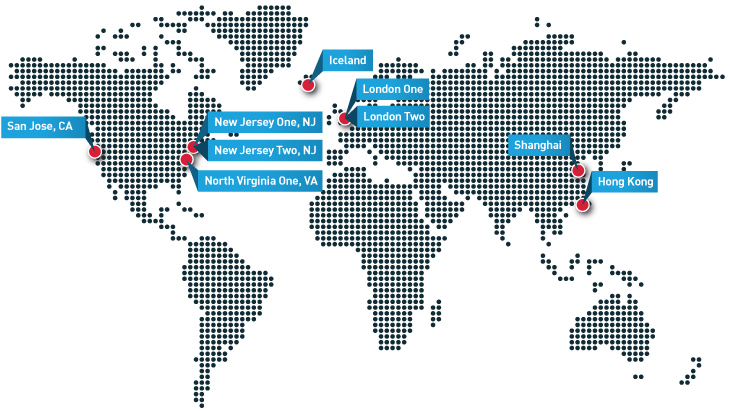
Datapipe-Data-Center-World-MapDatapipe is an existing tenant, but its expansion is a reflection of increased data center activity in Iceland. Low cost, renewable energy, improved connectivity, and a location between North America and Europe add up to an enticing proposition. Datapipe clients have immediate access to the new Iceland node. It’s available through the same portal as its other locations in Silicon Valley, the New York Metro area, Ashburn Virginia, London, Hong Kong, and Shanghai. “Iceland is a great in-between point with our U.S. and UK infrastructure, it’s great for disaster recovery., says Ed  Laczynski, Datapipe’s VP of Cloud Strategy.

The Statosphere HPC cloud platform is a high performance solution targeted at Big Data wokloads. Typical verticals that the company attracts are manufacturing, financial service, and research and development. The platform is API driven and utilizes all SSD storage with guaranteed IOPS (input/output per second) . Stratosphere can be configured with public or private resources, with up to 32 physical core equivalents per instance, a half terabyte (TB) of RAM, and tens of thousands of IOPS per volume, all residing on a 10GE network. It’s known as the most widely deployed Apache CloudStack environment on the market.

datapipe-logoDatapipe has been committed to using as much renewable energy as it can, and is finding that customers are increasingly asking for it as well. “As we grow new solutions, we’re seeing more and more green qualifications as a requirement to do business,” says Laczynski. “The kind of customers we’re talking about really do care about this; these are multinational corporations looking for sustainable solutions.” Recognized as a Green Power Partner by the U.S. Environmental Protection Agency (EPA) since 2010, Datapipe achieved EPA Leadership Club status in 2011 and is currently ranked #9 on the EPA Green Power Partner Top Tech & Telecom list.

Iceland-waterfall-1Verne Global offers a 100 percent renewably powered data center solution, which features access to geothermal and hydroelectric power sources, free-cooling provided by Iceland’s ambient air temperature and lower power prices that can be locked in over a 20 year period. “Power availability and costs are becoming two of the leading constraints for HPC clouds and clusters,” says Jeff Monroe, CEO of Verne Global. “Together, Verne Global and Datapipe are meeting these challenges with the first truly green HPC Cloud for the European and North American markets.”

From colocation facilities to major internet giants

In the last few years, Iceland has been seeing new investments in the form of colocation facilities.

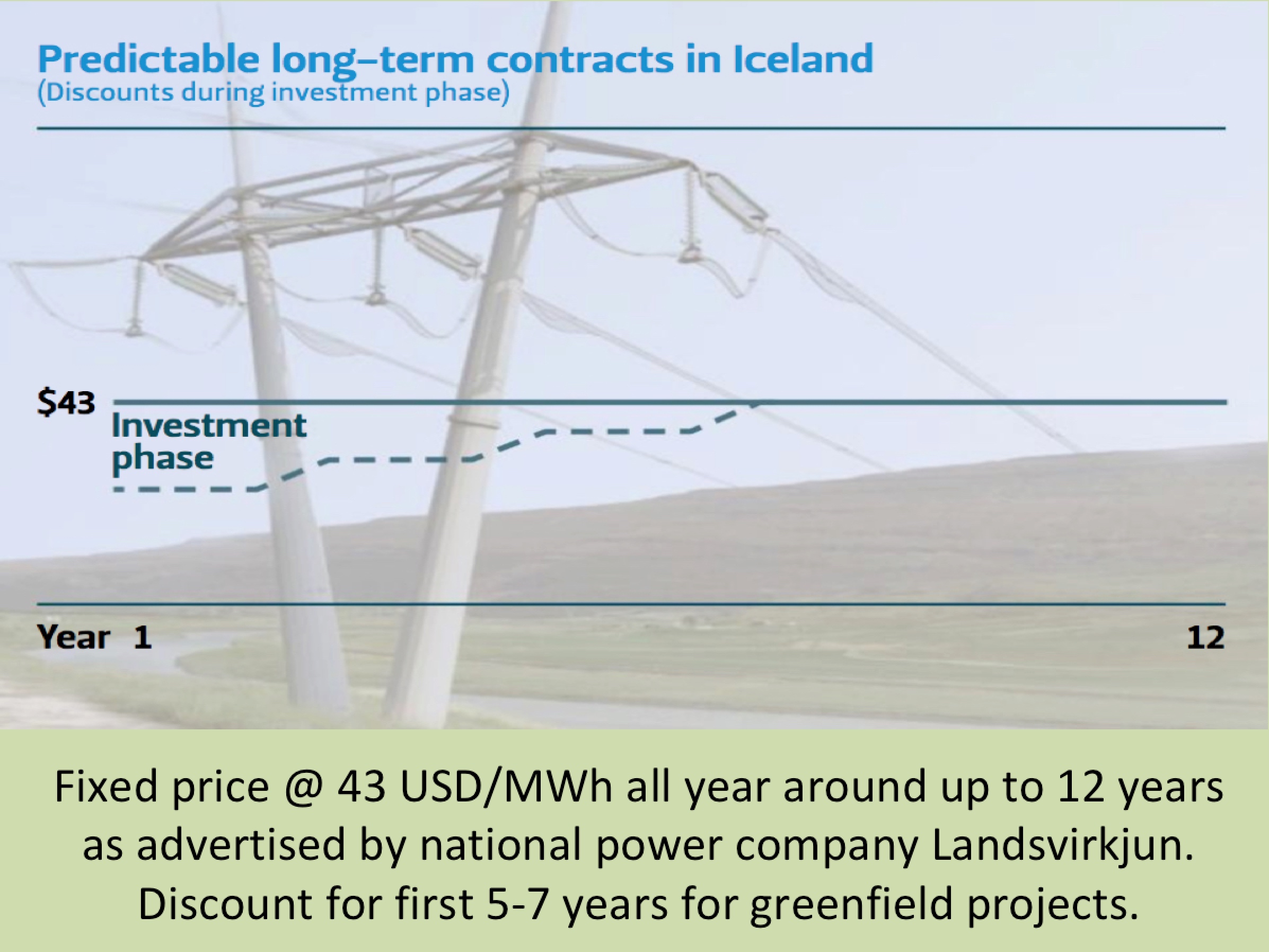
Iceland-green-renewable-askja-energyLong term contracts for fixed price low cost power, free cooling promoting a year-round power usage effectiveness, well-educated workforce, and several high-speed telecom subsea cables make Iceland a perfect location for data centers with a minimum of cost and complexity.

Verne Global opened its data centre in 2012 and has taken on BMW on as a major and expanding client. The Advania-owned highly effective Thor Data Centre hosts search engine Opera’s environment and the supercomputer used by the National High Performance Computing organizations of Norway, Denmark, Sweden and Iceland.

Gullfoss-eveningIceland is likely to attract increasingly more colocation facilities, offering equipment space and bandwidth for rental to retail customers. With plenty of renewable energy to spare, Iceland may soon also lure a major internet-giant to host its data in Iceland. Companies like Yahoo!, Facebook and Google have all been looking towards Iceland in this respect.

In next post we will be introducing an independent analysis of Iceland as a global data centre hub. This new study was undertaken by BroadGroup, which made a comparison using a wide variety of criteria with today’s leading data centre locations from around the world. The results were strongly in Iceland’s favor.

China and Iceland strengthen geothermal cooperation

Iceland has signed a free trade agreement with China, becoming the first European country to do so.

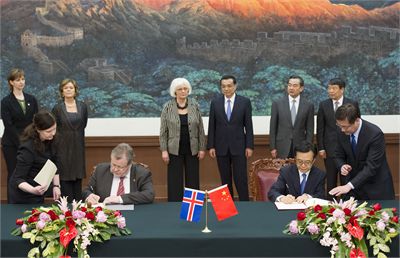
Iceland-China-Free-Trade-Agreement-april-2013-2Iceland’s Foreign Minister Össur Skarphéðinsson signed the deal with China’s Commerce Minister Gao Hucheng in Beijing couple of days ago, bringing to a close six years of talks. The free trade agreement will lower tariffs on a range of goods and is expected to boost seafood and other exports from Iceland to the world’s second-largest economy.

During talks following a formal welcoming ceremony at the Great Hall of the People in the center of Beijing, Chinese Premier Li Keqiang said the free trade agreement was “a major event in China-Iceland relations”. He added that the agreement will “increase the soundness of business transactions and presumably the interest among Chinese and Icelandic companies that are cooperating in geothermal power”.

China is already benefiting from Iceland’s expertise after 80 Chinese students graduated from the United Nations University Geothermal Program in Reykjavik. The signature of the free trade agreement between China and Iceland comes only a year after the countries signed a special deal  to increase co-operation in the development of geothermal energy. 

When in Iceland in April 2012, China’s then-Premier Wen Jiabao concluded the agreement during the first stage of a four-nation European tour.

China-Geothermal-AreaIceland is on the forefront in geothermal energy utilization and is going to work with China, the world’s largest energy consumer, to develop geothermal resources. In an effort to meet an exponentially growing energy demand, as well as reduce its greenhouse gas emissions, China has become a leading investor in alternative energy technologies. China Petroleum & Chemical Corporation (Sinopec), the second largest oil and gas producer in the country, plans to make geothermal energy one of its main businesses.

The geothermal strategic partnership with China offers Iceland serious economic potential. Iceland is already working with India, countries in East Africa, Abu Dhabi, and several western countries to develop geothermal power projects. Geothermal energy resources are widely discovered in China, making the country riche in geothermal energy. The country is still in its infancy of developing and utilizing these natural resources, thus offering a huge market potential.

What explains the high energy intensity in Iceland?

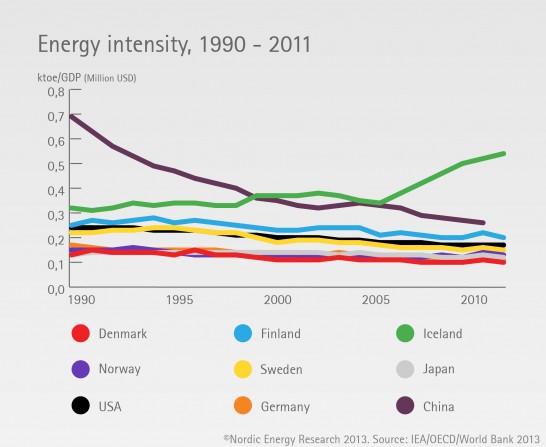
The worlds major economies have gradually been reducing their energy intensities (using less energy to produce one unit of GDP). This, for example, applies to all the Scandinavian countries. However, this does not apply to Iceland; Iceland has been increasing its energy intensity.

Nordic-Energy-intensity-1990-2011-with-China-Germany-Japan-USA

Reducing energy intensity means increasing the energy efficiency in the economy. China is an example of a country where the trend towards more energy efficiency has been evident. As the Chinese economy has increased productivity and moved towards higher value products, GDP has increased much faster than energy consumption.

Industry is often classified into three sectors;  primary, secondary, and services (tertiary sector). The primary sector involves the retrieval and production of raw materials, while the secondary sector involves the transformation of raw or intermediate materials into goods. The services- or tertiary sector involves the supplying of services to consumers and businesses.

Economies previously dominated by primary and secondary sectors, such as in Denmark, have steadily decreased their energy intensities since 1990. The economies in Sweden and Finland also follow this trend – although their energy intensity increased in the early 1990s due to an economic recession.

The reason for the present high energy intensity in Iceland, is the recent expansion of energy-intensive industries in the country. It is especially the aluminum industry that has expanded at a much faster rate than the general economy in Iceland has grown.

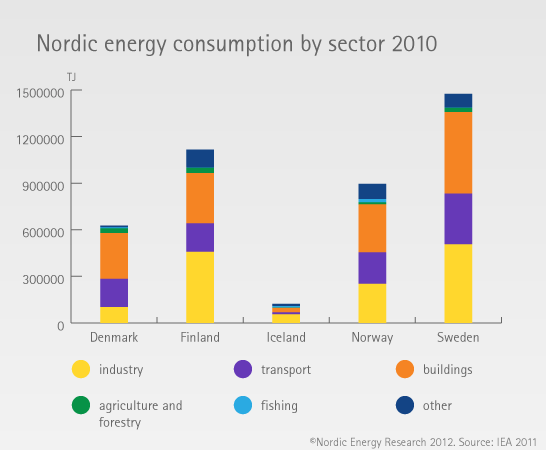
On average, industry accounts for about a third of the energy use in the Nordic countries. This is considerably higher than in most other developing countries.

Nordic-Energy-Consumption-by-Sector-20101

Both Iceland and Norway have significant metal manufacturing. This is due to historically cheap and plentiful hydroelectricity (and geothermal energy in Iceland). Because of the electricity consumption by the aluminium industry and other energy-intensive industries, Iceland and Norway actually have the world’s highest electricity consumption (and production) per capita!