Skip to content

Posts by Askja Energy

Icelandic electricity generation and transmission

The Icelandic electricity generation capacity and production has more than doubled in a decade. Today, the total capacity is 2,669 MW. The annual generation 2011 was 17,210 GWh.

ELECTRICITY GENERATION BY SOURCE:

Hydro Power              1,884 MW            12,507 GWh
Geothermal Power       665 MW              4,701 GWh
Fossil Fuels                   120 MW                      2 GWh
Total                            2,669 MW            17,210 GWh
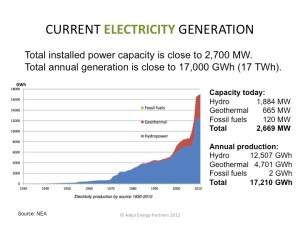
Slide08Close to 100% of the electricity generation in Iceland is produced by harnessing renewable sources. Hydropower is the largest source with close to 73% of the annual generation. Geothermal accounts for about 27% of the generation. In addition, there are a few fossil fuel generating plants.

Several new power stations are under planning (both hydropower and geothermal power). The most recent one (now being constructed in South Iceland) will become operational in late 2013 .
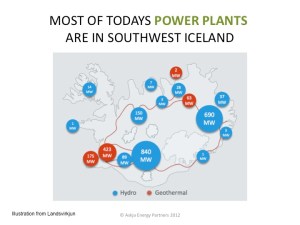
Slide10The power stations in Iceland are located all around the country. The geothermal power plants (marked by red on the illustration at left) are of course to be found where it is easiest to harness the geothermal heat for electricity generation. All the main hydropower stations utilize glacial water, flowing from Iceland’s glaciers.

The largest hydropower system is the Þjórsá and Tungnaá river system in Southern Iceland (marked by a large blue dot on the map at left) . However, Iceland’s largest power station is in the Northwestern part of the country. This is the 690 MW Fljótsdalur / Kárahnjúkar hydropower plant, that started operating in 2007 (marked on the map by the large blue dot north of Vatnajökull Glacier).
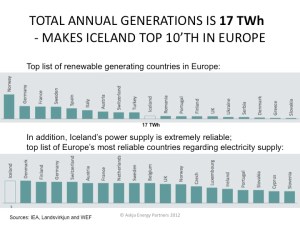
Slide09The total annual Icelandic electricity generation of 17,210 GWh (17 TWh) makes Iceland one of Europe’s largest producers of renewable power.

Norway is in a strong first place with its massive hydropower capacity, generating approximately 120 TWh annually. However, the electricity price in Iceland is much lower than in Norway or other European countries. Iceland  has no electricity connections with other countries. Thus, the generating firms in Iceland do not have access to the large electricity markets in Northwestern Europe, where electricity prices tend to be much higher than in Iceland.
Slide11

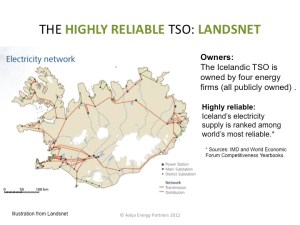
Despite Iceland’s isolated electricity market and sometimes severe weather conditions, the electricity supply in Iceland is renown for its reliability (see for example IMD’s and WEF’s World Competitiveness reports). This high reliability is the result of Iceland’s large reservoirs and the solid transmission system, which is operated by the Icelandic Transmission System Operator or TSO (Landsnet). The TSO connects all the large power stations to the Icelandic electrical grid, which runs around the country (all the nation lives in the lowlands, with the majority located in Southwestern Iceland).
New low-cost renewable capacity

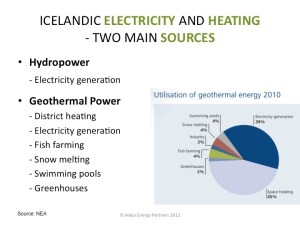
The main sources of Iceland’s primary energy are hydropower and geothermal power.

Iceland-Electricity-and-Heating-Sources-Hydro-Geothermal86% OF THE TOTAL ENERGY IS GREEN

Presently, the Icelandic hydro- and geothermal resources supply close to 100% of Iceland’s consumption of electricity and approximately 86% of Iceland’s total consumption of primary energy (of that total, 20% comes from hydropower- and 66% from geothermal sources). This is the world’s highest share of renewable energy in any national total energy budget.

Hydropower is the main source of the country’s electricity production, accounting for approximately three-quarters of all electricity generated and consumed. The remaining quarter is generated in geothermal power stations.

GEOTHERMAL DIVERSITY

Although hydropower is the main source for Iceland’s electricity production, geothermal heat is the main energy source in Iceland. As mentioned above, geothermal energy makes up around 66% of all primary energy use in the country.

The principal use of geothermal energy is space heating. Close to 90% of all energy used for house heating comes from geothermal resources, thanks to the country’s geophysical conditions and extensive district heating system. Geothermal energy also plays an important role in fulfilling an increasing electricity demand. Other sectors utilizing geothermal energy directly include swimming pools, snow and ice management, greenhouses, fish farming, and industrial uses.

STRONG GROWTH AHEAD

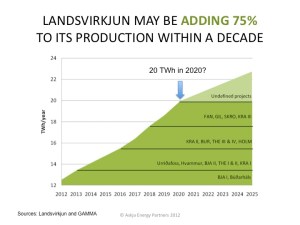
It is expected that demand for Icelandic renewable electricity will grow quite fast over the next few years. Iceland’s main power company, Landsvirkjun, has introduced plans for increasing its electricity production up to 75% within a decade.

Iceland-New-Green-Energy-Capacity

The fact that Iceland still has numerous very competitive unharnessed hydro- and geothermal options, makes the country an interesting location for all kinds of energy intensive industries and services. This may for example apply to data centers, aluminum foils production, several silicon production facilities etc.

The abundant natural hydro- and high temperature geothermal resources make the Icelandic power industry able to offer electricity at substantially lower prices than for example can be found in any other European country. Even the present low spot-price for electricity in the USA (due to extremely low price of natural gas) are no threat to the Icelandic electricity industry.

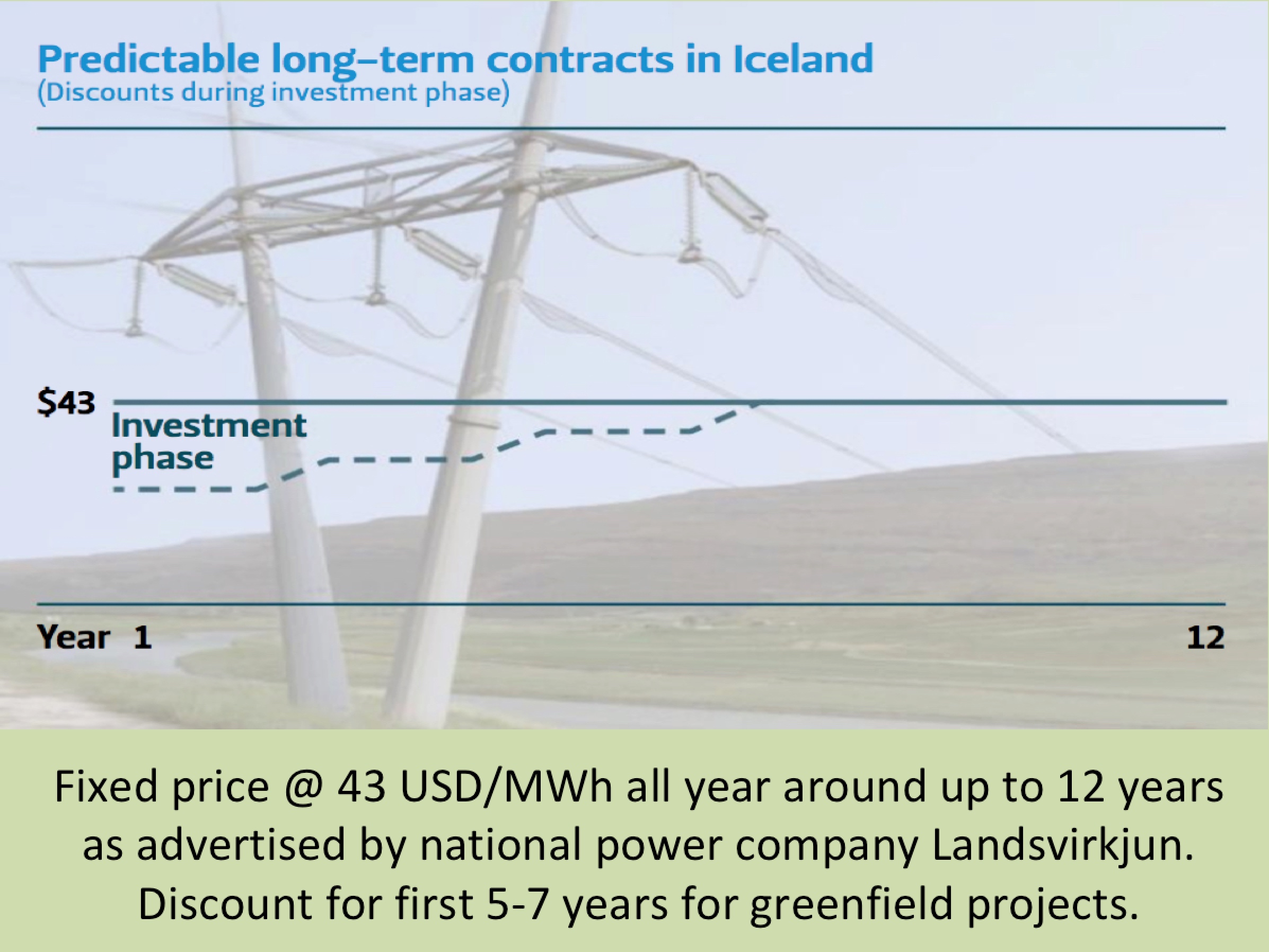
Companies that need substantial quantity of electricity and wish to operate within the OECD / Europe, will hardly find better long-term agreements than offered at the Icelandic market (43 USD/MWh in 12 year contracts are being offered by Landsvirkjun).

In addition to attractive electricity contracts, Iceland is a member of the European Economic Area and has a modern business environment based on European standards. For those considering energy-related investments in Iceland, a positive first step is contacting Icelandic professionals on the relevant subjects. At Askja Energy Partners we provide information and access to the most experienced and knowledgeable engineering, legal, tax, and accounting services.

Icelandic energy basics

Today, we publish the first post in a special introductory series about the Icelandic energy sector.

This series will include the following seven headings:

–  Icelandic Energy Basics (today)
–  New Low-Cost Renewable Capacity (December 17th)
–  The Icelandic Electricity Generation and Transmission (December 24th)
–  Overview of the Icelandic Energy Business (January 2nd 2013)
–  The Largest Consumers of Electricity in Iceland (January 7th 2013)
–  Future Growth of the Icelandic Energy Industry (January 14th 2013)
–  Gaining from the European Green Drivers (January 21st 2013)

———————————————————————————

WORLD RECORD FOR RENEWABLE ENERGY

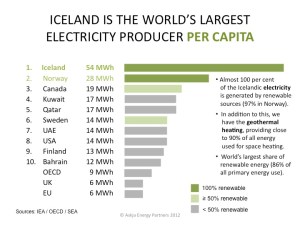
Iceland-Electricity-Production-Per-Capita-ComparsionNatural hydro- and geothermal resources have made Iceland the world’s largest green energy producer per capita.

Last year (2011) the electricity industry in Iceland produced 17,210,000 MWh (17.2 TWh) of electricity, which is close to 54 MWh per capita. In comparison, the average electricity production per capita by the countries within the OECD and EU is close to 9 MWh and 6 MWh, respectively.

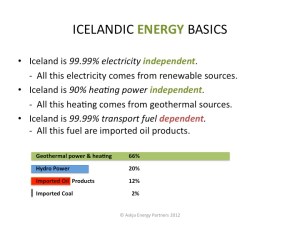
What makes the Icelandic energy profile even more interesting, is the fact that all the electricity is produced by harnessing renewable sources only. Renewable energy sources (hydro and geothermal) supply almost 100% of Iceland’s consumption of electricity. Furthermore, geothermal district heating provides almost 90% of Iceland’s heating needs.

Iceland-Energy-Independence-Primary-EnergyIn total, approximately 86% of Iceland’s consumption of primary energy comes from renewable sources. Of that total, 20% comes from hydropower- and 66% from geothermal sources. This is the world’s highest share of renewable energy in any national total energy budget.

Although hydropower and geothermal power offer the lowest cost opportunities, Icelandic wind energy may also be harnessed in the near future. The first large wind turbines in Iceland are expected to become operational in 2013.

TOWARDS EVEN STRONGER ENERGY INDEPENDENCE

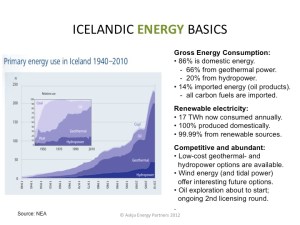
Iceland-Primary-Energy-Use-History_1940-2010The high share of renewable energy in Iceland’s energy portfolio (86%) is despite the fact that Iceland imports almost all its transport fuel. Today, imported carbon fuels and other oil products account for 14% of the gross energy consumption in Iceland. This number may soon become somewhat lower, as oil exploration is about to start at the continental shelf deep Northwest of Iceland’s shore.

Iceland’s renewable energy sources are not only abundant, relative to the size of the nation as a whole, but they are also available at a comparatively low cost. The cost issue will be discussed further in next week, here at Icelandic Energy Portal. Read more

Important step towards Icelandic oil exploration

Today, the National Energy Authority of Iceland (NEA) finished processing two applications for licences for exploration and production of hydrocarbons in the Dreki Area, Northwest of Iceland.

Iceland-Oil-Exploration_Faroe-Petroleum-Valiant-Petroleum-litud-areas-DrekiFor the last six months NEA has been evaluating of the technical and geological and financial capacity of the three applicants that handed in their applications earlier this year (2012). According to Icelandic law, the applicants must be able to handle extensive activities and have sufficient financial strength to conduct the activities for the long-term and handle the corresponding environmental and safety elements.

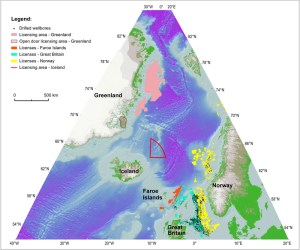
Following this evaluation, the NEA has made a decision to grant two licences. One to Faroe Petroleum Norge and Iceland Petroleum, and other to Valiant Petroleum and Kolvetni. Furthermore, the Norwegian Ministry of Petroleum and Energy has notified the NEA of their decision to participate in both licences to a 25 per cent share, in accordance with an agreement between Iceland and Norway from 1981.

The areas covered by the two licenses are shown on the map above. Areas awarded to Valiant Petroleum and Kolvetni are marked with blue color. Areas awarded to Faroe Petroleum Norge and Iceland Petroleum are marked with red.

Dreki-Area-hydrocarbon-licenses-mapHowever, the licences will not by issued until the Norwegian Parliament has approved the decision on the participation by Norway through the State-owned fund Statens direkte økonomiske engasjement (the State’s Direct Financial Interest or SDFI), administrated by the Norwegian firm Petoro. Following this and the signing of the parties to the licences of their joint operating agreements, NEA will grant the licences. This is expected to take place in early next year (2013).

We will soon be offering more information about hydrocarbon activities on the Icelandic continental shelf on our special petroleum pages.

Biogas fuel in Iceland

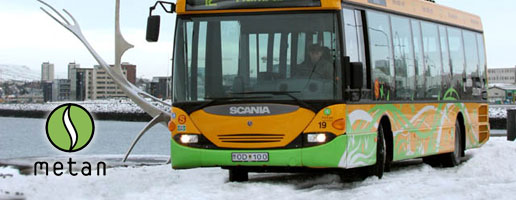
Iceland has used biological methane (biogas) as fuel for transport for more than a decade. The methane is collected from a landfill (waste yard) close to the capital, Reykjavik.

A public company, Sorpa, coordinates the solid waste disposal from Reykjavík and six other adjacent municipalities. Sorpa owns and operates the Álfsnes Landfill, serving the greater Reykjavik area. This organic waste in this landfill produces a substantial volume of methane.

In 1999 Sorpa founded a subsidiary, Metan Ltd. (metan means methane in Icelandic), whose purpose is to produce and market energy in the form of electricity, raw gas, landfill gas and upgraded methane.  They are also in the business of knowledge collection within the field of biogas and landfill gas utilization. In addition to Sorpa, Metan Ltd. has two other shareholders. They are the public energy firm Orkuveita Reykjavíkur (Reykjavik Energy) and the private oil importer and distributor N1 Ltd.

The main task of Metan has been the development and marketing of alternative fuel from waste landfills in the form of methane. For years even before starting fuel production, Sorpa channeled the methane gas to a burning device to render it less toxic and limits its greenhouse gas effects.

Metan Ltd. operates a gas refinery and production plant at the Álfsnes Landfill where the methane is treated by a cleaning process. The upgraded methane product is then used as fuel for vehicles. Finally, any gas not used for upgrading to methane fuel is funneled to a generator for producing electricity.

The methane power plant opened in 2003. This was the first time methane gas from a landfill site was used to generate electricity in Iceland. Metan Ltd. is a member of the Natural and Bio Gas Vehicle Association of Europe (NGVA Europe).

You can read more about Iceland’s methane- and renewable fuel industry in our special section about green fuel.

Icelandic green methanol

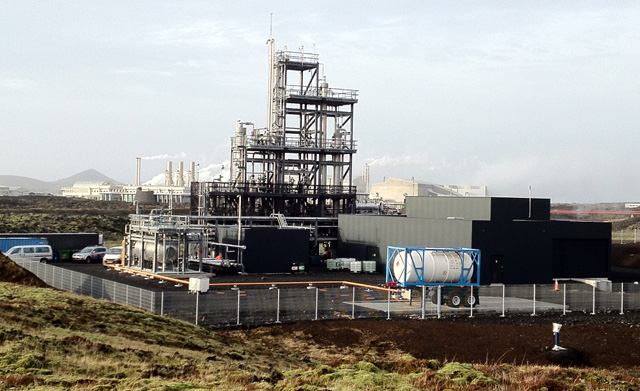
In Iceland, the company Carbon Recycling International (CRI) is currently constructing an industrial plant at Svartsengi in Southwestern Iceland, for producing green methanol.

Methanol is one type of alcohol fuel that can be used as alternative fuel in gasoline combustion engines, either directly or in combination with gasoline. If it is used as low blend in gasoline, very little or even no modifications of the engine are needed.

When methanol is produced by utilizing renewable sources such as biomass, and/or if the power used in the process comes from renewable energy, the product is sometimes referred to as green methanol or renewable methanol. CRI will produce the methanol by utilizing carbon dioxide from a geothermal power plant. The company will also receive the energy for the production from the geothermal plant.

It is not yet clear if this Icelandic green methanol will be blended in low quantities (maximum of three percent) in gasoline or if it will be a used as stronger methanol blend by flex-fuel vehicles. One more option CRI has, is to is to export the methanol. CRI has also launched a feasibility study with the Icelandic public waste firm Sorpa on making green methanol from household waste.

Methanol production by CRI can be related to the ideas of Nobel-prize winning chemist George Olah, who has introduced the possibility replacing fossil fuels with methanol rather than the more highly publicized hydrogen or ethanol. Unlike hydrogen, methanol can be transported and distributed via existing gasoline infrastructure. CRI’s geothermal-connected plant in Svartsengi, Iceland, goes by the name the George Olah Renewable Methanol Plant.

Icelandic geothermal know-how in Africa

Last week, the Icelandic Minister for Foreign Affairs, Mr. Össur Skarphéðinsson, presented the most extensive development project Iceland has participated in.

This is an international project in collaboration with the World Bank. The project is part of the World Bank Global Geothermal Development Plan, estimated to amount to USD 500 million (ISK 64 billion, EUR 393 million).

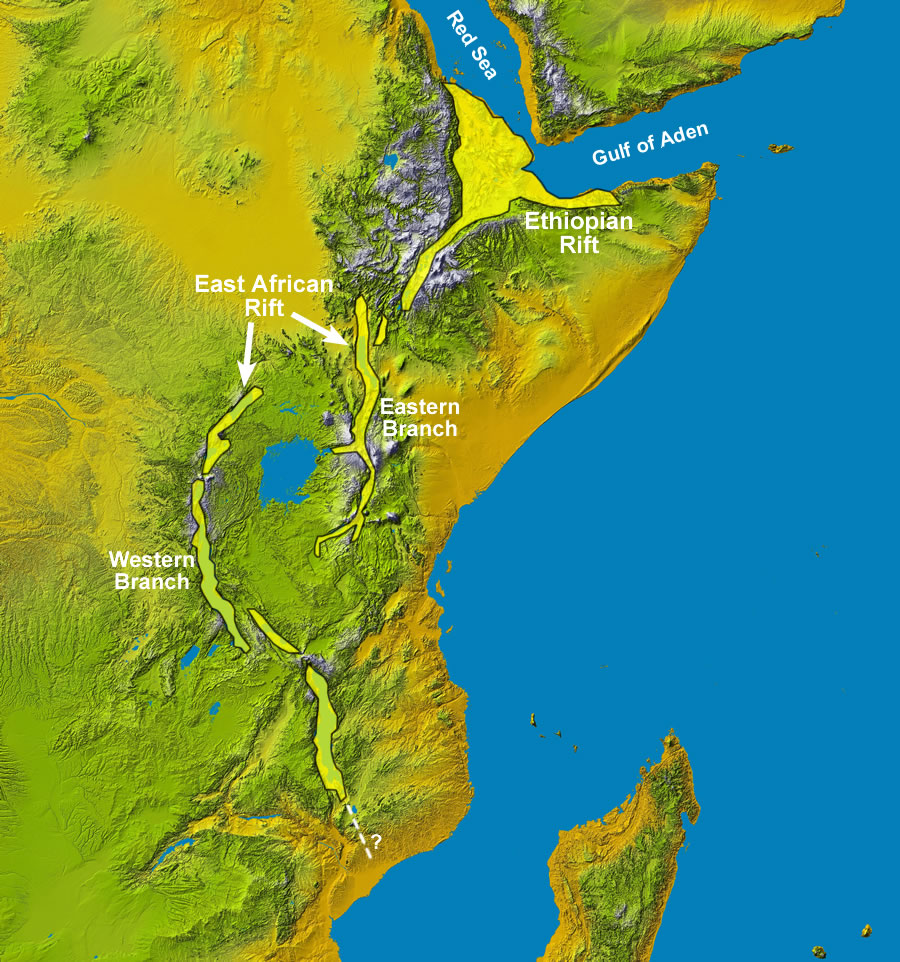
The project targets thirteen countries of the Great Rift Valley in East Africa. They include Burundi, Djibouti, Eritrea, Ethiopia, Kenya, Malawi, Mozambique, Rwanda, Somalia, South-Sudan, Tanzania, Uganda, and Zambia. The Great Rift Valley is known for widespread geothermal activity. However, little of this energy has been harnessed, due to limited access to both capital and know-how.

This collaboration between Iceland and the World Bank is the largest initiative so far for promoting the utilization of geothermal energy in developing countries. The World Bank  will provide finance for geothermal feasibility assessments and test drilling. The Nordic Development Fund (NDF) and the Government of Iceland will also provide part of the funding. The Icelandic International Development Agency, ICEIDA, will be the lead agency for this component.

Iceland will assist the respective states with geotechnical investigations of promising sites, detailed geophysical, seismic, environment and chemical tests including test drilling and assessments. The World Bank will collaborate with Iceland, other partners and funding agencies to establish a flexible financing facility that can in part share the costs and risks of specific drilling programs in the target countries.

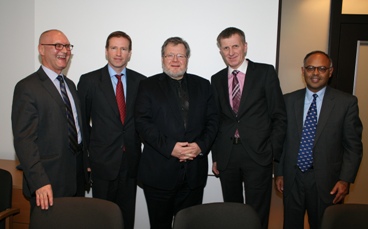
The agreement on the project was signed in Reykjavik in last week. In addition to the Icelandic Minister for Foreign Affairs, it was signed by Mr. Pasi Hellman, Managing Director of the Nordic Development Fund, Mr. Engilbert Guðmundsson, Director General of Iceland‘s International Development Agency, and Mr. Rohit Khanna, Program Manager of the Energy Sector Management Assistance Program (who represented the World Bank).

McKinsey on Icelandic energy issues

The management and consulting firm McKinsey & Company recently published an independent report on the current state of the Icelandic economy and its future priorities. The title of the report is “Charting a Growth Path for Iceland”.

According to the report, the Icelandic power industry has provided the foundation for a strong export-based heavy industry sector. However, McKinsey also points out that capital productivity in the Icelandic energy sector is the lowest across all sectors of the Icelandic economy:

“With 25-30% of the capital stock directly or indirectly invested in the energy sector, this is a serious matter for resolution. We identify several important themes to this end, e.g. diversification of the industrial buyer market and systematic enablement of the most profitable expansion projects based on their ability to pay. Additionally, the opportunity to connect the Icelandic electricity market to Europe via a physical interconnector is an attractive option that should be explored in detail.”

McKinsey then goes on making some suggestions on how to increase value capture from the energy sector. According to the report, the keyword for higher capital productivity is increased integration with other markets. Since the Icelandic power system is an island-system there is, according to McKinsey, a “significant slack in the system to ensure that sufficient margins are in place to meet domestic demand.”

McKinsey argues that the isolated market is “reflected in the design of hydro plants where investments have been optimized accordingly, i.e. with relatively small reservoirs allowing surplus water to bypass generation as there are no alternative markets available.”  Hence, nearly 15 per cent of the energy available for electricity production is wasted each year (on average).

McKinsey emphasizes that these factors will have to be taken into consideration during the next growth phase to maximize the value captured. In this regard, McKinsey seems ecpecially positive towards constructing an interconnector between Iceland and Europe:

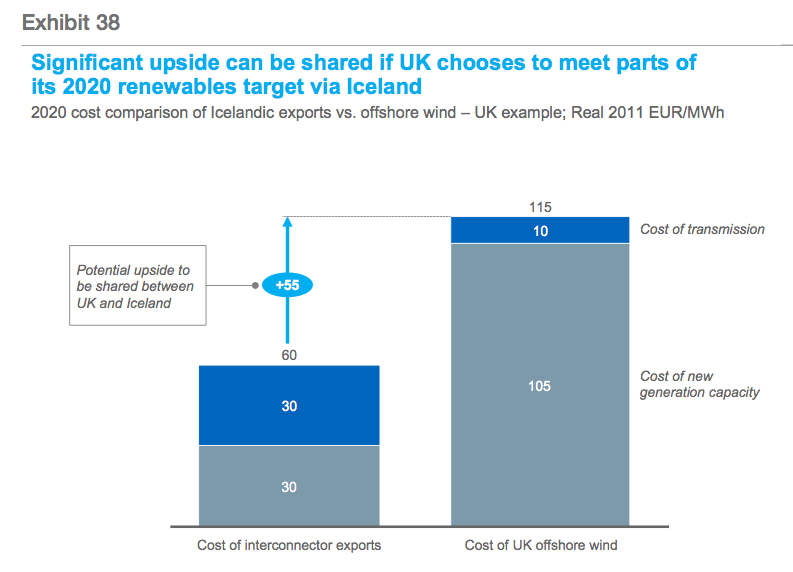
“The economic rationale for an interconnector is based on the opportunity of supplying the receiving market with green energy and thus contributing to decarbonization more efficiently than through other means e.g. offshore wind power. Iceland could share the benefit of such cost savings with the partner. Taking into account generation costs in Iceland, the cost of the interconnector itself and the anticipated cost of offshore wind power in 2020, cost savings of around EUR 60/Mwh could be shared.”

What makes the business model of an interconnector especially interesting, is the fact that so far Iceland has only harnessed  20-25 percent of its theoretically available hydro and geothermal energy. With environmental considerations and the economic feasibility of the investments taken into account, new projects could probably almost double current production (from 17 TWh to approximately 34 TWh annually). This is a substantially less costly renewable energy option than for example wind power in the United Kingdom.

The report concludes with strong future prospects. McKinsey is of the opinion that “Iceland is in the privileged position of having multiple growth levers that can greatly improve average production in the economy. The country therefore has good reason to be optimistic, provided policymakers utilize the opportunities available.” To access the report follow this link.

The Icelandic energy sector is back on track

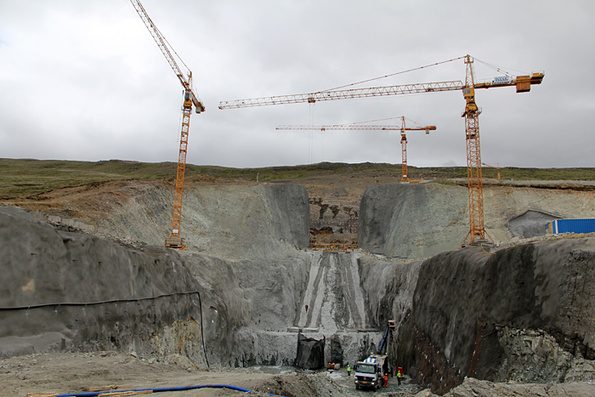
Construction of the new Búðarháls Hydropower Station in the southern highlands of Iceland is proceeding as scheduled.

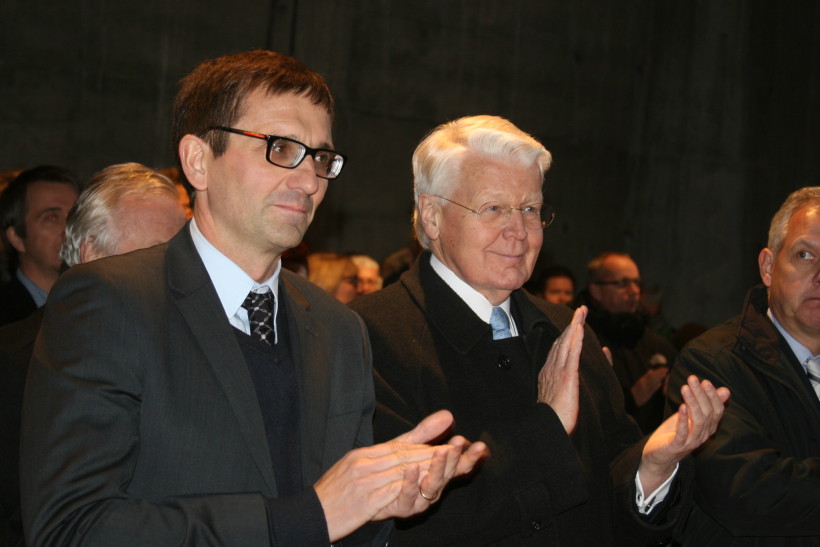
Last week the President of Iceland, Mr. Ólafur Ragnar Grímsson, laid the cornerstone to the station’s powerhouse. The construction of this new power plant commenced in late 2010. The station will have two 47.5 MW turbines, with a total power of 95 MW. It will start operation by end of 2013 and by 2014 the station will produce 585 GWh of electricity annually.

The project is part of Landsvirkjun’s expansion following an agreement to provide an aluminum smelter of Rio Tinto Alcan (RTA) with more power. RTA has more than 40 years operating history in Iceland and is currently expanding its aluminum plant at Straumsvík in Southwestern Iceland. This increases RTA’s electricity demand in Iceland by 658 GWh annually.

When the financial crises hit Iceland in late 2008, a period of economical difficulties followed and foreign investment became minimal. Iceland’s credit rating was downgraded and as the power company Landsvirkjun is state owned this downgrading was negative for the company.

However, the Icelandic economy soon started to show positive signs. In early 2011 Landsvirkjun secured full funding for the Búðarháls Project. This includes two loans from the Nordic Investment Bank (NIB) and the European Investment Bank (EIB), respectively. Each of the loans is 70 million USD. In addition, Landsvirkjun successfully issued bonds for 100 million USD through an Icelandic bank. It certainly seems that Landsvirkjun is back on the track.

Icelandic sustainable energy management solutions

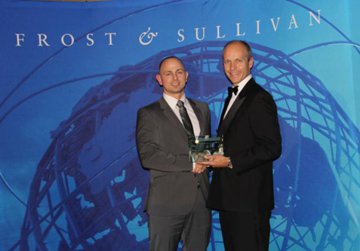
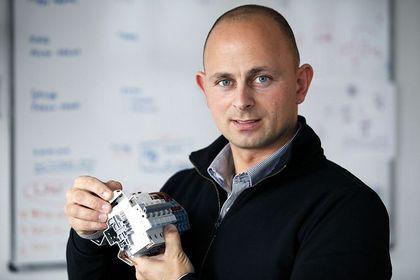
Icelandic startup ReMake Electric was recently awarded the 2012 Europe Early State Investment Opportunity Award by Frost & Sullivan Market Research and Consulting.

According to Frost & Sullivan, ReMake Electric has demonstrated excellence in its intellectual property, the experience of its management, its funding history and quality of its investors.

“ReMake Electric provides sustainable energy management solutions that help customers optimise their energy usage,” Frost & Sullivan Senior Analyst Vinod Cartic states in a press release on the company’s website. “Simple, innovative and versatile solutions promote energy conservation, while enabling customers to make economic gains.”

The firm excels in developing basic electrical metering products for energy consumption monitoring and analysis. It optimizes energy usage and creates savings on the energy bills of its customers, primarily based in Europe, through the development of electrical metering products. The company serves both residential and commercial customers, among them IKEA and Coca Cola.

In 2010 the company received the Golden Egg Innovation Award as the winner of the Icelandic Innovit innovation competition. Then, a total of 300 business ideas were submitted.