Skip to content

Posts by Askja Energy

BMW and Icelandic energy in the media

Recently, there has been a lot of international media coverage about Icelandic energy issues.

This includes numerous news-stories about the decision of the flash German car maker BMW to move its high performance computing to a data centre in Iceland, powered by renewable energy. This will save around 3,600 tonnes of carbon emissions per year.

According to the news, BMW  is moving ten of its high performance computing clusters, consuming 6.31 GWh of energy each year annually, from Germany over to the Verne Global Data Centre in Southwest Iceland. The data centre uses electricity from 100 percent renewable sources – Iceland’s geothermal and hydroelectric generators.

Besides the carbon free renewable energy, Icelandic electricity is much cheaper than in any other OECD-country. Thus, BMW will save around 80 percent of the power costs of running calculations including crash test and aerodynamics simulations, as well as computer aided design and engineering calculations.

For more news about Icelandic energy issues, please go to our media-page.

Electricity statistics update 2012

The Icelandic Energy Authority has published statistics regarding the electricity industry in 2011. The publication is in Icelandic only (link to the pdf-file). Here are some of the key numbers:

————————————————————————————————————————————————————–

TOTAL ELECTRICITY GENERATION:          17,210 GWh (2011)

————————————————————————————————————————————————————–

ELECTRICITY GENERATION SHARE BY SOURCE:

Hydro Power 72.67%
Geothermal Power     27.32%
Fossil Fuels     0.01%
Total 100.00%

————————————————————————————————————————————————————–

ELECTRICITY POWER CAPACITY:

Hydro Power  1,884 MW
Geothermal Power     665 MW
Fossil Fuels     120 MW
Total 2,669 MW

————————————————————————————————————————————————————–

ELECTRICITY CONSUMPTION SHARE:

Energy Intensive Industries 80%
General Consumption     18%
Other     2%
Total 100.00%

————————————————————————————————————————————————————–

We will soon be offering more Icelandic energy data in our special data-section.

Tidal energy innovation

Recently, the Icelandic National Power Company Landsvirkjun started to prepare the constructions of the first large wind turbines in Iceland. In Iceland, emphasis is also being placed on the utilization of marine power. For example, the Icelandic Innovation Centre has been involved with development of both osmotic energy and tidal power projects. There are also examples of possible upcoming projects, especially focusing on tidal power.

Some of the fiords and bays in Iceland experience strong tidal currents. The tidal wave at Iceland rotates clockwise around the country in 12 hours and 25 minutes, arriving at the south. The mean speed of the wave is around 150 km/hour.l elevations in Iceland are greatest on the west coast, especially in Breiðafjörður where the difference between ebb and flood for mean spring tides can exceed 4 meters. Along the north and east coasts, this difference is considerably smaller, typically one to two meters.

Sjávarorka is an Icelandic firm that was established in 2001 with the main purpose to investigate the possibilities of utilizing tidal power and ocean currents around Iceland.  The company has been focusing is a specific site in the western part of Iceland where the difference between high and low tides is greatest. The plan is to use tidal turbines to harness the tidal current without constructing dams.

In mid-2011, Landsvirkjun decided to become a major shareholder in Sjávarorka, by becoming one of the owners of the company through investments. Since early 2012, Landsvirkjun has around 30 percent  stake in Sjávarorka. As Landsvirkjun is Iceland’s main energy company this may mean that research on Icelandic marine energy will increase substantially.  Here at Askja Energy we will be following the project of Sjávarorka closely and bring our readers news of interesting development of this and other marine energy projects in Iceland.

Incentives for investing in Iceland

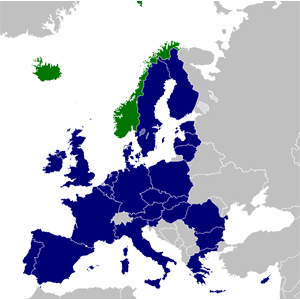
According to Icelandic law and regulations, businesses and industries are generally open to foreign investment. Because of Iceland’s strong legal relationship with Europe, the legal framework of the Icelandic energy industry is very similar to what applies in the European Union (EU). All individuals and other legal residents of Iceland or other member states of the European Economic Area (EEA),  European Union (EU), and European Free Trade Association (EFTA) are permitted to own enterprises which produce or distribute energy, and own energy exploitation rights with regards to water and geothermal energy.

The Icelandic Parliament has adopted a general act on incentives for initial investment in Iceland (law no. 99/2010). Governmental authorities are permitted to grant both general and regional incentives for new investments in Iceland up to a defined ceiling, in line with EU legislation. In addition to certain derogations from taxes and charges, incentives can also come in the form of direct cash grants, training aid and lease of land. Industrial sites are available around Iceland at competitive cost and local communities may offer certain extra incentives.

As a member of the EEA, Iceland has access to research funds of the EU for research and development programs and joint ventures undertaken with companies from at least one other EEA country (including all the countries within the EU). In addition, EU’s energy policy is a strong driver for the Icelandic energy sector. Close to 85% of Iceland’s consumption of primary energy is renewable energy, while renewable energy sources now account for only 12% of the final consumption of energy within the EU (this refers to energy used as electricity, heating, cooling, and transportation). The European Union has a target to increase the share of renewable energy sources in its gross final consumption of energy from 12% to 20% by 2020.

This policy by the EU not only calls for major investment in renewable energy production, but creates great possibilities for countries with unharnessed green energy sources available. With this in mind, it is interesting that only a portion of Iceland’s renewable hydro- and geothermal energy resources have been harnessed (approx. 20–25% of the total and probably around 40-50% when environmental concerns have been taken into account). Iceland may also offer interesting possibilities for large-scale wind power generation. In a nutshell, it is likely that EU’s energy policy will create substantial more interest in Iceland’s green energy industry and more demand for Iceland’s renewable energy sources.

Utilizing the Icelandic wind power resource

While many countries, for example in Western Europe, are focusing on wind power to increase the share of renewable energy, Iceland has not yet constructed a single operating wind farm. The reason is simple: Icelandic energy firms have always had the privilege of being able to harness abundant low-cost geothermal- and hydropower options.

However, Iceland may be a perfect setting for extensive utilization of wind energy. Iceland is a windy country. According to early research by the Icelandic National Power Company Landsvirkjun, wind farms in Iceland can be expected to be almost 100% more efficient than in Europe or USA. And due to low population density and extensive areas of land with few natural or manmade barriers, there is plenty of space for large wind parks.

Large-scale wind power utilization in Iceland may be especially attractive in connection with a subsea electrical HVDC-cable between Iceland and Europe. Instead of constructing very expensive offshore wind farms outside the coast of countries like Denmark, Germany, Netherlands and United Kingdom, investing in wind power in Iceland may be both less costly and offer lower political thresholds.

There are several areas in Iceland that may be good locations for wind farms. The map below is from a presentation by Landsvirkjun, showing some of the most interesting sites.

Currently, Landsvirkjun is preparing the construction of two wind turbines close to one of its hydropower stations in the river of Þjórsá in southern Iceland. These will be the first large wind turbines in Iceland. This will be an interesting experiment, offering valuable information on the feasibility of wind power in Iceland. Operation and maintenance cost will to be studied along with availability-percentage of the turbines in the windy and sometimes harsh Icelandic nature.

Landsvirkjun is also participating in a Nordic research project Icewind, which will include the production of icing atlas for Sweden and Iceland based on long term meteorological statistics. The Risø Research Institute, Denmark, heads the project in which corporations and scientists from Denmark, Finland, Iceland, Norway and Sweden take part. Besides Landsvirkjun, other project participants from Iceland are the Icelandic Meteorological Office and the University of Iceland, with the Icelandic TSO Landsnet also joining as a collaborator. The project formally began in 2010 and is expected to end in 2014.

You can find information about wind energy potentials in Iceland on our wind page.

Icelandic geothermal know-how

Iceland produces a substantial share of its electricity by harnessing geothermal resources. Geothermal plants now account for approximately one-quarter of all electricity generated and consumed in Iceland. In addition, Iceland has a long tradition harnessing low geothermal heat for central district heating. This explains why geothermal is such a large share of the primary energy use in Iceland (in total, close to 65% of Iceland’s consumption of primary energy is geothermal energy).

Several European countries are looking towards utilizing geothermal heat, not least as a source for electricity production. However, these countries do not share Iceland’s geophysical conditions – low-cost geothermal electricity is not an option unless you have access to very high temperatures. On the other hand it may be an excellent option for many European countries to harness their low geothermal heat for central heating.

This is an area of expertise where Iceland has great strength. Iceland has a long tradition harnessing low geothermal heat for central district heating, which explains why geothermal is such a large share of the primary energy use in Iceland.

Icelandic engineering firms have been exporting this know-how to countries on the European continent. This for example applies to Hungary. There, the company Mannvit has provided engineering, procurement, and construction management of a geothermal district heating plants. These types of plants are replacing fossil-fuel powered district heating systems with environmentally-friendly and sustainable geothermal energy.

This type of geothermal harnessing is an option that could be appealing for many communities in numerous countries in Europe. In addition to Hungary, this for example applies to Britain, Germany, France, Slovenia and several other countries. In a nutshell, domestic geothermal energy is a resource Europeans should consider very seriously for district heating.

Photo at left: An official groundbreaking ceremony marked the beginning of the construction process of the geothermal district heating plant in the town of Szentlőrinc, Hungary. The cornerstone was laid by Mr. Össur Skarphéðinsson, Foreign and External Trade Minister of Iceland, Pál Kovács, Deputy Secretary of Energy Policy from the Ministry of Development and, Dr. Márk Győrvári, the Mayor of Szentlőrinc.

Icelandic energy attracts foreign investment

Although Iceland is an independent country with its own currency, the country has a very close economic relationship with its Nordic neighbors as well as the European Union (EU). In this regard, Iceland’s membership in the European Economic Area (EEA) is of special importance.

The EU has adopted an ambitious and binding renewable energy policy, generally referred to as the 20/20/20. The policy requires:

  • a reduction in EU greenhouse gas emissions (by 2020) of at least 20% below 1990 levels,
  • 20% of EU energy consumption to come from renewable resources,
  • and finally a 20% reduction in primary energy use compared with projected levels, to be achieved by improving energy efficiency.

These climate and energy targets will result in a highly increased demand for renewable energy, a demand where Iceland is well-suited to contribute. No less important for the green Icelandic energy sector is the upward-pressure this policy will put on electricity prices. In a nutshell, the EU’s legally binding energy and environmental legislation is making Iceland’s renewable energy more competitive than ever before.

The Icelandic energy and business sectors have been attracting numerous new types of foreign companies to the country in recent years, such as the data-center of Verne Global (a recent benchmarking study by PricewaterhouseCoopers (PwC) in Belgium described Iceland as the most competitive location for the operation of data centers). The latest large energy project in the country is the ongoing construction of the 95 MW Búðarháls Hydropower Station. Several other power projects are being considered and planned, with a total capacity of several hundred MW.

The Icelandic energy industry itself has also gained interest from foreign investors. Recently, Iceland’s third major electricity company (HS Orka) was bought by a Canadian energy investment firm, lead by geologist and resource company entrepreneur Ross Beaty, CEO of American Silver Corp. The electricity industry in Iceland is open to direct investment by all legal entities registered within the European Union (EU) and the European Economic Area (EEA). You can read more about this in our section about Foreign Investment.

Iceland’s hydropower source

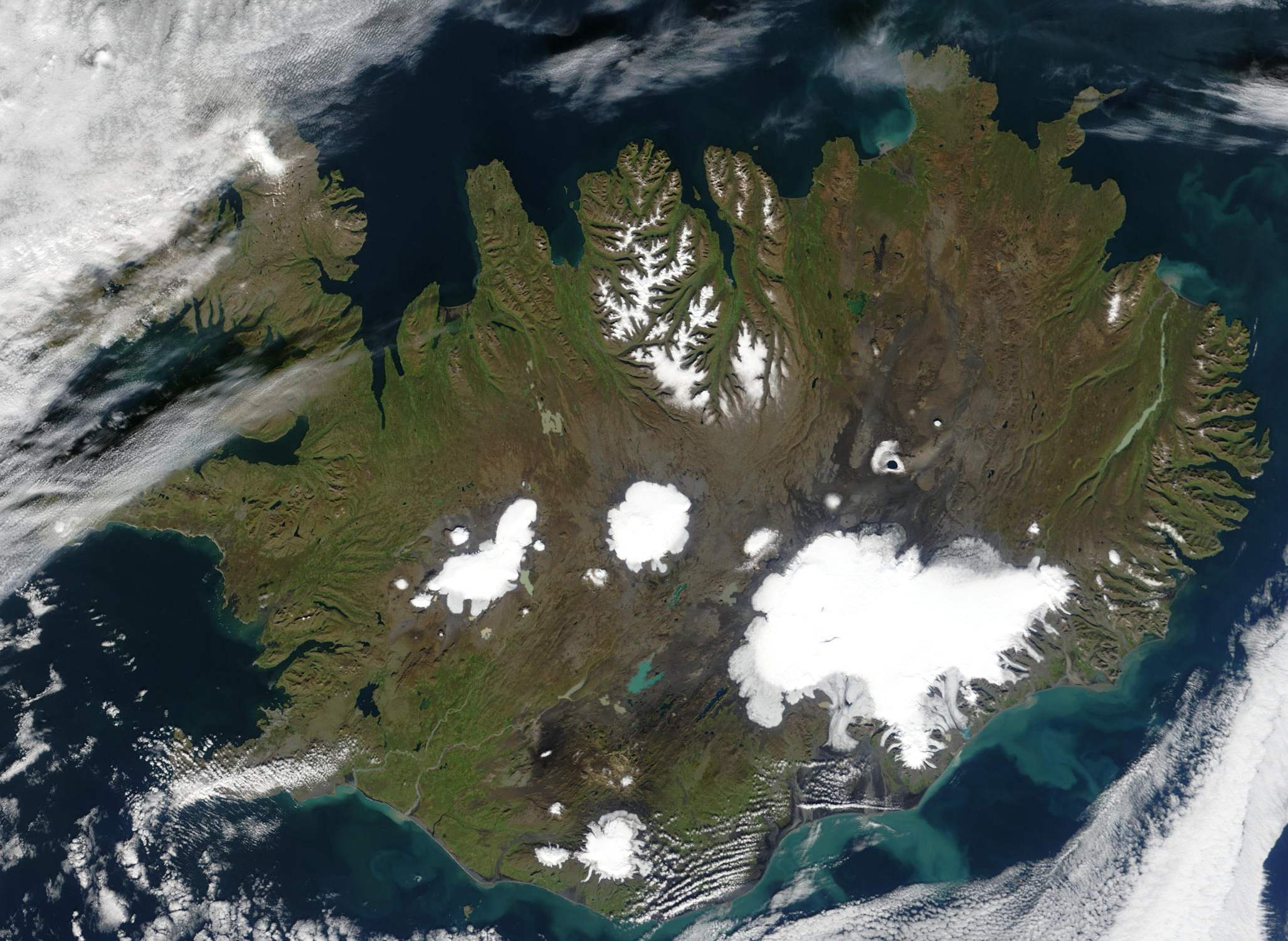
Almost 75% of all electricty consumed in Iceland is generated by hydropower plants. The main source of Iceland’s hydropower are the glacial rivers flowing from Iceland’s glaciers.  The largest glaciers are Langjökull and Hofsjökull in the interior, and the massive Vatnajökull in the southeast (note that “jökull” in Icelandic means glacier).

These three glaciers can clearly be seen on the satellite photo of Iceland at left. Also, the smaller Mýrdalsjökull and the infamous Eyjafjallajökull in south Iceland can be seen.

The glaciers in Iceland cover more than 1/10 of the total area of the country. Some parts of the glaciers are houndreds of meters thick. Maximum thickness of the ice is cose to one thousand meters (in Vatnajökull, which is the largest glacier in Iceland).

Vatnajökull is close to 8,100 sqkm (in comparison, Iceland is 103,000 sqkm). Vatnajökull is the world’s largest glacier apart from Greenland’s ice-sheet and of course Antartica. The glacier itself is now part of Vatnajökull Natonal Park.

Iceland’s electricity generation is very stable, thanks to number of large reservoirs with glacial melt water. The largest reservoirs are between 50-90 sq. km and they can often clearly be seen on satellite photos. The largest reservoirs (in areal size) are Þórisvatn (88 sq. km when full), Blöndulón (57 sq. km), Hálslón (57 sq. km) and Hágöngulón (37 sq. km). Þórisvatn is the light-blue lake in southern Iceland that can be seen on the satellite photo above.

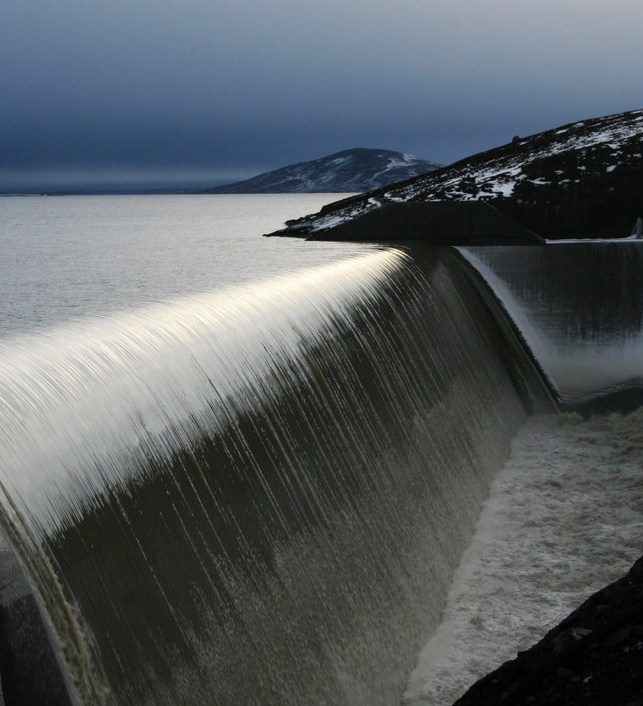
In winter, some of the reservoirs are covered with ice and snow, as can be seen on the photo at left. the photo shows Hálslón reservoir in the middle of winter. In fact the ice never becomes very thick, but it can snow heavily.

Some of the large hydropower stations, dams and reservoirs are quite accessible for travelers. A popular route towards the Icelandic highlands goes past Þórislón and several hydropower plants close by in Þjórsá and Tungnaá rivers. Also, there is a road up to Hálslón and the large Kárhnjúkar dam in the highlands in northeast Iceland.

When the Hálslón reservoir becomes full (it normally happens in the period from late July to early September) the water starts to flow over the spillway. From there it falls almost 100 m down to the canyon below, forming a spectacular waterfall called Hverfandi (Vanisher). This year (2012) Hálslón became full on 7th of August.

Icelandic energy expertise in Georgia

The Icelandic energy industry has decades of experience in the hydropower and geothermal power sectors.

Most of the projects have of course been in Iceland. But in recent years Icelandic companies have increasingly been involved in hydropower and geothermal projects overseas. The most recent example of such a project is a consultancy agreement between the Icelandic firm Landsvirkjun Power and a Georgian hydropower company, which is developing new hydropower stations in Georgia.

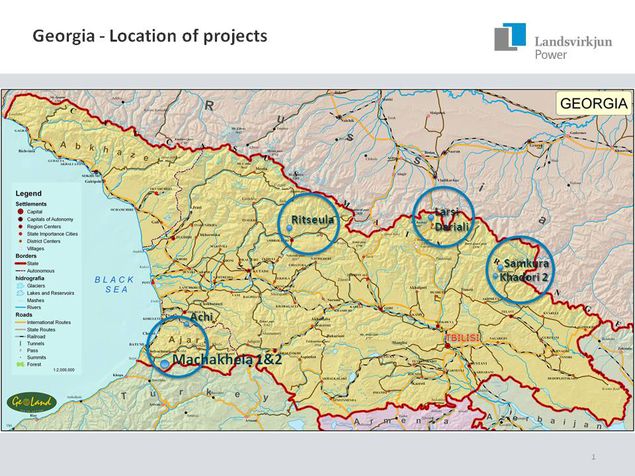
This agreement involves two hydroelectric plants with a capacity of 20-25 MW. They will be constructed on the river Machakhelistskali in the Adjara region,in southwestern Georgia, near the Turkish border. Landsvirkjun Power was the successful bidder for consultancy services and the contract was signed earlier this summer. The map (at left) shows the location of the project and other projects that Landsvirkjun Power has worked on in Georgia in the last few years.

With Icelandic engineers, Landsvirkjun Power will conduct site investigations at the Machakhelistskali and prepare a feasibility study, followed by initial project design, preparation of tender documents for construction work and detail design of civil works and review of design of equipment. The work is to be completed by end of 2015.

Landsvirkjun Power is the engineering, construction and foreign investment arm of Landsvirkjun; the Icelandic National Power Company. The purpose of Landsvirkjun Power is primarily consultancy in development of power schemes, and secondly, investment in such schemes outside of Iceland. The firm has also carried out activities in the hydro- and geothermal power sector e.g. in Albania, Canada, Greenland, and Turkey.

Energy producers in Iceland

There are several energy companies in Iceland, producing electricity and heating. In total, they generate about 17 TWh of electricity annually and close to 22 TWh of geothermal heat. Almost all this energy comes from renewable sources (hydropower and geothermal power). In total, close to 85% of Iceland’s consumption of primary energy is renewable energy. This is the world’s highest share of renewable energy in any national energy budget.

The largest energy generating firms in Iceland are Landsvirkjun, Orkuveita Reykjavíkur (Reykjavik Energy), and HS Orka. State owned Landsvirkjun is by far the largest, providing approximately 76% of all the electricity produced in Iceland. More than 96% of all hydro generation in Iceland is produced by Landsvirkjun, and its share in the generation of electricity from geothermal power is around 11% of the total.

Landsvirkjun owns eleven hydropower stations and two geothermal power stations with a combined capacity of 1,895 MW.  Lansdvirkjun is also the main owner of the Icelandic Transmission System Operator (TSO), with a share of 65%.

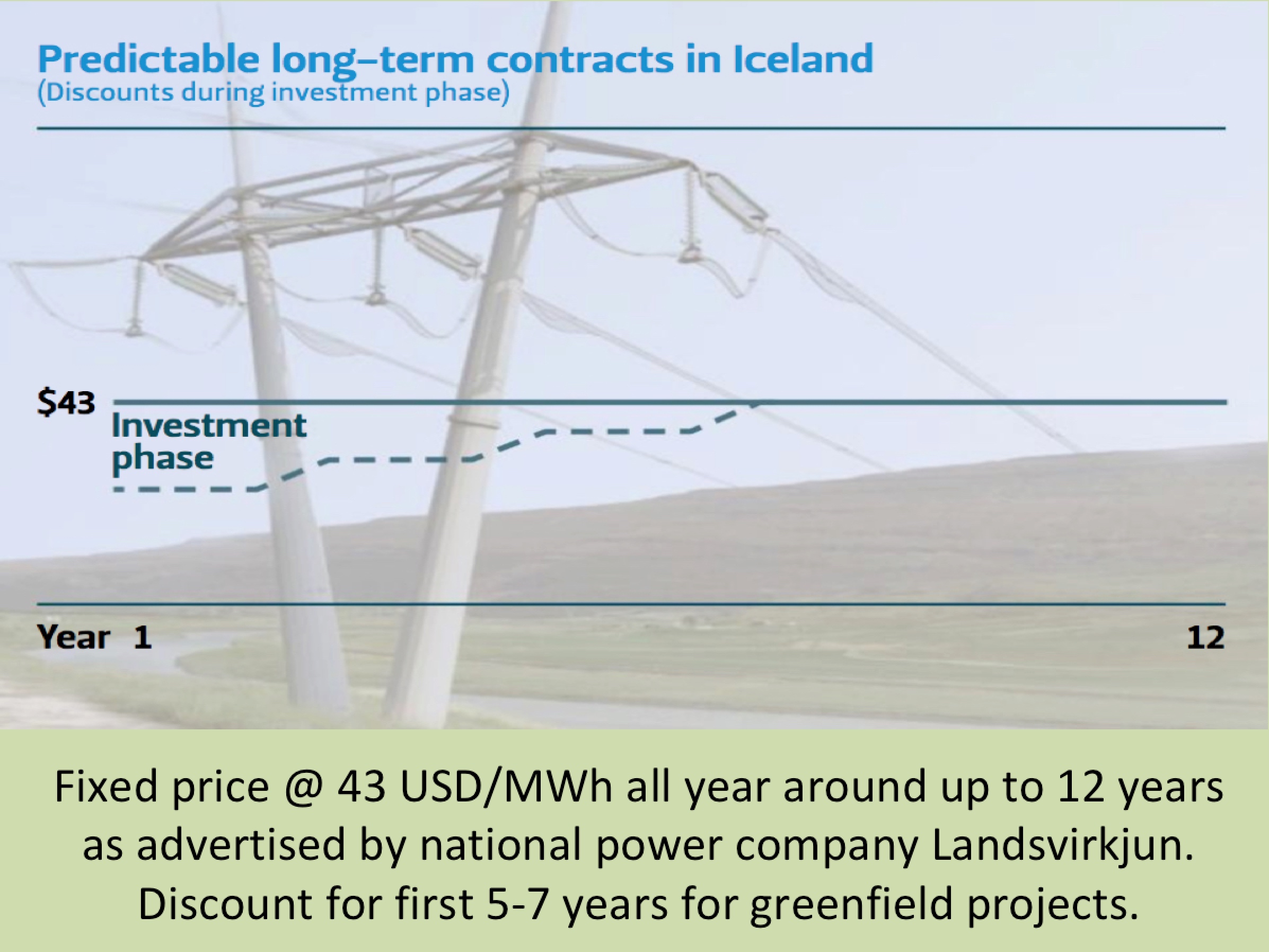
Landsvirkjun receives much of its revenue in foreign currency (USD) as a result of extensive electricity sales to large foreign-owned aluminum smelters in Iceland (80% of the electricity Landsvirkjun generates is sold to energy intensive industries via long term contracts). The economic turbulence Iceland experienced recently did not affect Landsvirkjun nearly as much as most other Icelandic firms (the devaluation of the Icelandic currency did not have negative effects on Landsvirkjun’s income).

Landsvirkjun is one of Iceland’s largest companies and currently it has more equity than any other Icelandic firm . Of all the Icelandic power companies, Landsvirkjun is by far the strongest player and currently the only large Icelandic power company expanding its operations.

Orkuveita Reykjavíkur (OR, but also called Reykjavik Energy) is Iceland’s second largest energy firm. This public utility company provides both electricity and hot water for heating. It is by far the largest local provider of electricity and heating to end-users. The main service area of the company is the larger Reykjavik Metropolitan Area. OR’s largest single customer is Norduaral Aluminum Smelter, that is located not far from Reykjavik. In recent years OR has been struggling with heavy debt, which has led to rising costs for its general customers.
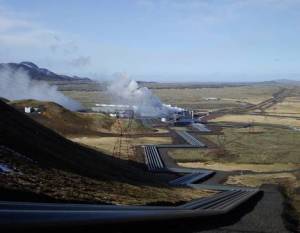
OR’s power-generation plants have a total capacity of 435 MW. Most of the electricity from OR is generated at two geothermal plants that utilize high-pressure steam. Besides producing and distributing electricity, OR sells and distributes both hot and cold water. The water from OR for space heating comes from low-temperature fields in and close to the city and from the combined heat and power plants at the Nesjavellir and Hellisheiði Stations. Cold water is collected from groundwater reservoirs outside of Reykjavík. Also OR operates an extensive sewage system for the Reykjavik area, as well as some adjacent municipalities.

HS Orka is the third main energy firm in Iceland. Until 2007 it was a public company owned by the Icelandic state and municipalities in Southwest Iceland. It was later privatized and today its largest shareholder now is the Canadian Alterra Power. The rest is owned by a group of Icelandic pension funds. HS Orka operates two geothermal power stations with a total capacity of 175 MW. HS Orka owns a few subsidiaries, including ¼ of the well known Blue Lagoon.