Skip to content

Posts from the ‘Engineering and Technology’ Category

Data centers in Iceland

In 2007, a benchmarking study by PricewaterhouseCoopers  (PWC) showed Iceland to be a favorable location for new data centre activity. The report concluded with Iceland being supportive and welcoming in the respect of issues as governmental legislation, immigration and permits.

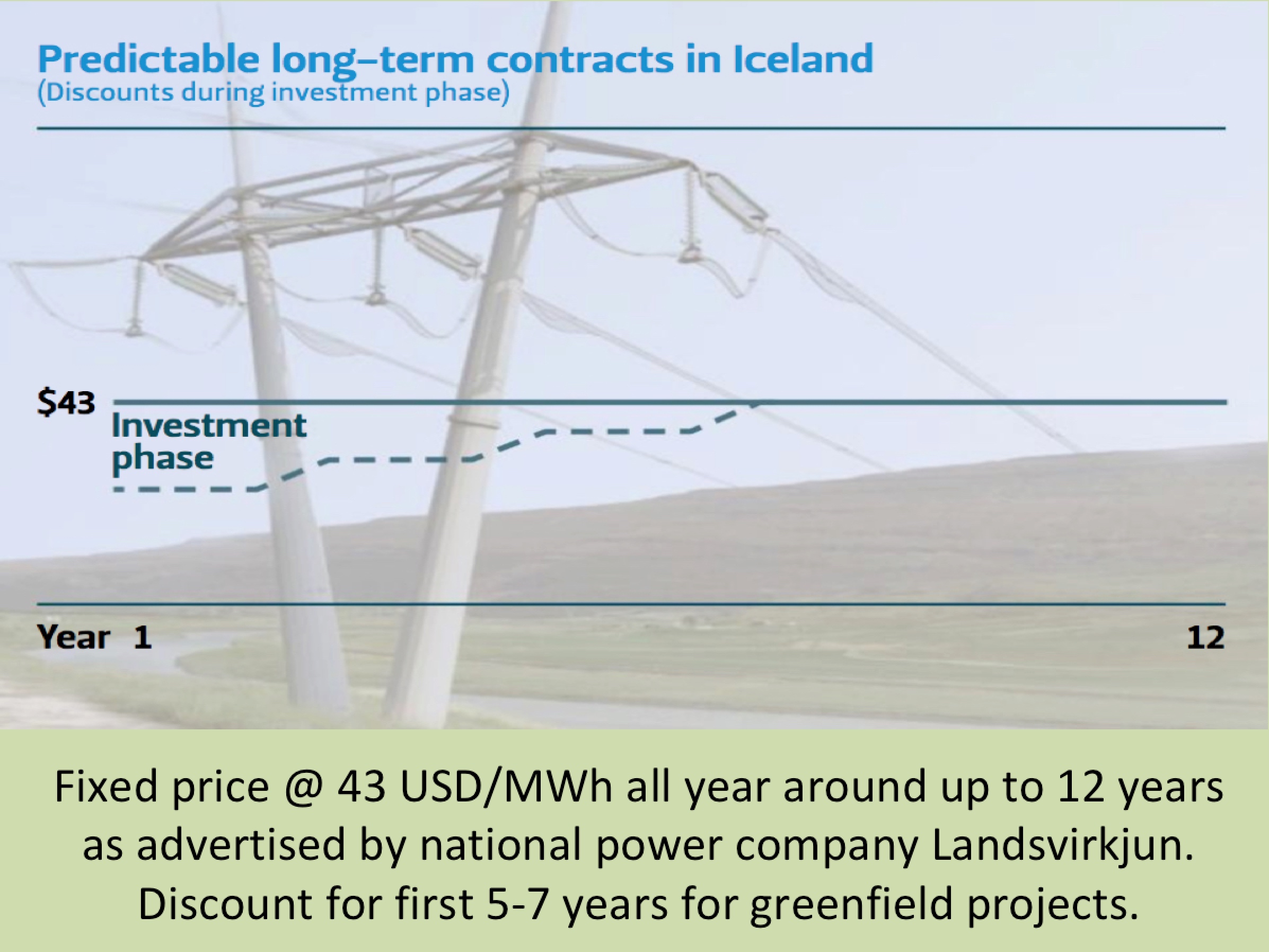
Operational cost for data centres in Iceland is minimum due to the low cost cooling and electricity. Presently, the Icelandic power company Landsvirkjun is offering electricity contracts at the price of 43 USD/MWh. Those competitive rates are available as fixed for up to 12 years. Furthermore, Iceland has significantly less of a security risk than almost any other Western or emerging countries. Its geographic location, low population density and lowered post-Cold War strategic value make it an unlikely target for either external or internal forces.
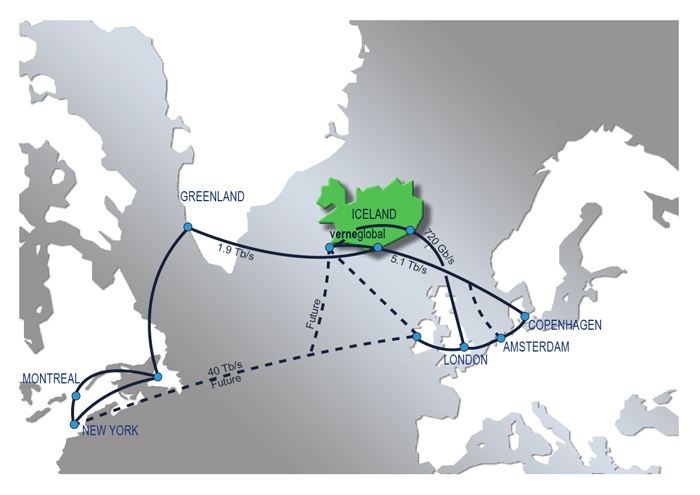
Iceland-Telecom-Cable-MapThe Icelandic infrastructure for telecommunications networks and services is highly advanced. Mobile phone and Internet penetration in Iceland are among the highest in the world. Iceland is linked with Europe and North America via number of fiber-optic submarine systems. They are Farice-1 to the UK (with a capacity of 0.72 terabits per second and was originally installation in 2003), the Danice cable to Denmark and the Netherlands (with a capacity of 5.1 terabits per second), and Greenland Connect which connects Iceland to Canada and the Northeast United States (with a total capacity of 1.9 terabits per second). Additionally, the new Emerald Express trans-Atlantic cable (with a connection to Iceland) is scheduled to be ready for service before end of this year (2013).

Verne Global and Thor Data Center are examples of new data-centres that have started operation in Iceland in recent years. Besides running on low-cost 100% renewable energy, the growing data-center industry in Iceland is also enjoying a major upgrade of the international submarine telecom capacity between Iceland and mainland Europe

Verne-Global-logo-taglineVerne Global is a company that owns and operates a data center campus in Keflavik in Southwest Iceland. The 18-hectare (approximately 45-acre) Verne Global data centre complex is just west of Reykjavik, the capital of Iceland, minutes from Keflavík International Airport. Verne Global’s facility has been designed to fully utilise Iceland’s unique environmental power advantages: 100% powered by renewable energy resources and 100% cooled by the natural environment of Iceland, without the use of chillers or compressors.

The largest investor in Verne is the UK investment foundation Wellcome Trust. Verne Global offers data centre decision makers a 100% carbon neutral and affordable power solution with a very precise pricing predictability, a range of server density options and efficiency without extra expense, using natural cooling. The customers of Verne Global customers range in size from those requiring multi-kilowatts to multi-megawatts. With its headquarters in the United Kingdom, Verne Global is led by an experienced team with proven success in the data centre industry.

Thor-Data-Center-Advania-logoThor Data Center (THORDC) in Hafnarfjordur is owned by the Nordic IT company Advania. The Thor Data Center facility is located 10 minutes from  Reykjavik, and a 30 minute drive from Keflavik International Airport. Due to the physical and natural elements in Iceland and the specific datacenter design, Thor Data Center is claimed to be one of the most energy efficient data centers in the world. It is powered by clean renewable hydro- and geothermal energy sources and offers unique value proposition for companies demanding a reliant and cost effective hosting service in a 100% green, zero carbon footprint  environment.
Mannvit Engineering awarded EU energy funding

Recently, the Commission of the European Union (EU) awarded more than EUR 1.2 billion to several highly innovative renewable energy technology projects within the EU. One of the selected projects is Hungary’s first Enhanced Geothermal System (EGS), with the participation of Icelandic engineering firm Mannvit.

EU-climate_action-logoThe Hungarian EGS project was selected by the Hungarian Ministry of National Development amongst a series of project proposals to participate on behalf of Hungary in a special programme called NER300. The NER300 programme is one of the world’s largest funding programmes for innovative low-carbon energy demonstration projects. The programme will act as a catalyst for the demonstration of environmentally safe carbon capture and storage (CCS) and innovative renewable energy sources (RES) technologies on a commercial scale within the EU.

The programme is run by the European Comission on member state basis. It is funded by the sale of 300 million emission allowances from the New Entrants Reserve (NER) set up for the third phase of the EU Emissions Trading System (ETS). NER300 funding is expected to leverage a considerable amount of private investment and/or national co-funding across the EU, boost the deployment of innovative low-carbon technologies and stimulate the creation of jobs in those technologies within the EU.

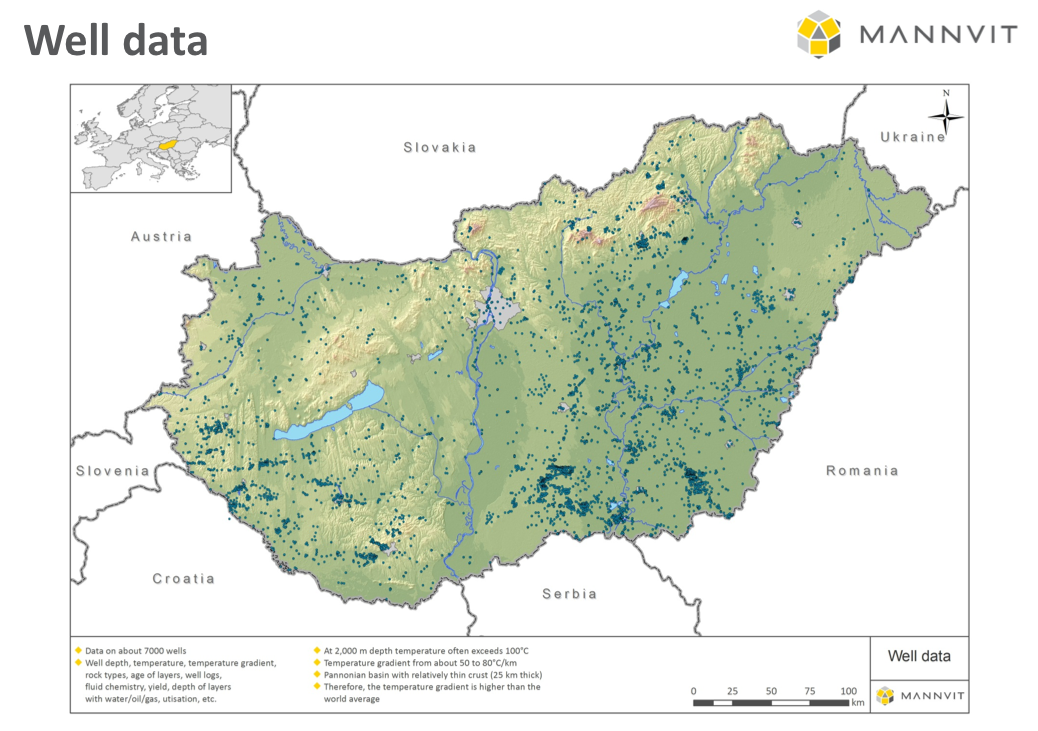
Mannvit-Hungary-Well-Data-MapThe project Mannvit is participating in is led by a consortium formed by Mannvit Hungary and EU-FIRE, which is a Hungarian real estate investment and consultant company. Mannvit Hungary is a subsidiary of Mannvit in Iceland, the veteran leader in geothermal power development with decades of experience in developing geothermal resources. The consortium is in a close cooperation with the Hungarian Ministry of National Development. Further development and execution of the project will require input from various engineering and scientific partners, both international and domestic.

The project was awarded almost EUR 40 million, while the total investment cost amounts to over EUR 100 million. This is a pioneering endeavor of creating a commercially viable geothermal resource for power generation in hot dry geological formations in Southeast Hungary. Geothermal energy systems constitute a sustainable source of electricity that is almost entirely free of greenhouse gas emissions. The Hungarian EGS project will produce electricity in an environmental friendly and sustainable way. The project will also provide various opportunities to strengthen the community with prospects in the fields of long-term employment in various sectors, knowledge transfer and development of secondary green industrial or horticultural development projects that will support social and economical development in the area.

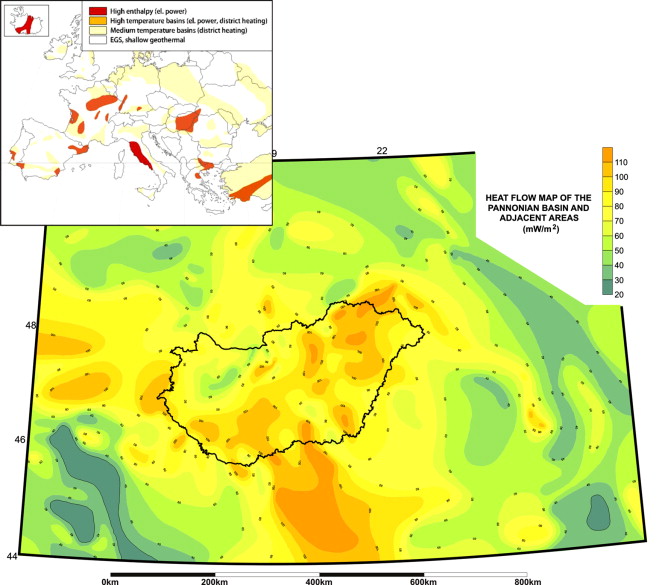
Hungary-Geothermal-Heat-Flow-MapThe EGS technology that lays the foundation of the project has an enormous potential to become an important contributor to the energy portfolio, not only in Hungary, but in the greater part the South Danube Region of central Europe. It represents a source of clean and renewable energy and thereby facilitates the EU goal  that 20% of the energy use is to be from sustainable renewable energy sources by 2020.

The Icelandic engineering firm Mannvit offers wide range of services in the fields of engineering, consulting, management, operations and EPCM contracting. The company was founded in 1963 and is employee-owned (more than 100 shareholders). It has headquarters in Reykjavik and branch offices or affiliates in Hungary, United Kingdom, Germany, Chile and the USA.

Other projects and activities by Mannvit on the European continent include mapping of geothermal potential in Serbia and deep drilling exploration project in Slovenia with the purpose to produce electricity. Also, Mannvit is developing geothermal possibilities in Bosnia and Herzegovina. More information about Mannvit can be found on the company’s website.

The Icelandic energy sector is back on track

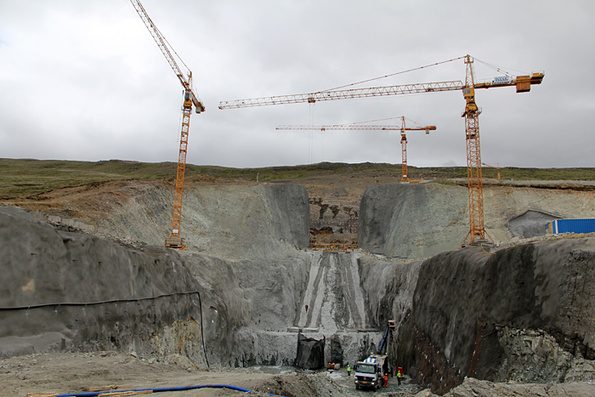
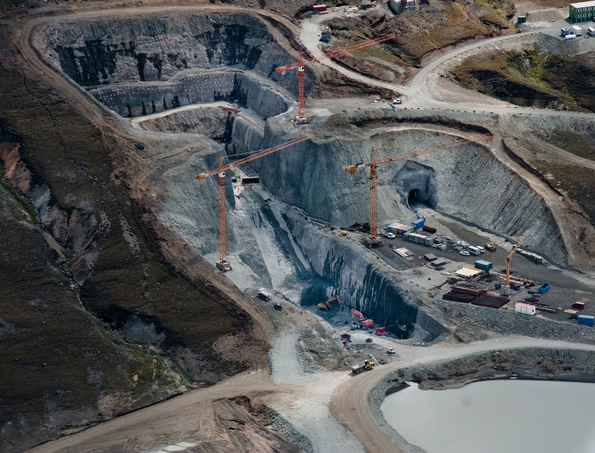
Construction of the new Búðarháls Hydropower Station in the southern highlands of Iceland is proceeding as scheduled.

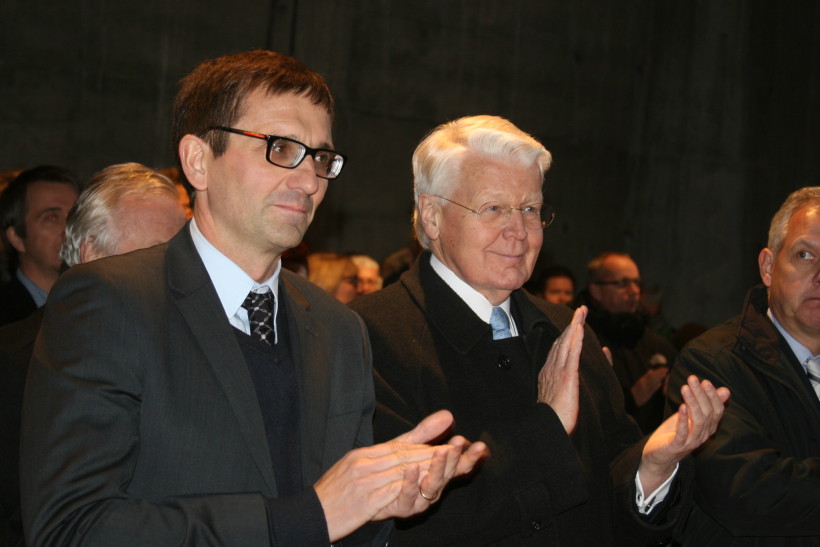
Last week the President of Iceland, Mr. Ólafur Ragnar Grímsson, laid the cornerstone to the station’s powerhouse. The construction of this new power plant commenced in late 2010. The station will have two 47.5 MW turbines, with a total power of 95 MW. It will start operation by end of 2013 and by 2014 the station will produce 585 GWh of electricity annually.

The project is part of Landsvirkjun’s expansion following an agreement to provide an aluminum smelter of Rio Tinto Alcan (RTA) with more power. RTA has more than 40 years operating history in Iceland and is currently expanding its aluminum plant at Straumsvík in Southwestern Iceland. This increases RTA’s electricity demand in Iceland by 658 GWh annually.

When the financial crises hit Iceland in late 2008, a period of economical difficulties followed and foreign investment became minimal. Iceland’s credit rating was downgraded and as the power company Landsvirkjun is state owned this downgrading was negative for the company.

However, the Icelandic economy soon started to show positive signs. In early 2011 Landsvirkjun secured full funding for the Búðarháls Project. This includes two loans from the Nordic Investment Bank (NIB) and the European Investment Bank (EIB), respectively. Each of the loans is 70 million USD. In addition, Landsvirkjun successfully issued bonds for 100 million USD through an Icelandic bank. It certainly seems that Landsvirkjun is back on the track.

Icelandic sustainable energy management solutions

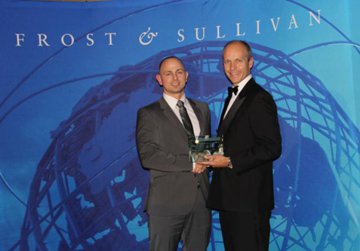
Icelandic startup ReMake Electric was recently awarded the 2012 Europe Early State Investment Opportunity Award by Frost & Sullivan Market Research and Consulting.

According to Frost & Sullivan, ReMake Electric has demonstrated excellence in its intellectual property, the experience of its management, its funding history and quality of its investors.

“ReMake Electric provides sustainable energy management solutions that help customers optimise their energy usage,” Frost & Sullivan Senior Analyst Vinod Cartic states in a press release on the company’s website. “Simple, innovative and versatile solutions promote energy conservation, while enabling customers to make economic gains.”

The firm excels in developing basic electrical metering products for energy consumption monitoring and analysis. It optimizes energy usage and creates savings on the energy bills of its customers, primarily based in Europe, through the development of electrical metering products. The company serves both residential and commercial customers, among them IKEA and Coca Cola.

In 2010 the company received the Golden Egg Innovation Award as the winner of the Icelandic Innovit innovation competition. Then, a total of 300 business ideas were submitted.

Icelandic geothermal know-how

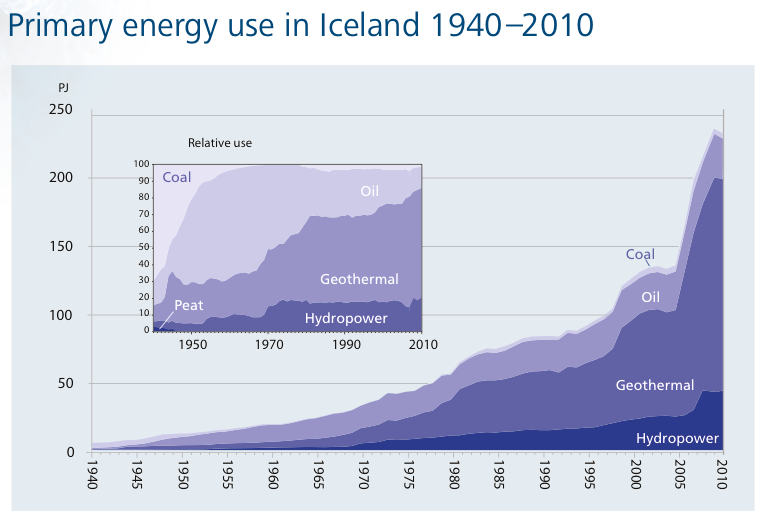
Iceland produces a substantial share of its electricity by harnessing geothermal resources. Geothermal plants now account for approximately one-quarter of all electricity generated and consumed in Iceland. In addition, Iceland has a long tradition harnessing low geothermal heat for central district heating. This explains why geothermal is such a large share of the primary energy use in Iceland (in total, close to 65% of Iceland’s consumption of primary energy is geothermal energy).

Several European countries are looking towards utilizing geothermal heat, not least as a source for electricity production. However, these countries do not share Iceland’s geophysical conditions – low-cost geothermal electricity is not an option unless you have access to very high temperatures. On the other hand it may be an excellent option for many European countries to harness their low geothermal heat for central heating.

This is an area of expertise where Iceland has great strength. Iceland has a long tradition harnessing low geothermal heat for central district heating, which explains why geothermal is such a large share of the primary energy use in Iceland.

Icelandic engineering firms have been exporting this know-how to countries on the European continent. This for example applies to Hungary. There, the company Mannvit has provided engineering, procurement, and construction management of a geothermal district heating plants. These types of plants are replacing fossil-fuel powered district heating systems with environmentally-friendly and sustainable geothermal energy.

This type of geothermal harnessing is an option that could be appealing for many communities in numerous countries in Europe. In addition to Hungary, this for example applies to Britain, Germany, France, Slovenia and several other countries. In a nutshell, domestic geothermal energy is a resource Europeans should consider very seriously for district heating.

Photo at left: An official groundbreaking ceremony marked the beginning of the construction process of the geothermal district heating plant in the town of Szentlőrinc, Hungary. The cornerstone was laid by Mr. Össur Skarphéðinsson, Foreign and External Trade Minister of Iceland, Pál Kovács, Deputy Secretary of Energy Policy from the Ministry of Development and, Dr. Márk Győrvári, the Mayor of Szentlőrinc.

Icelandic energy expertise in Georgia

The Icelandic energy industry has decades of experience in the hydropower and geothermal power sectors.

Most of the projects have of course been in Iceland. But in recent years Icelandic companies have increasingly been involved in hydropower and geothermal projects overseas. The most recent example of such a project is a consultancy agreement between the Icelandic firm Landsvirkjun Power and a Georgian hydropower company, which is developing new hydropower stations in Georgia.

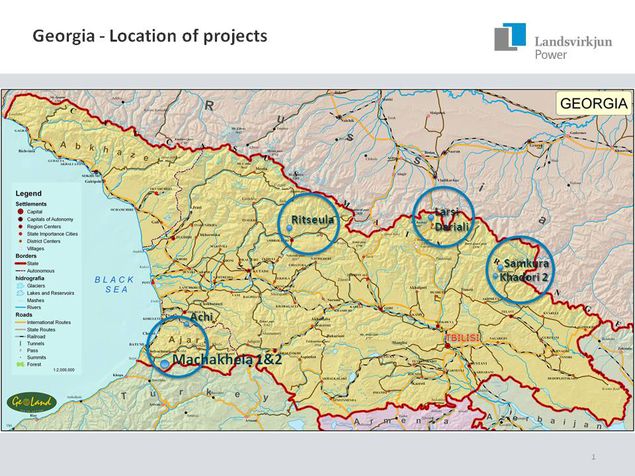
This agreement involves two hydroelectric plants with a capacity of 20-25 MW. They will be constructed on the river Machakhelistskali in the Adjara region,in southwestern Georgia, near the Turkish border. Landsvirkjun Power was the successful bidder for consultancy services and the contract was signed earlier this summer. The map (at left) shows the location of the project and other projects that Landsvirkjun Power has worked on in Georgia in the last few years.

With Icelandic engineers, Landsvirkjun Power will conduct site investigations at the Machakhelistskali and prepare a feasibility study, followed by initial project design, preparation of tender documents for construction work and detail design of civil works and review of design of equipment. The work is to be completed by end of 2015.

Landsvirkjun Power is the engineering, construction and foreign investment arm of Landsvirkjun; the Icelandic National Power Company. The purpose of Landsvirkjun Power is primarily consultancy in development of power schemes, and secondly, investment in such schemes outside of Iceland. The firm has also carried out activities in the hydro- and geothermal power sector e.g. in Albania, Canada, Greenland, and Turkey.

Strong Icelandic electricity growth

The recent growth in electricity generation and transmission in Iceland has been impressive.

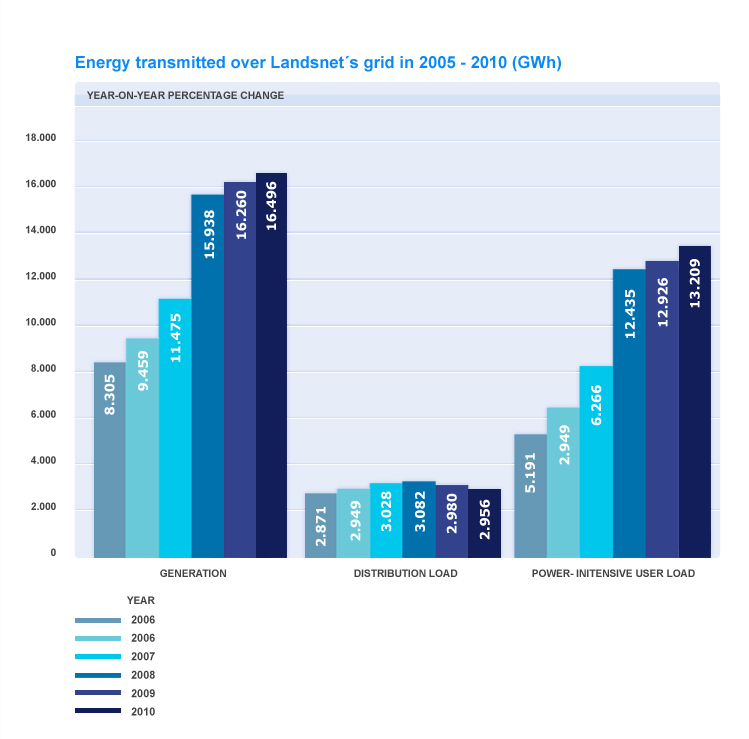
Between 2005 and 2010 the Icelandic electricity generation doubled. It is important to keep in mind that all this increase was in low cost renewable generation (mostly hydropower). And remember that almost 100% of all electricity generated in Iceland comes from renewable sources (hydro- and geothermal power).

This rapid increase in Iceland’s green electricity generation is shown on the histogram at left / above. Most of the increased production is supplied to new industries and services. One of the main explanation behind this growth is the competitive electricity price Iceland offers.

The abundant natural hydro- and high temperature geothermal resources make the Icelandic power industry able to offer electricity at substantially lower prices than for example can be found in any other European country. Even the present low spot-price for electricity in the USA (due to extremely low price of natural gas) are no threat to the Icelandic electricity industry. Companies that need substantial quantity of electricity and wish to operate within the OECD, will hardly find better long-term agreements than offered at the Icelandic market (43 USD/MWh in 12 year contracts are being offered by the Icelandic power company Landsvirkjun).

It is expected that demand for Icelandic renewable electricity will grow quite fast over the next few years. The fact that Iceland still has numerous very competitive unharnessed hydro- and geothermal options, makes the country an interesting location for all kinds of energy intensive industries and services. This may for example apply to data centers, aluminum foils production, several silicon production facilities etc.

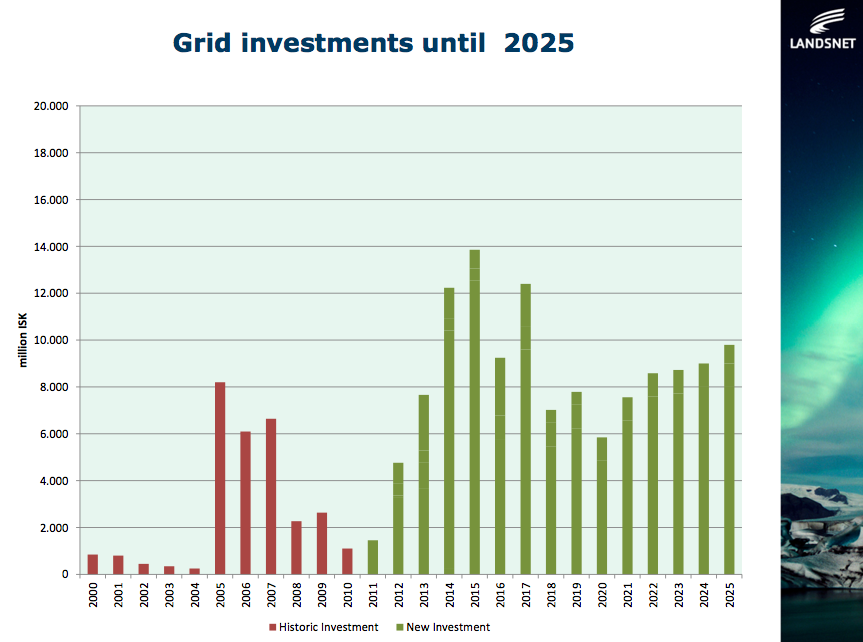
When having in mind the probable high growth in Icelandic electricity generation in the forthcoming years, it is not surprising that Landsnet (the Icelandic Transmission System Operator; TSO) is considering major investments in the electricity transmission system. The diagram at left is from Landsnet. It is interesting that even the major increase in transmission investments during 2005-2010 is fairly small compared to what may be expected in the next 10-15 years.

This plan for new transmission projects is not final yet. But it gives a clear view of the opportunities Iceland has regarding new and competitive green energy projects. No other western country enjoys similar economic possibilities based on 100% renewable energy.

Búðarháls power station

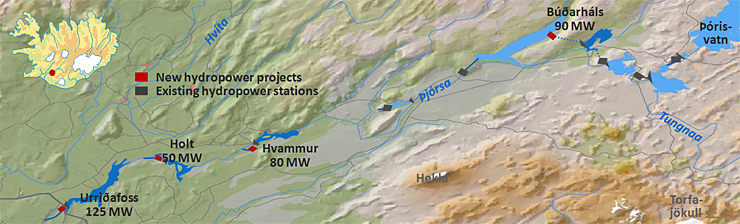
The glacial river system of Þjórsá and Tungnaá rivers in South Iceland is a major source for Icelandic hydropower.

Current capacity of the five power stations in those two rivers is 840 MW, with an annual generation of more than 5,000 GWh. The sixth power station in Þjórsá-Tungnaá, Búðarháls Station, will start operating in late 2013. It will have an installed power capacity of 95 MW and every year it will be generating 585 GWh. Then, the total annual generation in Þjorsá-Tungnaá will be close to 5,600 GWh.

All these six hydropower stations are owned and operated by Iceland’s largest power company; Landsvirkjun. In addition, Landsvirkjun is considering to construct three more power stations in Þjórsá river. Those three stations would have a combined capacity of 265 MW, adding more than 2,000 GWh of power generation per annum.

The Búðarháls Power Station received a positive assessment of environmental impact already in 2001 and construction commenced in November 2010. The electricity from the Búðarháls Station has already been sold to the aluminum smelter of Rio Tinto Alcan in Straumsvík in Southwest Iceland. The smelter in Straumsvík has 40 years successful operating history and the electricity from Búðarháls Station will be used for substantial increase in its aluminum production.

The project at Búðarháls includes a new 6 km² intake reservoir, Sporðöldulón, created with a 2.1 km long dam just below the Hrauneyjarfoss Power Station. A 7 km long 220 kW transmission line will be erected from the new power station to the Hrauneyjafoss line to connect Búðarháls Station with the National Grid.

It is worth having in mind that besides the three additional power stations Landsvirkjun is preparing in Þjórsá, as mentioned above, the company is considering several other attractive hydro- and geothermal power projects. Currently, Landsvirkjun is offering new power contracts that probably are the best offer available in all Europe. The company is offering a fixed real rate of $43/MWh in 12 year contracts.

In addition to the very competitive price, all the electricity Landsvirkjun produces comes from harnessing renewable power sources. No less important is the fact that all the Icelandic power stations are known for their excellent reliability – and the same applies to the Icelandic transmission system. This has been confirmed in numerous international reports, where Iceland’s electricity supply is ranked among world’s most secure (see for example IMD’s and WEF’s World Competitiveness reports).

Understanding geothermal

Iceland produces substantial share of its electricity by harnessing geothermal resources. Geothermal plants now account for approximately one-quarter of all electricity generated and consumed in Iceland.

Several European countries are also looking towards geothermal heat as a source for electricity production. This for example applies both to Germany and Britain. However, these countries do not share Iceland’s  geophysical conditions and low-cost geothermal electricity is not an option unless you have access to very high temperatures, .

In Iceland, geothermal electricity generation is only considered feasible in areas where geothermal heat is at least 200°C  at a depth that is less than 1,000 m. This applies to many areas within the orange zone on the map above. Outside of this zone the heat is lower and more similar to what can be found in several areas in Europe.

Countries like Germany and Britain are building geothermal power plants in low-heat areas that would not be consider competitive in Iceland. However, it is understandable that European countries want to harness even their low geothermal heat for electricity generation. Wind energy is also an expensive option and so is solar energy (whether PV or CSP). There simply are very limited low-cost options available in European renewable generation.

Interestingly, it may be an excellent option for European countries to harness their low geothermal heat for central heating rather than generating electricity. This is an area of expertise where Iceland has great strength. Iceland has a long tradition harnessing low geothermal heat for central district heating, which explains why geothermal is such a large share of the primary energy use in Iceland (as can be seen on the chart above).

Recently, Icelandic engineering firm Mannvit exported this know-how to Hungary. There, the company provided engineering, procurement, and construction management of a geothermal district heating plant in the town of Szentlőrinc in the southwestern part of the Hungary.

The plant provides heating and hot water for some 900  homes in Szentlőrinc, and has excess capacity for further expansion. This new geothermal plant replaces the town’s natural-gas powered district heating system with environmentally-friendly and sustainable geothermal energy.

This type of geothermal harnessing is an option that could be interesting for many communities in numerous countries in Europe. In addition to Hungary, this for example applies to Germany, France, Slovenia and several other countries.

In a nutshell, geothermal is a resource Europeans should consider very seriously for district heating. This especially applies to local communities, taking an initiative not only towards more renewable energy but at the same time greatly  improving peoples living conditions. Instead of focusing too much on wind and solar and renewable electricity generation, governments need to understand and realize the multiple potentials of geothermal.

Engineering Expertise

Icelandic engineers and technicians are known for their world-class expertise.

Icelandic engineering and consulting firms have up to 50 years experience in development and construction of hydro- and geothermal power plants and related areas, such as power transmission and infrastructure. Their projects are all around the world, covering wide range of services, including engineering, procurement, construction and maintenance.

For more information about the Icelandic engineering sector go to our pages on engineering & technology. You can also explore more related information, such as the main industries in Iceland and possibilities for foreign investment, under the invest category in the Main Menu.