Skip to content

Posts from the ‘World Energy’ Category

Data centers in Iceland offer dramatic savings

Businesses overseas are turning to Iceland to host their data, making use of cheaper energy and natural cooling resources. Icelandic datacenters do not only offer very competitive prices, but also reduce carbon footprint and improve green credentials, as they are powered by renewable electricity only (from natural hydro- and geothermal resources).
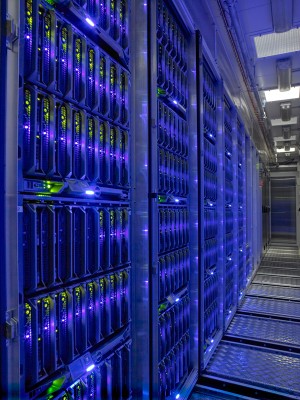
datacenter-icelandA recent study by PricewaterhouseCoopers found that the operating expenditure of a 10,000 sqf data center in Iceland, over a 15 year period, is USD 130 million cheaper than running it in the United Kingdom or in Continental Europe. Thus, Iceland offers dramatic savings in the long run.

According to Invest in Iceland, a government body provides information to foreign investors, a fifth of data centre costs are spent on power. Half of that is used for cooling. In Iceland, businesses have access free-air cooling all year round and thus saving substantially on cooling costs.

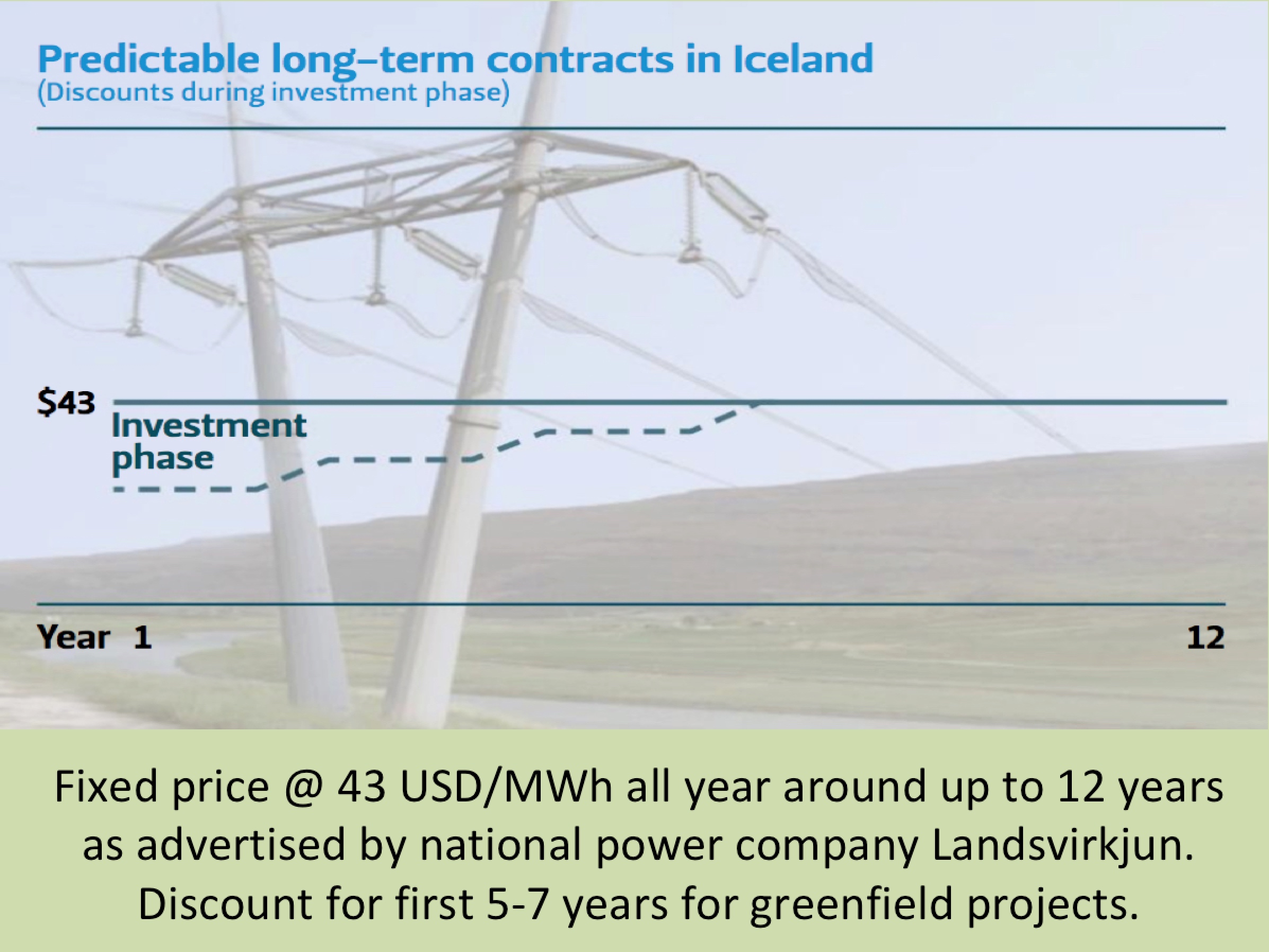
In addition, the electricity is much cheaper in Iceland than in the rest of Europe. In Iceland, data centers are currently being offered power at the price of USD 0.043 (4.30 cents) per kWh, which is less than half of the price which is common in other European countries. This low Icelandic price can be locked up for at east 12 years, offering businesses a clear understanding of operating expenses in the long run.

Furthermore, while cost is one of the major factors attracting data centre investment and services to Iceland, carbon footprint is also an important driver for European businesses to consider Iceland as a location for their data. As European carbon taxes begin to bite, companies are looking towards Iceland’s carbon free data centers as a long-term option to demonstrate their commitment to green IT. Currently, three data centers have been constructed; the Advania, GreenCloud and Verne Global.
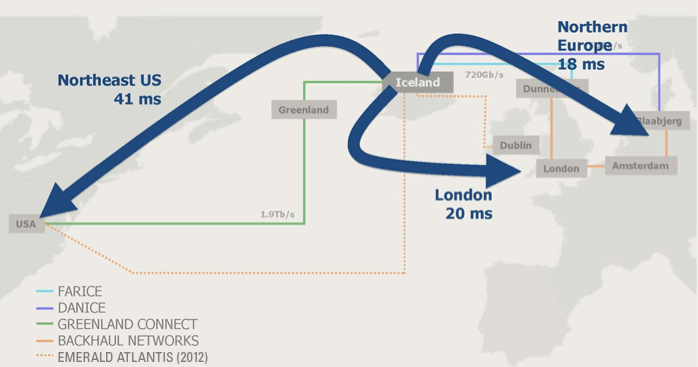
Iceland-Data-Fiber-ConnectionsThe Icelandic electricity generation and distribution ranks as one of the most reliable in the world. Thus, Iceland data centers offer 99.999% uptime, and power companies are willing to put that uptime in the contract agreement. Connectivity to the Icelandic data center facilities is provided by redundant, high-capacity, multi-terabit-per-second connections, including Farice, Danice and Greenland Connect.

Volcanic activity in Iceland may have the effect making investors reluctant to invest in data centers in Iceland and same may apply to businesses regarding hosting their data in the country. But the fact is, that large areas in Iceland have no volcanic activity and none seismic risk. In a nutshell, the risk for data centers from natural hazards or extreme weather are no higher in Iceland than in most other European countries.

Reykjavik-Center-WinterThe regulatory environment in Iceland is clear and is built on European standards (Iceland is a full member of the European Economic Area; EEA). Numerous agencies and local governments are willing to assist companies interested in investing. Our readers are welcome to contact us at the Icelandic Energy Portal for more information. You can call us at +354-863-8333 and/or send message through our contact-form.
Mannvit Engineering awarded EU energy funding

Recently, the Commission of the European Union (EU) awarded more than EUR 1.2 billion to several highly innovative renewable energy technology projects within the EU. One of the selected projects is Hungary’s first Enhanced Geothermal System (EGS), with the participation of Icelandic engineering firm Mannvit.

EU-climate_action-logoThe Hungarian EGS project was selected by the Hungarian Ministry of National Development amongst a series of project proposals to participate on behalf of Hungary in a special programme called NER300. The NER300 programme is one of the world’s largest funding programmes for innovative low-carbon energy demonstration projects. The programme will act as a catalyst for the demonstration of environmentally safe carbon capture and storage (CCS) and innovative renewable energy sources (RES) technologies on a commercial scale within the EU.

The programme is run by the European Comission on member state basis. It is funded by the sale of 300 million emission allowances from the New Entrants Reserve (NER) set up for the third phase of the EU Emissions Trading System (ETS). NER300 funding is expected to leverage a considerable amount of private investment and/or national co-funding across the EU, boost the deployment of innovative low-carbon technologies and stimulate the creation of jobs in those technologies within the EU.

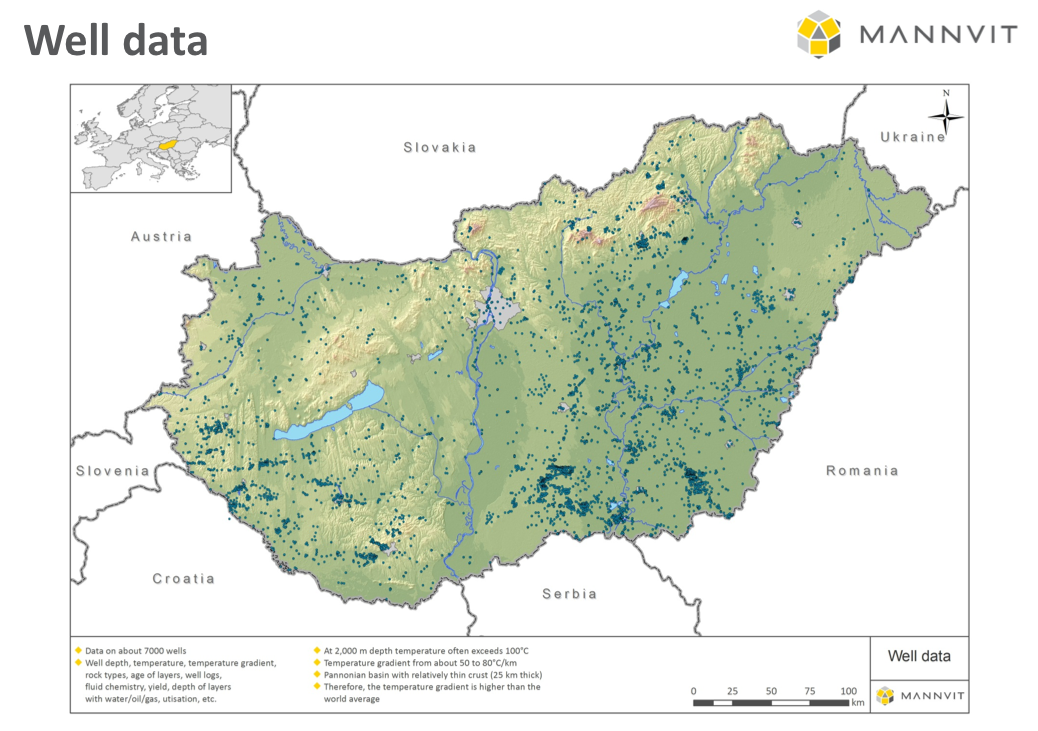
Mannvit-Hungary-Well-Data-MapThe project Mannvit is participating in is led by a consortium formed by Mannvit Hungary and EU-FIRE, which is a Hungarian real estate investment and consultant company. Mannvit Hungary is a subsidiary of Mannvit in Iceland, the veteran leader in geothermal power development with decades of experience in developing geothermal resources. The consortium is in a close cooperation with the Hungarian Ministry of National Development. Further development and execution of the project will require input from various engineering and scientific partners, both international and domestic.

The project was awarded almost EUR 40 million, while the total investment cost amounts to over EUR 100 million. This is a pioneering endeavor of creating a commercially viable geothermal resource for power generation in hot dry geological formations in Southeast Hungary. Geothermal energy systems constitute a sustainable source of electricity that is almost entirely free of greenhouse gas emissions. The Hungarian EGS project will produce electricity in an environmental friendly and sustainable way. The project will also provide various opportunities to strengthen the community with prospects in the fields of long-term employment in various sectors, knowledge transfer and development of secondary green industrial or horticultural development projects that will support social and economical development in the area.

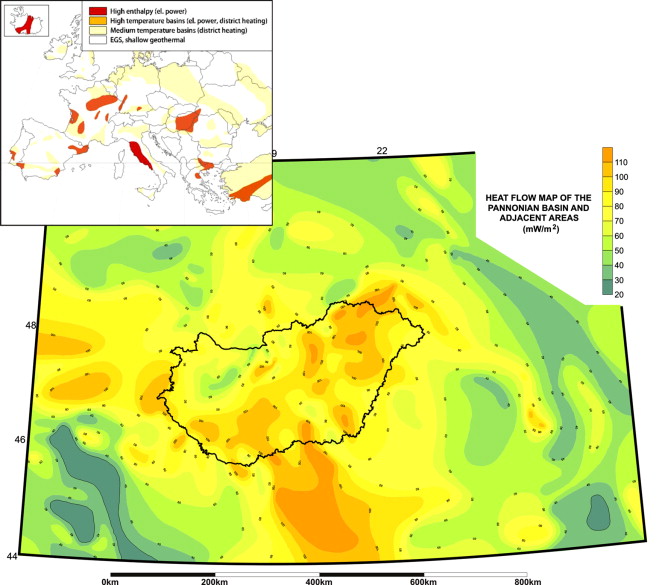
Hungary-Geothermal-Heat-Flow-MapThe EGS technology that lays the foundation of the project has an enormous potential to become an important contributor to the energy portfolio, not only in Hungary, but in the greater part the South Danube Region of central Europe. It represents a source of clean and renewable energy and thereby facilitates the EU goal  that 20% of the energy use is to be from sustainable renewable energy sources by 2020.

The Icelandic engineering firm Mannvit offers wide range of services in the fields of engineering, consulting, management, operations and EPCM contracting. The company was founded in 1963 and is employee-owned (more than 100 shareholders). It has headquarters in Reykjavik and branch offices or affiliates in Hungary, United Kingdom, Germany, Chile and the USA.

Other projects and activities by Mannvit on the European continent include mapping of geothermal potential in Serbia and deep drilling exploration project in Slovenia with the purpose to produce electricity. Also, Mannvit is developing geothermal possibilities in Bosnia and Herzegovina. More information about Mannvit can be found on the company’s website.

Icelandic energy basics

Today, we publish the first post in a special introductory series about the Icelandic energy sector.

This series will include the following seven headings:

–  Icelandic Energy Basics (today)
–  New Low-Cost Renewable Capacity (December 17th)
–  The Icelandic Electricity Generation and Transmission (December 24th)
–  Overview of the Icelandic Energy Business (January 2nd 2013)
–  The Largest Consumers of Electricity in Iceland (January 7th 2013)
–  Future Growth of the Icelandic Energy Industry (January 14th 2013)
–  Gaining from the European Green Drivers (January 21st 2013)

———————————————————————————

WORLD RECORD FOR RENEWABLE ENERGY

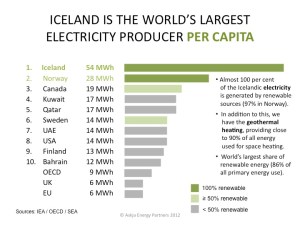
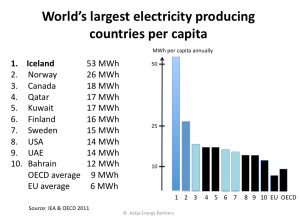
Iceland-Electricity-Production-Per-Capita-ComparsionNatural hydro- and geothermal resources have made Iceland the world’s largest green energy producer per capita.

Last year (2011) the electricity industry in Iceland produced 17,210,000 MWh (17.2 TWh) of electricity, which is close to 54 MWh per capita. In comparison, the average electricity production per capita by the countries within the OECD and EU is close to 9 MWh and 6 MWh, respectively.

What makes the Icelandic energy profile even more interesting, is the fact that all the electricity is produced by harnessing renewable sources only. Renewable energy sources (hydro and geothermal) supply almost 100% of Iceland’s consumption of electricity. Furthermore, geothermal district heating provides almost 90% of Iceland’s heating needs.

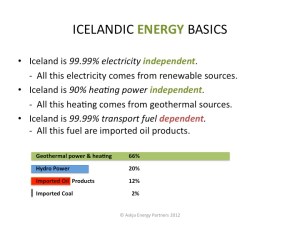
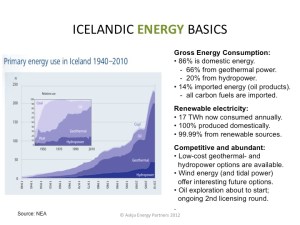
Iceland-Energy-Independence-Primary-EnergyIn total, approximately 86% of Iceland’s consumption of primary energy comes from renewable sources. Of that total, 20% comes from hydropower- and 66% from geothermal sources. This is the world’s highest share of renewable energy in any national total energy budget.

Although hydropower and geothermal power offer the lowest cost opportunities, Icelandic wind energy may also be harnessed in the near future. The first large wind turbines in Iceland are expected to become operational in 2013.

TOWARDS EVEN STRONGER ENERGY INDEPENDENCE

Iceland-Primary-Energy-Use-History_1940-2010The high share of renewable energy in Iceland’s energy portfolio (86%) is despite the fact that Iceland imports almost all its transport fuel. Today, imported carbon fuels and other oil products account for 14% of the gross energy consumption in Iceland. This number may soon become somewhat lower, as oil exploration is about to start at the continental shelf deep Northwest of Iceland’s shore.

Iceland’s renewable energy sources are not only abundant, relative to the size of the nation as a whole, but they are also available at a comparatively low cost. The cost issue will be discussed further in next week, here at Icelandic Energy Portal. Read more

Icelandic geothermal know-how in Africa

Last week, the Icelandic Minister for Foreign Affairs, Mr. Össur Skarphéðinsson, presented the most extensive development project Iceland has participated in.

This is an international project in collaboration with the World Bank. The project is part of the World Bank Global Geothermal Development Plan, estimated to amount to USD 500 million (ISK 64 billion, EUR 393 million).

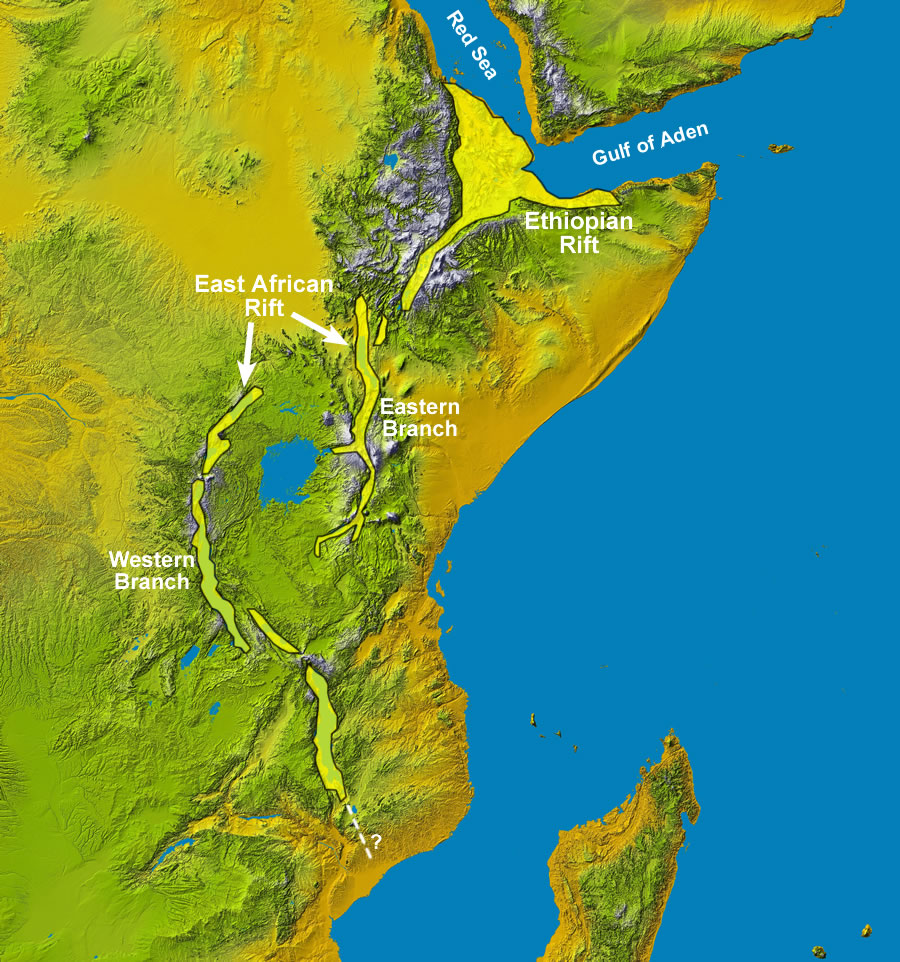
The project targets thirteen countries of the Great Rift Valley in East Africa. They include Burundi, Djibouti, Eritrea, Ethiopia, Kenya, Malawi, Mozambique, Rwanda, Somalia, South-Sudan, Tanzania, Uganda, and Zambia. The Great Rift Valley is known for widespread geothermal activity. However, little of this energy has been harnessed, due to limited access to both capital and know-how.

This collaboration between Iceland and the World Bank is the largest initiative so far for promoting the utilization of geothermal energy in developing countries. The World Bank  will provide finance for geothermal feasibility assessments and test drilling. The Nordic Development Fund (NDF) and the Government of Iceland will also provide part of the funding. The Icelandic International Development Agency, ICEIDA, will be the lead agency for this component.

Iceland will assist the respective states with geotechnical investigations of promising sites, detailed geophysical, seismic, environment and chemical tests including test drilling and assessments. The World Bank will collaborate with Iceland, other partners and funding agencies to establish a flexible financing facility that can in part share the costs and risks of specific drilling programs in the target countries.

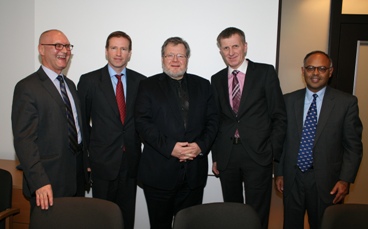
The agreement on the project was signed in Reykjavik in last week. In addition to the Icelandic Minister for Foreign Affairs, it was signed by Mr. Pasi Hellman, Managing Director of the Nordic Development Fund, Mr. Engilbert Guðmundsson, Director General of Iceland‘s International Development Agency, and Mr. Rohit Khanna, Program Manager of the Energy Sector Management Assistance Program (who represented the World Bank).

BMW and Icelandic energy in the media

Recently, there has been a lot of international media coverage about Icelandic energy issues.

This includes numerous news-stories about the decision of the flash German car maker BMW to move its high performance computing to a data centre in Iceland, powered by renewable energy. This will save around 3,600 tonnes of carbon emissions per year.

According to the news, BMW  is moving ten of its high performance computing clusters, consuming 6.31 GWh of energy each year annually, from Germany over to the Verne Global Data Centre in Southwest Iceland. The data centre uses electricity from 100 percent renewable sources – Iceland’s geothermal and hydroelectric generators.

Besides the carbon free renewable energy, Icelandic electricity is much cheaper than in any other OECD-country. Thus, BMW will save around 80 percent of the power costs of running calculations including crash test and aerodynamics simulations, as well as computer aided design and engineering calculations.

For more news about Icelandic energy issues, please go to our media-page.

The Energy of Adventure in Iceland

Today, two young Russians began their world journey to research global energy and explore how the most challenging energy problems are being dealt with in different parts of the world. Later this week they will be heading for Iceland.

Maria Khromova (24) and Egor Goloshov (21) are on a backpacker-style tour of the world to talk with energy leaders around the globe about their energy challenges and innovations. Over their journey, they will meet with an array of energy experts, including scientists and academics, and visit a variety of companies and organizations.

The pair plan to visit almost twenty countries n the next three months to assess how energy challenges are being dealt with. They began their tour in Germany, which has more installed solar energy generation capacity than any other country in the world and has plans for decommission all of its nuclear power plants and replace them with renewable energy sources. Iceland, with its 100% renewable electricity market, will be their next stop.

Besides Germany and Iceland, Maria and Egor are also scheduled to visit China, France, Israel, Italy, Kazakhstan, and South Korea in the first weeks of their trip. Then they will be going to Australia, Brazil, Denmark, India, Japan, Spain, Tanzania, the United Arab Emirates (UAE), and the USA before finishing the trip back in Moscow. Their plan is to talk to country leaders and authorities about how they are preparing to meet the energy challenges the world is facing.

They intend to report about their findings, discussions, and observations over the course of their tour in hopes of inspiring and triggering new thinking and ideas for addressing today’s interconnected energy challenges. Through social media, incorporating video blogging, Facebook and Twitter, the pair will share their stories with the world. The story of the Energy of Adventure will not only be educational, but also personal,  as the pair encounter different environments and cultures, develop their own friendship, and face challenges with only each other to rely on.

Maria Khromova is trained in the power industry and Egor Goloshov is an economist. They were selected in last May out of a competitive pool of 49,000 applicants from across Russia as part of the non-profit Energy of Adventure project.

Energy of Adventure is one of the programs of the Global Energy Prize; an “independent award for outstanding scientific research and technological development in energy, which contribute to efficiency and environmentally friendly energy sources for the benefit of humanity.”  The award was established in Russia, with the support of leading Russian energy companies such as Gazprom. Energy of Adventure is describes as an initiative to draw public attention to critical energy issues in Russia and abroad, to encourage the search for new solutions to energy problems of the present and future.

Maria and Egor are said to be looking forward to their journey in the whole and are impatient to see the world of energy in all its diversity. It will be interesting to hear their experience from visiting Iceland. Not least after they have visited almost twenty of the most interesting energy hot-spots in the world.  According to Icelander Þorsteinn Ingi Sigfússon, Director of the Innovation Center in Iceland and a Global Energy Prize Laureate, this is “a great opportunity for the younger entrants into the energy-business-world to see firsthand how actors across the energy supply chain and in different parts of the world are coping with their unique set of energy challenges and problems.”

World’s largest electricity producer per capita

Iceland is the world’s largest electricity producer per capita. Norway comes in second place, by generating approximately half the electricity per capita of that of Iceland.

Other countries on the top-ten list of the world’s largest electricity producers per capita are Canada, Qatar, Kuwait, Finland, Sweden, United States of America (USA), United Arab Emirates (UAE) and Bahrain.

Most of the countries on the top-ten list of the world’s highest electricity producing countries per capita generate most or all their electricity from fossil fuels, especially gas and coal. However, both Iceland and Norway produce close to 100% of their electricity from renewable sources (both countries draw from hydroelectric power, but Iceland has a unique energy source in its geothermal power). Thus, Iceland and Norway are not only the largest producers of electricity (per capita) in the world, but also by far the world’s largest green electricity producers (per capita).

Canada, Finland and Sweden all have extensive hydropower sources and utilize them for electricity generation. Thus, they might be described as semi renewable electric producers (thus marked with light blue color on the graph, whereas Iceland and Norway are marked with dark blue). It is also noteworthy that Canada generates approximately