Skip to content

Posts from the ‘Geothermal Power’ Category

10 TWh of green energy available
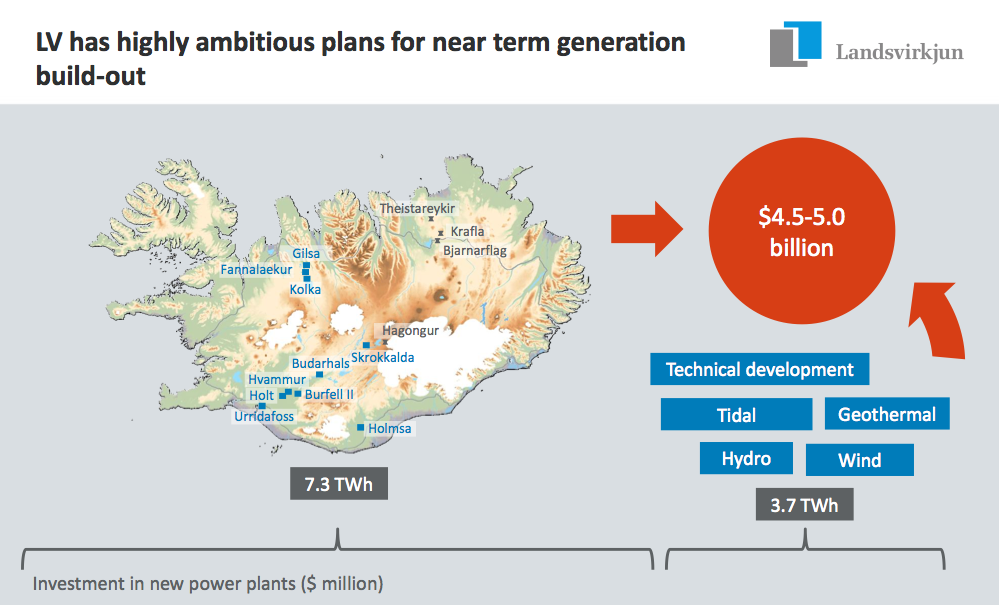
Iceland-Landsvirkjun-New-Renewable-Electricity-GenerationThe Icelandic power company Landsvirkjun has introduced plans for several new renewable energy projects.

If all these projects will be realized, they will add close to 7 TWh of annual generation from natural hydro- and geothermal sources. All the projects have been identified. As Landsvirkjun is owned by the Icelandic government, formal decisions about which of the projects will be realized first depends on the Icelandic parliament.

In addition, Landsvirkjun has put a figure on several other possible new power projects, that could be generating electricity within a decade or so. In total, Iceland may within near future be producing 9-10 TWh more electricity than today. This is not an exact figure; the new additional capacity could be somewhat less or even more. This will depend on the interest of new users of electricity, such as data centers, silicon industry etc. However, the most interesting option may be selling part of the new electricity production to markets in Europe.
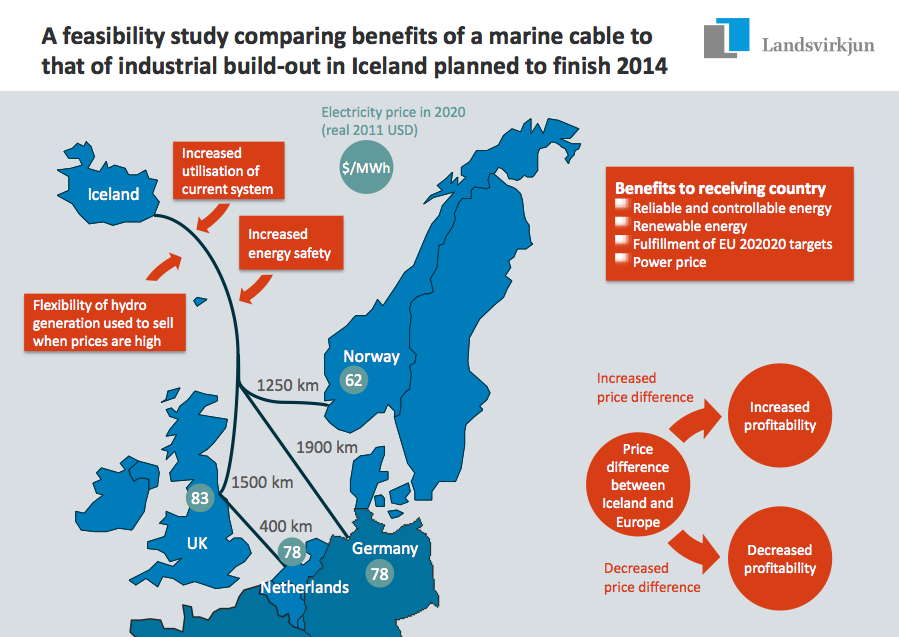
Iceland-Landsvirkjun-HVDC-Feasabilty-StudyA feasibility study on a possible electrical cable (high voltage direct current cable; HVDC) between Iceland and Europe is currently being carried out by a special working group. The group includes people from the Icelandic power sector and other stakeholders, appointed by the Icelandic Minister of Industries and Innovation. It is expected that the working group will deliver its report  during next year (2014).

The high electricity prices in Europe make a cable to Europe an especially interesting option for the Icelandic power generating firms. During the last few years, wholesale electricity prices in Western Europe have often been around three times higher than in Iceland. Thus, an electric cable between Iceland and Europe could increase the profits of Icelandic power companies  substantially.
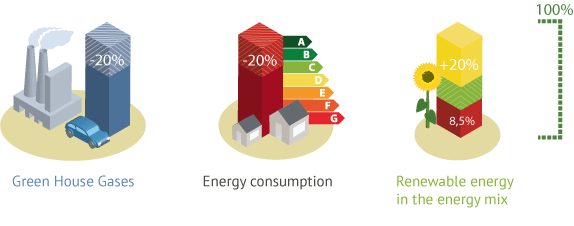
EU-energy-policy-20-20-20There would be numerous other positive gains from such a cable, as presented on the slide at left (the slide is from a presentation by Landsvirkjun). For example, the Icelandic power companies would be able to maximize the current capacity, resulting in more production. Europe would enjoy access to new green electricity generation, which would help the member states of the European Union (EU) in achieving climate- and energy goals (the EU aims at raising the share of EU energy consumption produced from renewable resources to 20% no later than 2020). The issues of such a connection between Iceland and Europe was described in more details in one of our earlier posts.

In the forthcoming months it will hopefully become clearer if Europe may gain access to the geothermal- and hydropower of Iceland.
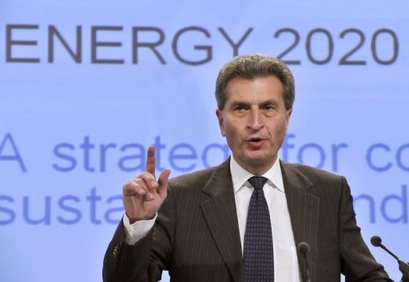
European Union welcomes Icelandic geothermal know-how

Earlier this month the Energy Commissioner of the European Union (EU), Mr. Günther Oettinger, emphasized the importance of Icelandic geothermal experience and know-how for EU’s energy policy.

oettinger-geothermal-energy-eu-policyIn his closing speech at the Iceland Geothermal Conference 2013 in Reykjavik, Mr. Oettinger backed binding targets for renewable energy for 2030, noting that geothermal energy can “help us reach our energy and climate goals, and that we can expect the utilization of geothermal energy  to become more and more prominent”.

In European context, geothermal is currently just slightly over 0.1% of the total electricity generation. Around 1% of the renewable power generation within the EU comes from geothermal and geothermal accounts for approxemately 3% of EU’s renewable heat production.

Mr. Oettinger pointed out that the EU can learn a lot from Iceland regarding utilization of geothermal energy. Iceland alone generates almost as much electricity from geothermal sources as the rest of the EU put together. While all the 27 member states of the EU produce close to 6 TWh of electricity from geothermal sources annually, the figure in Iceland is 4,7 TWh. Another comparison Mr. Oettinger mentioned in his speech, is that Iceland produces more than ten times as much geothermal heating as Germany.

With this said, Mr. Oettinger expressed that it is “no surprise that the United Nations decided in 1978 to base its University Geothermal Training Programme in Iceland”. He went on stressing that Iceland has shown that by getting the energy policy and prices right, the jobs and businesses will follow.

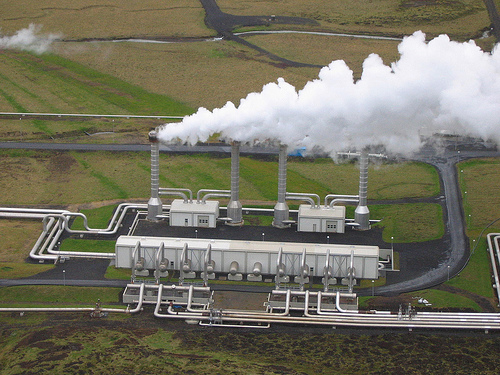
Iceland-Geothermal-Station-PipesMr. Oettinger said that geothermal can help EU’s member states achieving their energy policy goals on sustainability, competitiveness, security of supply, and geopolitical security. Of course geothermal will never be taking off in the EU the same way as in Iceland – the geography and geology is simply too different for that. “But we reckon that if we played it right, we could get 5% of our energy demand from geothermal within 10 years.”

This is a very interesting suggestion of a possible goal by Mr. Oettinger. Not only would this call for a massive investment in the geothermal sector, but at the same time offer great possibilities for Icelandic businesses, with their extensive knowledge of geothermal utilization. In this respect it is worth mentioning the Icelandic engineering firms are already is working on several geothermal projects on the European continent and elsewhere in the world.

Possibly, geothermal utilization for heating and cooling (by geothermal heat pumps) could be the best option for the EU in growing its use of geothermal energy. Thus, it is not surprising that in his speech Mr. Oettinger especially mentioned that although the EU does have “nowhere near the geothermal resources that Iceland has, there is plenty of potential in Europe, in particular for heating”. This may for example apply to countries like Germany, Hungary, Romania and Slovenia, just to name a few of EU’s member states.

Iceland-Geothermal-Conference-2013-Gekon-logoFrom Mr. Oettinger’s speech at the Iceland Geothermal Conference, it seems clear that we may expect more cooperation in the field of geothermal energy between the EU and Iceland. Mr. Oettinger expressed EU’s interest in increasing financial support for more geothermal research. In this regard he mentioned the European GEOFAR project (Geothermal Finance and Awareness in European Regions), and stressed his aim to get bankers and investors more interested, as well as conventional extractive industries, including oil and gas.

Next Iceland Geothermal Conference will be taking place in April 2016.

World Bank calls for global geothermal energy initiative

Walking out of Keflavik airport as the arctic breeze hit my face at 50 km per hour, I thought to myself, “I love my job.”

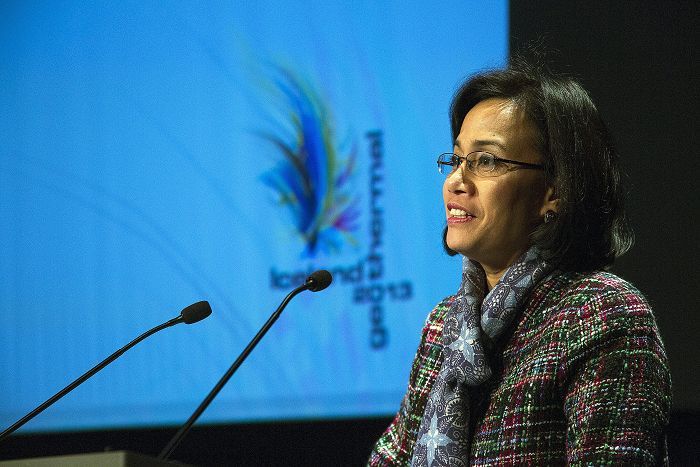
Sri Mulyani Indrawati-Iceland-2012These words are from a recent blog of Mrs. Sri Mulyani Indrawati, Managing Director of the World Bank, following her visit to Iceland. There, Sri Mulyani was a keynote speaker at at the Iceland Geothermal Conference, which took place in Reykjavik on March 5-8. Roughly 600 participants, delegates, and exhibitors attended the conference to discuss changes and forward thinking within the energy industry, with 55 presentations given by global figureheads within the industry.

The Geothermal Conference has helped carry a positive message for the possibilities within the green energy industry. A major obstacle for geothermal projects has been the initial test drilling phase, which can be very expensive and risky. By its new Global Geothermal Development Plan (GGDP), the World Bank hopes to attract more investment into geothermal exploration.

The focus of the GGDP is on geothermal opportunities in the developing world. Many developing world regions are rich in geothermal resources, including East Africa, Southeast Asia, Central America, and the Andean region. The GGDP will bring together donors and multilateral lenders around an investment plan to scale up geothermal power, with the goal of developing a pipeline of commercially-viable projects that are ready for private investment.

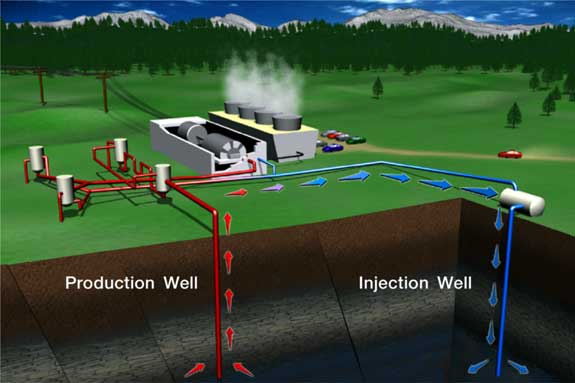
Geothermal-plant-illustrationPromising sites will be identified and exploratory drilling financed, with the aim of developing commercially viable projects.  The Plan’s initial target is to mobilize USD 500 million. Donors can participate by identifying viable projects, and through bilateral assistance, as well as by contributing to existing channels such as the Climate Investment Funds (CIF’s) or the Global Environment Facility (GEF).  The GGDP will be managed by the World Bank’s longstanding Energy Sector Management Assistance Program (ESMAP).

The World Bank and Iceland are already working together to support surface exploration studies and technical assistance for countries in Africa’s Rift Valley. This cooperation includes project financing of geothermal exploration in thirteen East Africa Rift Valley by the Icelandic International Development Agency (ICEIDA) and the Nordic Development Fund (NDF).

Iceland-Geothermal-power-plant-1The GGDP expands on previous efforts by its global scope, and will build on regional efforts such as the coopertaion between Iceland and the World Bank. “Until now, our work has been at the country and regional levels,” Sri Mulyani said. “These efforts are important, and should continue.  But a global push is what is needed now. Only a global effort will put geothermal energy in its rightful place – as a primary energy source for many developing countries.  Only a global effort will pool resources to spread the risk effectively. It will let us learn from each other, from our failures and successes, and apply that learning.”

Data centers in Iceland offer dramatic savings

Businesses overseas are turning to Iceland to host their data, making use of cheaper energy and natural cooling resources. Icelandic datacenters do not only offer very competitive prices, but also reduce carbon footprint and improve green credentials, as they are powered by renewable electricity only (from natural hydro- and geothermal resources).

datacenter-icelandA recent study by PricewaterhouseCoopers found that the operating expenditure of a 10,000 sqf data center in Iceland, over a 15 year period, is USD 130 million cheaper than running it in the United Kingdom or in Continental Europe. Thus, Iceland offers dramatic savings in the long run.

According to Invest in Iceland, a government body provides information to foreign investors, a fifth of data centre costs are spent on power. Half of that is used for cooling. In Iceland, businesses have access free-air cooling all year round and thus saving substantially on cooling costs.

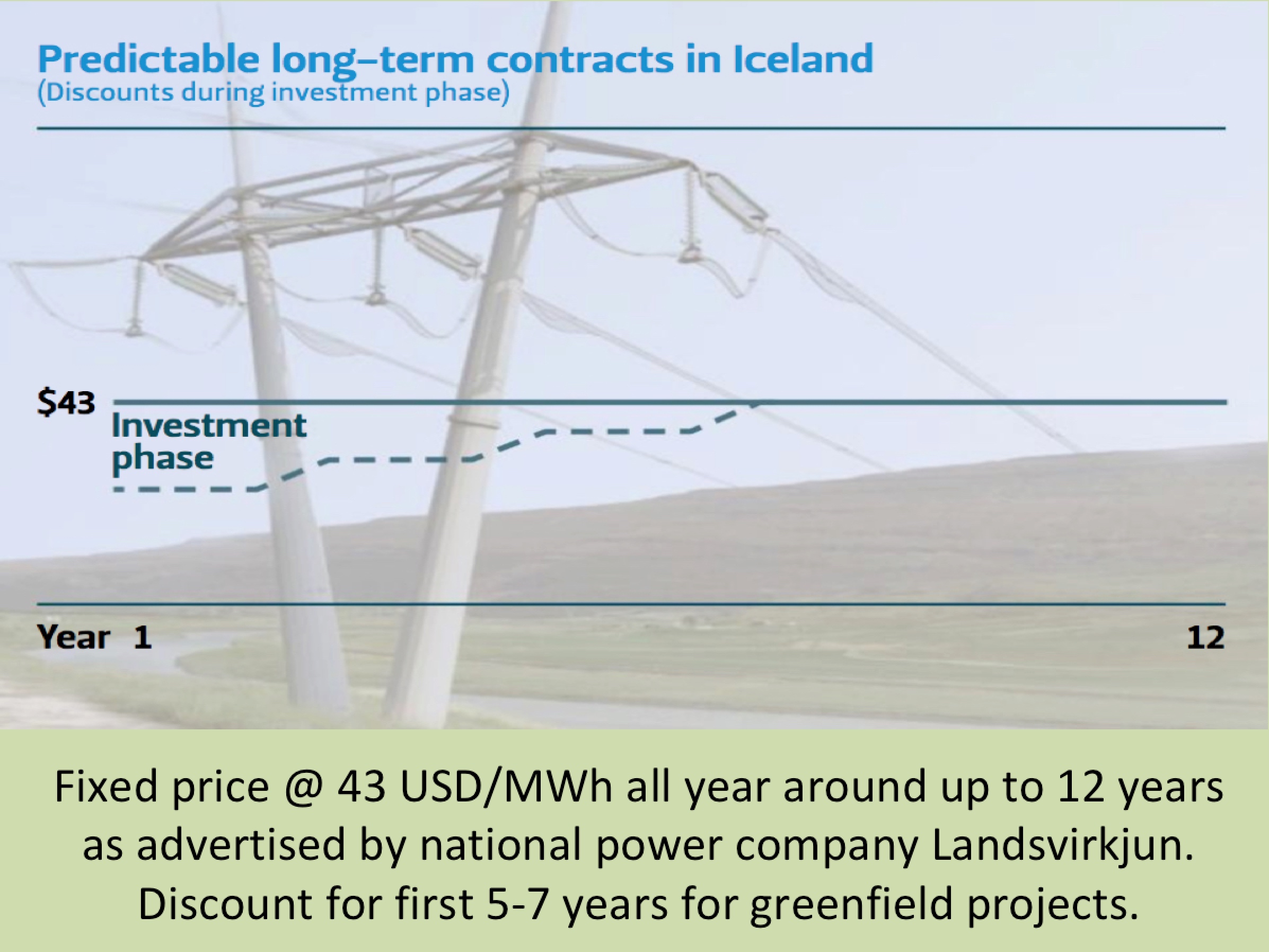
In addition, the electricity is much cheaper in Iceland than in the rest of Europe. In Iceland, data centers are currently being offered power at the price of USD 0.043 (4.30 cents) per kWh, which is less than half of the price which is common in other European countries. This low Icelandic price can be locked up for at east 12 years, offering businesses a clear understanding of operating expenses in the long run.

Furthermore, while cost is one of the major factors attracting data centre investment and services to Iceland, carbon footprint is also an important driver for European businesses to consider Iceland as a location for their data. As European carbon taxes begin to bite, companies are looking towards Iceland’s carbon free data centers as a long-term option to demonstrate their commitment to green IT. Currently, three data centers have been constructed; the Advania, GreenCloud and Verne Global.

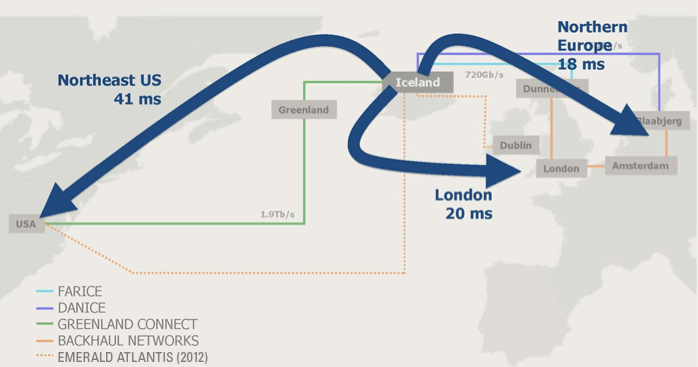
Iceland-Data-Fiber-ConnectionsThe Icelandic electricity generation and distribution ranks as one of the most reliable in the world. Thus, Iceland data centers offer 99.999% uptime, and power companies are willing to put that uptime in the contract agreement. Connectivity to the Icelandic data center facilities is provided by redundant, high-capacity, multi-terabit-per-second connections, including Farice, Danice and Greenland Connect.

Volcanic activity in Iceland may have the effect making investors reluctant to invest in data centers in Iceland and same may apply to businesses regarding hosting their data in the country. But the fact is, that large areas in Iceland have no volcanic activity and none seismic risk. In a nutshell, the risk for data centers from natural hazards or extreme weather are no higher in Iceland than in most other European countries.

Reykjavik-Center-WinterThe regulatory environment in Iceland is clear and is built on European standards (Iceland is a full member of the European Economic Area; EEA). Numerous agencies and local governments are willing to assist companies interested in investing. Our readers are welcome to contact us at the Icelandic Energy Portal for more information. You can call us at +354-863-8333 and/or send message through our contact-form.

Icelandic energy in the New York Times

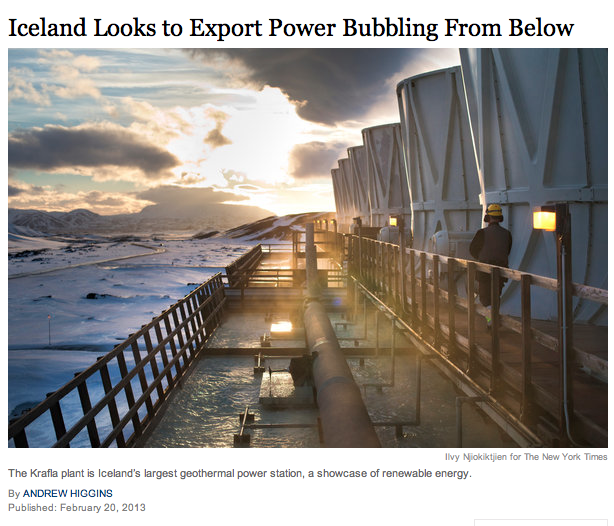
“In a nation with only 320,000 people, the state-owned power company, Landsvirkjun, which operates the Krafla facility, sells just 17 percent of its electricity to households and local industry. The rest goes mostly to aluminum smelters owned by the American giant Alcoa and other foreign companies that have been lured to this remote North Atlantic nation by its abundant supply of cheap energy.”

NYT-Iceland-electric-cable-feb-2013These words are from an article published by the New York Times (NYT) a few days ago. The article describes how electricity generated by harnessing Iceland’s extensive renewable energy sources may possibly be exported to consumers in the European Union (EU). Such an export could result in a very substantial increase in profits for the generating companies in Iceland. The aluminum smelters are paying prices believed to be less than 30 USD per MWh. Which is, according to the NYT, less than half the going rate in the EU and barely a quarter of what, according to the Renewable Energies Federation, a Brussels-based research unit, is the average tariff, once tax breaks and subsidies are factored in, for renewable electricity in the EU.

Currently, Landsvirkjun is conducting a research into the possibility of a submarine electric cable (a High Voltage Direct Current cable or HVDC) to connect the electricity markets of Iceland with the European market. The cable would be approximately three times longer than the link between Norway and the Netherlands, which is currently the world’s longest submarine electricity cable. It is to early to say what would be the preferable connecting point in the EU; it could be Scotland, the Netherlands, Germany, or even Norway.

A connector between Iceland and Europe would not only offer the Icelandic electricity generating companies the possibility of substantially higher price for their product. Such a cable would also make it possible to import electricity to Iceland in periods of low electricity prices at the other end of the cable (such as during the night). The connector would also increase the energy security in Iceland, as the country would be less dependent on keeping large emergency reserves, as it does now. For the EU this would also be an attractive project – not least as the Union’s 27 member states agreed in 2009 to a mandatory target of deriving at least 20 percent of its energy from renewable sources by 2020.

Hordur-Arnarson-Landsvirkjun-CEOLandsvirkjun’s CEO, Mr. Hörður Arnarson, has described the possible cable as a very promising project.  “We have a lot of electricity for the very few people who live here.” Compared with the rest of the world, he said to the NUT, Iceland produces “more energy per capita by far, and it is very natural to consider connecting ourselves to other markets.”

It is expected that final decision on the cable will be taken within two years or so. For more information about the cable and the importance of EU’s energy policy for Iceland, please check out our earlier post on the issue.

Mannvit Engineering awarded EU energy funding

Recently, the Commission of the European Union (EU) awarded more than EUR 1.2 billion to several highly innovative renewable energy technology projects within the EU. One of the selected projects is Hungary’s first Enhanced Geothermal System (EGS), with the participation of Icelandic engineering firm Mannvit.

EU-climate_action-logoThe Hungarian EGS project was selected by the Hungarian Ministry of National Development amongst a series of project proposals to participate on behalf of Hungary in a special programme called NER300. The NER300 programme is one of the world’s largest funding programmes for innovative low-carbon energy demonstration projects. The programme will act as a catalyst for the demonstration of environmentally safe carbon capture and storage (CCS) and innovative renewable energy sources (RES) technologies on a commercial scale within the EU.

The programme is run by the European Comission on member state basis. It is funded by the sale of 300 million emission allowances from the New Entrants Reserve (NER) set up for the third phase of the EU Emissions Trading System (ETS). NER300 funding is expected to leverage a considerable amount of private investment and/or national co-funding across the EU, boost the deployment of innovative low-carbon technologies and stimulate the creation of jobs in those technologies within the EU.

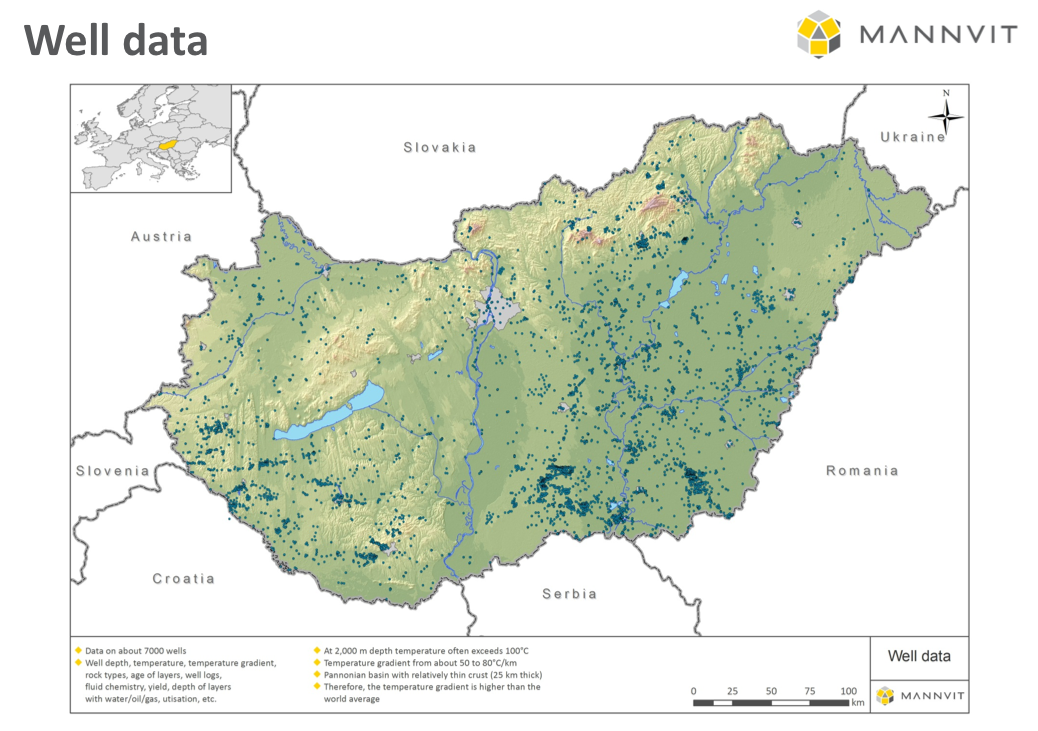
Mannvit-Hungary-Well-Data-MapThe project Mannvit is participating in is led by a consortium formed by Mannvit Hungary and EU-FIRE, which is a Hungarian real estate investment and consultant company. Mannvit Hungary is a subsidiary of Mannvit in Iceland, the veteran leader in geothermal power development with decades of experience in developing geothermal resources. The consortium is in a close cooperation with the Hungarian Ministry of National Development. Further development and execution of the project will require input from various engineering and scientific partners, both international and domestic.

The project was awarded almost EUR 40 million, while the total investment cost amounts to over EUR 100 million. This is a pioneering endeavor of creating a commercially viable geothermal resource for power generation in hot dry geological formations in Southeast Hungary. Geothermal energy systems constitute a sustainable source of electricity that is almost entirely free of greenhouse gas emissions. The Hungarian EGS project will produce electricity in an environmental friendly and sustainable way. The project will also provide various opportunities to strengthen the community with prospects in the fields of long-term employment in various sectors, knowledge transfer and development of secondary green industrial or horticultural development projects that will support social and economical development in the area.

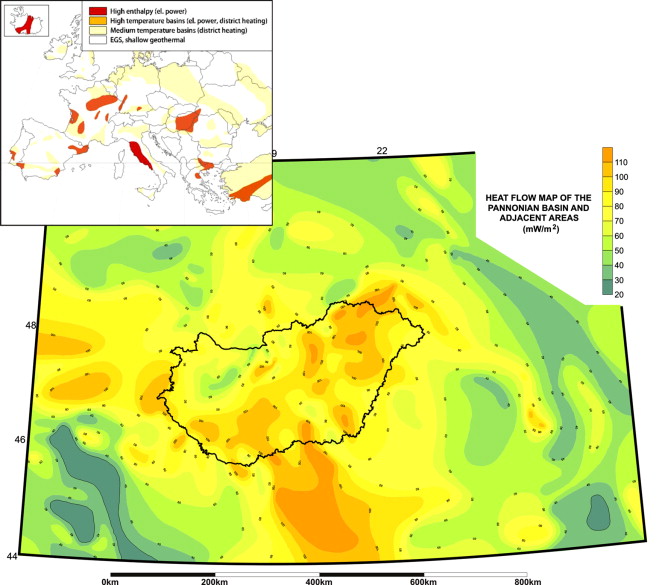
Hungary-Geothermal-Heat-Flow-MapThe EGS technology that lays the foundation of the project has an enormous potential to become an important contributor to the energy portfolio, not only in Hungary, but in the greater part the South Danube Region of central Europe. It represents a source of clean and renewable energy and thereby facilitates the EU goal  that 20% of the energy use is to be from sustainable renewable energy sources by 2020.

The Icelandic engineering firm Mannvit offers wide range of services in the fields of engineering, consulting, management, operations and EPCM contracting. The company was founded in 1963 and is employee-owned (more than 100 shareholders). It has headquarters in Reykjavik and branch offices or affiliates in Hungary, United Kingdom, Germany, Chile and the USA.

Other projects and activities by Mannvit on the European continent include mapping of geothermal potential in Serbia and deep drilling exploration project in Slovenia with the purpose to produce electricity. Also, Mannvit is developing geothermal possibilities in Bosnia and Herzegovina. More information about Mannvit can be found on the company’s website.

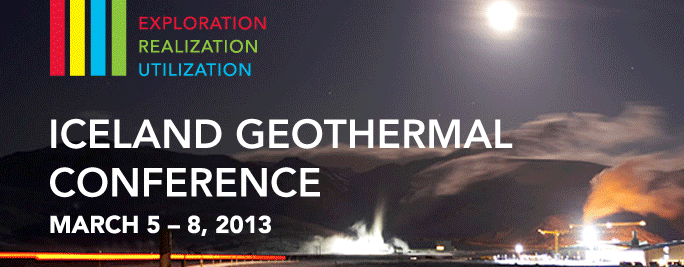
Iceland Geothermal Conference 2013

The Iceland Geothermal Conference will take place  in Reykjavík on March 5-8 2013. The venue is the new outstanding conference and concert centre Harpa, at the oceanfront in downtown Reykjavík.

Icelandic-Geothermal-Conference-2013The overall theme of the conference is presented as “to share effective exploration methods, learn how to maximize the utilization of geothermal energy from veterans and explore ways to realize geothermal projects with less risk and higher profitability.” The speakers include dozens of specialists in the geothermal sector. You can see the program here.

The conference is a perfect place to meet for utilities, investors, vendors, regulators and government to take an in-depth look at the major steps in geothermal projects. As the conference is positioned in proximity to a region rich in geothermal activity, most of the attending guests will probably also enjoy the field trips offered to selected geothermal areas close by.

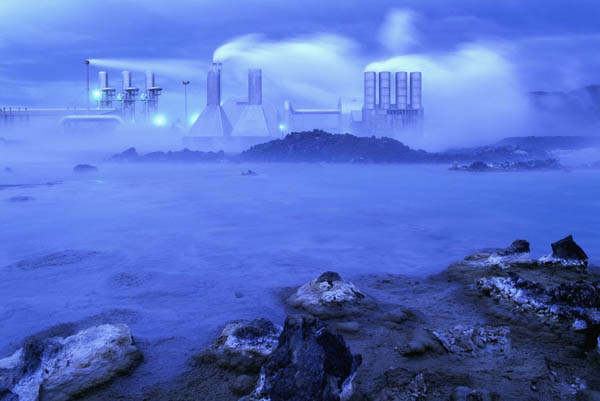
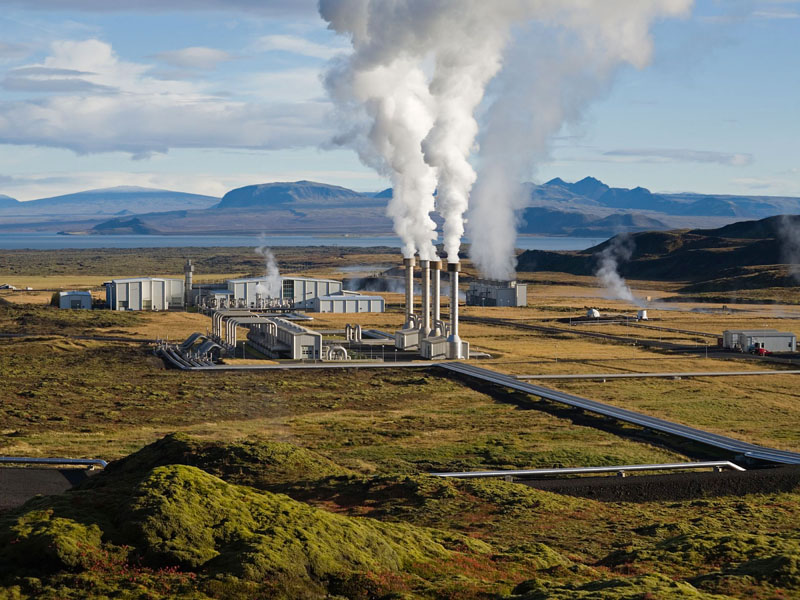
Iceland-Geothermal-Plant-SteamGeothermal energy provides over half of Iceland’s primary energy supply. The principal use of geothermal energy is space heating. Close to 90% of all energy used for house heating comes from geothermal resources (low-temperature). Geothermal energy also plays an important role in fulfilling an increasing electricity demand. Other sectors utilizing geothermal energy directly include swimming pools, snow and ice management, greenhouses, fish farming, and industrial uses.

Harnessing geothermal energy is an area of expertise where Iceland has great strength. The Reykjavík geothermal district heating service started operating on a small scale in 1930. Today, it is the largest of its kind and serves close to 60% of the total population of Iceland. Iceland also produces a substantial share of its electricity by harnessing geothermal resources. Geothermal plants now account for approximately one-quarter of all electricity generated and consumed in Iceland.

Nesjavellir-Geothermal-Power-Plant-IcelandThe use of geothermal energy for industrial uses on a large scale began in Iceland in the late 1960’s. The most recent industrial operation in the country utilizing geothermal energy is the methanol production of Carbon Recycling International in southwestern Iceland. The plant captures carbon dioxide from a geothermal power plant and converts the carbon dioxide into methanol. Currently, the Norwegian company Stolt Sea Farm is constructing a fish farm, that will utilize warm water from a geothermal power plant to produce senegalese sole. In a nutshell, Iceland’s geothermal resources offer numerous interesting opportunities. You are welcome to contact us directly for more information about the Iceland Geothermal Conference and/or with inquiries regarding the Icelandic energy sector.

Icelandic electricity generation and transmission

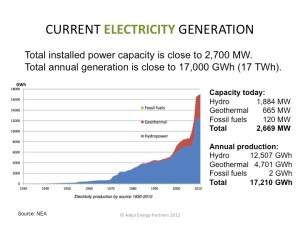
The Icelandic electricity generation capacity and production has more than doubled in a decade. Today, the total capacity is 2,669 MW. The annual generation 2011 was 17,210 GWh.

ELECTRICITY GENERATION BY SOURCE:

Hydro Power              1,884 MW            12,507 GWh
Geothermal Power       665 MW              4,701 GWh
Fossil Fuels                   120 MW                      2 GWh
Total                            2,669 MW            17,210 GWh

Slide08Close to 100% of the electricity generation in Iceland is produced by harnessing renewable sources. Hydropower is the largest source with close to 73% of the annual generation. Geothermal accounts for about 27% of the generation. In addition, there are a few fossil fuel generating plants.

Several new power stations are under planning (both hydropower and geothermal power). The most recent one (now being constructed in South Iceland) will become operational in late 2013 .

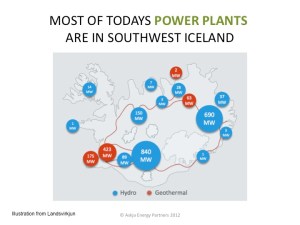
Slide10The power stations in Iceland are located all around the country. The geothermal power plants (marked by red on the illustration at left) are of course to be found where it is easiest to harness the geothermal heat for electricity generation. All the main hydropower stations utilize glacial water, flowing from Iceland’s glaciers.

The largest hydropower system is the Þjórsá and Tungnaá river system in Southern Iceland (marked by a large blue dot on the map at left) . However, Iceland’s largest power station is in the Northwestern part of the country. This is the 690 MW Fljótsdalur / Kárahnjúkar hydropower plant, that started operating in 2007 (marked on the map by the large blue dot north of Vatnajökull Glacier).

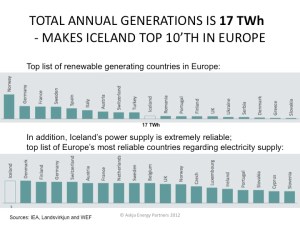
Slide09The total annual Icelandic electricity generation of 17,210 GWh (17 TWh) makes Iceland one of Europe’s largest producers of renewable power.

Norway is in a strong first place with its massive hydropower capacity, generating approximately 120 TWh annually. However, the electricity price in Iceland is much lower than in Norway or other European countries. Iceland  has no electricity connections with other countries. Thus, the generating firms in Iceland do not have access to the large electricity markets in Northwestern Europe, where electricity prices tend to be much higher than in Iceland.

Slide11

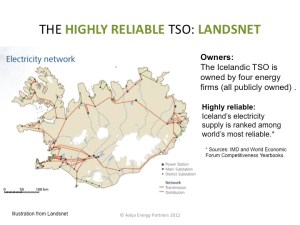
Despite Iceland’s isolated electricity market and sometimes severe weather conditions, the electricity supply in Iceland is renown for its reliability (see for example IMD’s and WEF’s World Competitiveness reports). This high reliability is the result of Iceland’s large reservoirs and the solid transmission system, which is operated by the Icelandic Transmission System Operator or TSO (Landsnet). The TSO connects all the large power stations to the Icelandic electrical grid, which runs around the country (all the nation lives in the lowlands, with the majority located in Southwestern Iceland).

New low-cost renewable capacity

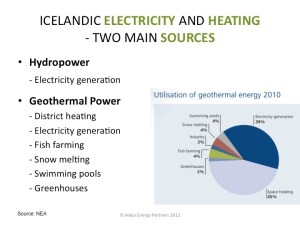
The main sources of Iceland’s primary energy are hydropower and geothermal power.

Iceland-Electricity-and-Heating-Sources-Hydro-Geothermal86% OF THE TOTAL ENERGY IS GREEN

Presently, the Icelandic hydro- and geothermal resources supply close to 100% of Iceland’s consumption of electricity and approximately 86% of Iceland’s total consumption of primary energy (of that total, 20% comes from hydropower- and 66% from geothermal sources). This is the world’s highest share of renewable energy in any national total energy budget.

Hydropower is the main source of the country’s electricity production, accounting for approximately three-quarters of all electricity generated and consumed. The remaining quarter is generated in geothermal power stations.

GEOTHERMAL DIVERSITY

Although hydropower is the main source for Iceland’s electricity production, geothermal heat is the main energy source in Iceland. As mentioned above, geothermal energy makes up around 66% of all primary energy use in the country.

The principal use of geothermal energy is space heating. Close to 90% of all energy used for house heating comes from geothermal resources, thanks to the country’s geophysical conditions and extensive district heating system. Geothermal energy also plays an important role in fulfilling an increasing electricity demand. Other sectors utilizing geothermal energy directly include swimming pools, snow and ice management, greenhouses, fish farming, and industrial uses.

STRONG GROWTH AHEAD

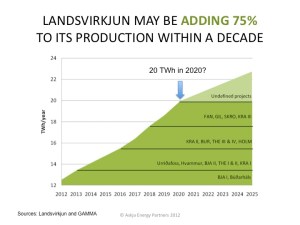
It is expected that demand for Icelandic renewable electricity will grow quite fast over the next few years. Iceland’s main power company, Landsvirkjun, has introduced plans for increasing its electricity production up to 75% within a decade.

Iceland-New-Green-Energy-Capacity

The fact that Iceland still has numerous very competitive unharnessed hydro- and geothermal options, makes the country an interesting location for all kinds of energy intensive industries and services. This may for example apply to data centers, aluminum foils production, several silicon production facilities etc.

The abundant natural hydro- and high temperature geothermal resources make the Icelandic power industry able to offer electricity at substantially lower prices than for example can be found in any other European country. Even the present low spot-price for electricity in the USA (due to extremely low price of natural gas) are no threat to the Icelandic electricity industry.

Companies that need substantial quantity of electricity and wish to operate within the OECD / Europe, will hardly find better long-term agreements than offered at the Icelandic market (43 USD/MWh in 12 year contracts are being offered by Landsvirkjun).

In addition to attractive electricity contracts, Iceland is a member of the European Economic Area and has a modern business environment based on European standards. For those considering energy-related investments in Iceland, a positive first step is contacting Icelandic professionals on the relevant subjects. At Askja Energy Partners we provide information and access to the most experienced and knowledgeable engineering, legal, tax, and accounting services.

Icelandic green methanol

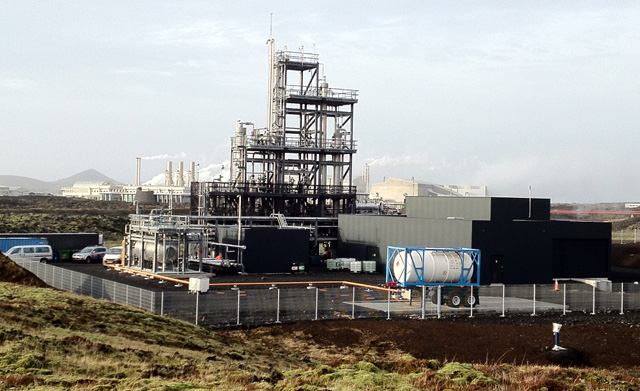
In Iceland, the company Carbon Recycling International (CRI) is currently constructing an industrial plant at Svartsengi in Southwestern Iceland, for producing green methanol.

Methanol is one type of alcohol fuel that can be used as alternative fuel in gasoline combustion engines, either directly or in combination with gasoline. If it is used as low blend in gasoline, very little or even no modifications of the engine are needed.

When methanol is produced by utilizing renewable sources such as biomass, and/or if the power used in the process comes from renewable energy, the product is sometimes referred to as green methanol or renewable methanol. CRI will produce the methanol by utilizing carbon dioxide from a geothermal power plant. The company will also receive the energy for the production from the geothermal plant.

It is not yet clear if this Icelandic green methanol will be blended in low quantities (maximum of three percent) in gasoline or if it will be a used as stronger methanol blend by flex-fuel vehicles. One more option CRI has, is to is to export the methanol. CRI has also launched a feasibility study with the Icelandic public waste firm Sorpa on making green methanol from household waste.

Methanol production by CRI can be related to the ideas of Nobel-prize winning chemist George Olah, who has introduced the possibility replacing fossil fuels with methanol rather than the more highly publicized hydrogen or ethanol. Unlike hydrogen, methanol can be transported and distributed via existing gasoline infrastructure. CRI’s geothermal-connected plant in Svartsengi, Iceland, goes by the name the George Olah Renewable Methanol Plant.